





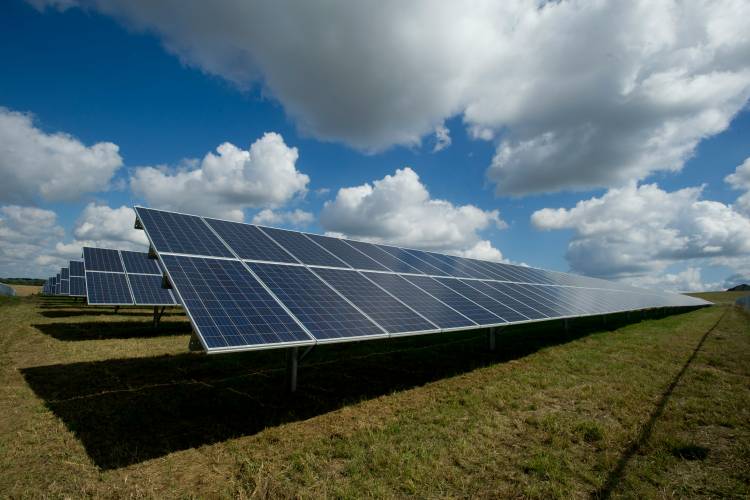
India’s green energy transition: The expansion of renewable energy in India has been faster than most projections made a decade ago. Solar and wind capacity has risen sharply, tariffs have fallen and large project awards no longer attract surprise. But the success is largely in terms of installed capacity. The real challenge is whether the distribution network can use that capacity without sacrificing reliability or raising costs.
India’s non-fossil capacity had reached about 297 GW by June 2026, accounting for more than half of the total installed capacity. Coal supplied more than two thirds of the electricity generated in 2025-26 up to January. Solar and wind capacity remains idle for part of the day or year, but coal plants can generate for much longer.
READ | China’s green energy strategy is becoming a theory of power
Public discussion treats the two numbers as interchangeable, though they measure different things. India’s 2030 commitment is tied to installed capacity, not to half of actual electricity generation. Until transmission, storage and grid management catch up, additional renewable capacity will not translate fully into usable clean power.
India green energy: Capacity is not generation
A megawatt of solar capacity and a megawatt of coal capacity are not comparable measures of supply. Coal stations can generate through the day, subject to fuel, maintenance and despatch conditions. Solar output is confined to daylight hours; wind output varies by season and location.
In 2024-25, coal represented 47% of installed capacity but produced 73% of electricity. Solar represented 22% of capacity and 8% of generation. Installed capacity is useful, but it is a poor substitute for energy delivered.
This changes the policy question. Land acquisition, project finance and auctions dominated the first stage of the renewable programme. Transmission, storage, forecasting, scheduling and electricity-market design will dominate the next. More capacity without these investments can increase congestion, curtailment and payment risks rather than usable clean power.
NTPC’s expansion plans show how the sector is adjusting. The group has about 14.2 GW of renewable capacity under construction and aims for 60 GW by 2032. It is also building thermal and hydro projects. Renewable energy is taking a larger share of future investment, but coal remains central to reliability.
READ | India’s green energy transition powered by big players
India renewable energy transition and the grid
Renewable-rich states have encountered the integration problem first. Karnataka has a large pipeline of solar and wind projects, and the Central Electricity Authority has planned transmission for integrating more than 50 GW of renewable capacity in the state by 2034-35. Tamil Nadu’s wind output fluctuates sharply with the monsoon. For both states, adding generation is easier than matching it with demand, transmission capacity and despatch arrangements.
The geography makes the task harder. Much of the new solar capacity is located in Rajasthan and Gujarat; large wind resources lie in western and southern states. Demand is dispersed across industrial centres and cities. Power must move across state borders and through networks that take longer to build than solar parks.
Delayed transmission can leave completed projects waiting for evacuation or force grid operators to back down generation. The visible asset may be the solar park, but the value of that asset depends on transmission lines, substations and load-despatch centres that attract fewer announcements.
READ | India bets on nuclear power for its green energy future
Storage, markets and DISCOMs
Storage is the second constraint. Solar production peaks before evening demand. Wind cannot be scheduled with the certainty of a thermal unit. Batteries can shift power across hours, while pumped-storage plants can support longer periods.
The government estimates that India’s storage requirement will rise from 82.37 GWh in 2026-27 to 411.4 GWh by 2031-32. That scale requires project pipelines, clear payment mechanisms and tariffs that value electricity supplied during scarce hours rather than capacity alone.
Electricity markets must carry more of the adjustment. Better forecasting by generators, stricter scheduling by load-despatch centres, deeper day-ahead and real-time markets, and time-of-day prices can reduce the cost of balancing renewable output. These are regulatory changes. They require the Central Electricity Regulatory Commission, state regulators, Grid India and distribution companies to act in sequence.
The finances of distribution companies remain the final constraint. Accumulated losses, delayed payments and tariffs below the cost of supply weaken their ability to sign contracts, invest in networks or pay for storage and balancing services. Renewable power can be cheap at the plant gate and still impose costs that an insolvent distributor cannot absorb.
India’s first renewable achievement could be counted in gigawatts. The next one will be visible in transmission lines completed on time, storage available at the evening peak, fewer curtailment instructions and distribution companies able to pay their bills. A solar park can be sanctioned by one ministry. A reliable low-carbon power system requires several institutions to work together.