





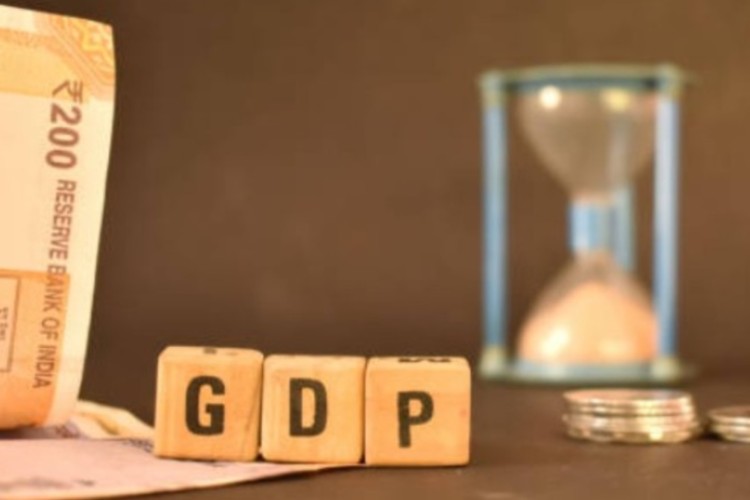
RBI bets on 7.1% GDP growth: The Reserve Bank of India has raised interest rates even as it raised its forecast for economic growth. That combination captures the central bank’s reading of the economy: growth remains strong, but the inflation outlook has become less comfortable.
In its October 7 policy review, the Monetary Policy Committee raised the repo rate by 25 basis points to 5.5%, the first increase since February 2023, and shifted its stance from neutral to calibrated tightening. At the same time, it raised its FY27 real GDP growth forecast to 7.1% from 6.7%, after the economy grew 7.8% in the first quarter. The inflation forecast was raised to 5.2% from 5%.
READ | Only a competition-friendly economy can sustain growth
The message is less alarming than the rate increase might suggest. The RBI does not see a growth crisis. It sees an economy with enough momentum to absorb tighter monetary conditions, while the risks to inflation have become substantial enough to warrant a change in policy.
Growth remains resilient despite a difficult external environment
The strongest part of the RBI’s assessment is its confidence in domestic demand. Real GDP grew 7.8% in the April-June quarter, supported by consumption, investment and exports. The central bank expects growth of 7.2% in the second quarter, 6.9% in the third and 6.8% in the fourth.
That implies only a gradual moderation through the year. It also suggests that the RBI does not expect external shocks to derail domestic activity.
The risks have increased. The conflict in West Asia has pushed crude oil prices higher, global trade remains uncertain and financial conditions have tightened. Brent crude has crossed $100 a barrel, while the rupee has fallen close to its record low. On October 8, it was trading around ₹96.8 to the dollar.
India is better placed to absorb an external shock than it was a decade ago. Banks are better capitalised, non-performing assets have fallen sharply and services exports provide an important source of foreign exchange. The IMF has also pointed to the resilience of India’s financial system and corporate sector.
These buffers cannot, however, insulate the economy from an oil shock. India remains heavily dependent on imported energy. A sustained rise in crude prices increases the import bill, puts pressure on the rupee and raises costs for transport and energy-intensive industries. Currency depreciation can add to those pressures by making imports more expensive.
The RBI therefore has to consider more than the latest inflation reading. A temporary supply shock becomes a monetary policy problem if it starts feeding into broader prices and inflation expectations.
READ | ISP: India’s services economy finally gets a monthly measure
Inflation is becoming harder to ignore
August provided an early warning. Consumer inflation rose to 4.82% from 4.45% in July, according to the latest official data. The figure remained within the RBI’s 2-6% tolerance band, but the direction was less reassuring than it had been earlier in the year.
Core inflation has also moved higher. The RBI’s latest projection puts core inflation at 4.4% for FY27. Its quarterly projections for headline inflation rise from 4.9% in the second quarter to 6% in the third and 5.7% in the fourth. The full-year forecast has consequently been raised to 5.2%.
The concern is whether the initial price shock spreads. Higher food or fuel prices do not automatically produce persistent inflation. The risk becomes greater when firms pass higher transport and input costs to customers, workers seek compensation for lost purchasing power and households begin to expect higher prices.
This explains the RBI’s attention to measures beyond headline CPI. Inflation diffusion and the persistence of price increases provide clues about whether the pressure is confined to a few items or becoming more widespread. Interest rates cannot produce more food or oil, but they can restrain demand if a supply shock begins to turn into generalised inflation.
Weather adds another uncertainty. The RBI has identified the monsoon and El Niño conditions among the risks to the inflation outlook. A poor agricultural season could affect food prices and rural demand, while higher international commodity prices could raise production costs.
The central bank is therefore dealing with an economy in which growth is strong enough to withstand tighter policy, while inflation is becoming high enough to make further monetary easing difficult.
READ | Rural non-farm economy suffer from low productivity
A weaker rupee makes the calculation harder
The currency is an important part of this equation. The rupee’s decline to around ₹96.8 to the dollar has come alongside higher crude prices, capital outflows and tighter global financial conditions. The RBI has intervened in the foreign exchange market, while its reserves have declined from their recent peak.
The central bank cannot use reserves indefinitely to defend a particular exchange rate. The more important question is whether depreciation begins to feed into domestic inflation.
The rupee’s weakness also exposes the limits of India’s external buffers. Large foreign exchange reserves and strong services exports provide substantial protection against a balance-of-payments crisis. They cannot prevent a prolonged increase in the domestic cost of imported energy.
That makes the RBI’s decision to raise both its growth and inflation forecasts significant. Strong domestic demand gives the economy some protection from external shocks. At the same time, that demand gives the central bank less room to ignore an inflation shock that begins to spread.
Seven per cent growth will require higher productivity
The more difficult question lies beyond the current policy cycle. A growth rate of around 7% is a strong performance, but maintaining it for a decade requires more than robust consumption and public investment.
The IMF has identified productivity, jobs and innovation as constraints on India’s longer-term growth prospects. Stronger innovation and a more competitive business environment could raise productivity, but those gains require changes that monetary policy cannot deliver.
This is the distinction between cyclical strength and structural transformation. India can sustain high growth for some time with strong domestic demand, infrastructure spending and expanding services exports. Maintaining that pace over a much longer period will require higher productivity and a larger pool of productive employment.
Private investment needs to deepen. Manufacturing needs to become more competitive. Human capital needs to improve. These are slower-moving changes than an RBI rate decision and depend on a much wider set of economic policies.
The October policy review therefore offers reassurance about the immediate outlook while highlighting the limits of that reassurance. India has enough domestic momentum to withstand a more difficult external environment, but the return of inflation pressures and the weakness of the rupee will test that resilience.
The RBI can influence the monetary conditions in which growth takes place. It cannot determine whether 7% growth becomes a durable feature of the Indian economy. That will depend on productivity, investment and the ability to create more productive jobs.