





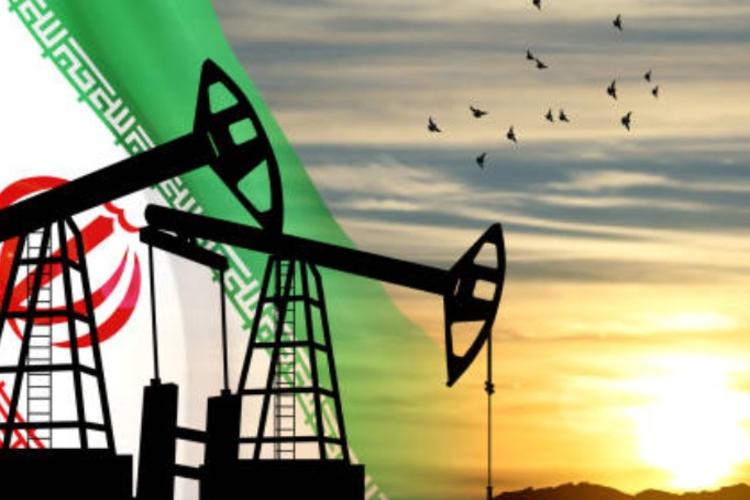
India growth outlook: There is something ironic about India’s economic moment. On one hand, the whole world is facing a crisis from the Iran energy shock and while the global economy is expected to take a hit from these headwinds, ratings agency S&P Global Ratings has raised India’s GDP growth projections at 7.1% for FY27. This is a respectable figure by any contemporary global standard. However, the agency has not discounted the possibility of a setback due to geopolitical tremors and volatile energy markets.
What is going well for the Indian economy is a familiar path. Growth will be powered by domestic consumption, private investment is cautiously returning and exports are learning to navigate a fragmented world, the Economic Outlook Asia-Pacific Q2 2026 report said. However, the risks emanating from the global headwinds are real and growth is actually going to moderate from 7.6% in FY26 to 7.1% in FY27. External headwinds include US tariffs and global trade uncertainties which may drag export-oriented sectors. The report said that average consumer inflation in FY26 would be about one percentage point higher.
READ | Petrodollar power: Venezuela and Iran may extend greenback dominance
In November 2025, S&P Global Ratings had projected that India’s economy would grow 6.5% in FY26 and 6.7% in FY27, driven largely by strong domestic consumption and supportive policy measures such as tax cuts and monetary easing.
Domestic demand remains the quiet anchor
The domestic demand is a quiet anchor in this story. Consumption has held up, supported by urban spending and a gradual recovery in rural demand. Government capital expenditure continues to play a catalytic role and the next goal is crowding in private investment and supporting infrastructure creation. There is a domestic engine that is keeping the economy moving even when external conditions turn unfriendly.
The dual existence of caution and confidence is interesting. India is the fastest-growing large economy but is also one of the most exposed to global shocks. A spike in crude oil prices can widen the current account deficit, push inflation up and complicate monetary policy.
India does have some protection against a pure supply shock. The government says the country has about 60 days of crude and fuel supplies, storage cover of roughly 74 days, and sourcing from more than 41 suppliers instead of relying narrowly on the Gulf. But the cushion has limits. About 40% of India’s crude imports still move through the Strait of Hormuz, and LPG remains far more vulnerable: roughly 60% of India’s cooking gas consumption is imported, with about 90% of those imports usually coming from the Middle East. That means India may avoid a physical shortage of crude, yet still face a price shock, higher refining costs and inflationary pressure if disruption in the Gulf persists.
READ | Europe’s Iran war response exposes its strategic weakness
In fact, the global supply chains which India has become heavily dependent on are also recovering from earlier disruptions and they are still vulnerable to fresh geopolitical fractures. Geopolitical fractures, trade restrictions and logistical bottlenecks can all feed into domestic outcomes in ways that are difficult to predict and even harder to control.
Also, domestic strength is not always sufficient. India’s growth model is increasingly intertwined with global capital flows, commodity cycles and trade dynamics. When these external variables shift, they do not knock politely. Capital flows can reverse, currencies can come under pressure and financing conditions can tighten. In fact, Policy Circle recently reported that India’s FDI numbers are flashing a warning as net foreign direct investment has stayed in negative territory for five straight months. India is drawing capital but investors have been cautious and are booking profits, restructuring holdings, or moving money to other markets.
Growth outlook: Inflation risks are getting harder to read
Inflation too needs reading. While it has remained broadly within target ranges in recent months, the outlook is less certain. Energy prices can seep into the broader price system through transport costs, input prices and expectations. It is already playing out in the LPG prices with common man getting cylinders at three times the costs of rates before the Iran conflict. The impact of the war is already visible. Also, if crude remains elevated, policymakers may be forced into uncomfortable choices. Allowing full pass-through to consumers may dampen demand and absorbing the shock through subsidies will strain fiscal balances.
Monetary policy can respond to inflationary pressures but it does so with lags and trade-offs. In a world of heightened uncertainty, policy agility matters as much as policy direction.
READ | Iran war is becoming a losing game for every player
Growth quality matters as much as headline GDP
There is a subtle shift underway in how growth itself should be understood. Are headline numbers a lived reality for everyone? Is employment keeping pace with output? Are gains being distributed evenly across regions and sectors? These questions do not always feature in quarterly projections but they shape the long-term trajectory of the economy. The quality and sustainability of that growth must also be questioned.
India has had some progress in infrastructure, digital adoption and formalisation but at the same time, challenges in employment generation and incomes have been a cause of concern. The risk is not of growth stalling but of growth becoming uneven. Headline numbers are strong but less inclusive in effect.
The fundamentals of India’s growth story, a large domestic market, a young workforce, improving infrastructure, are a good enough base for growth. The question is not whether India will grow but how smoothly it will be able to navigate the obstacles along the way.
For now, there is some solace in the fact that if India is not charging ahead, it is neither losing direction. It is adjusting to a world that is more fragmented, more uncertain and more hostile than before.