





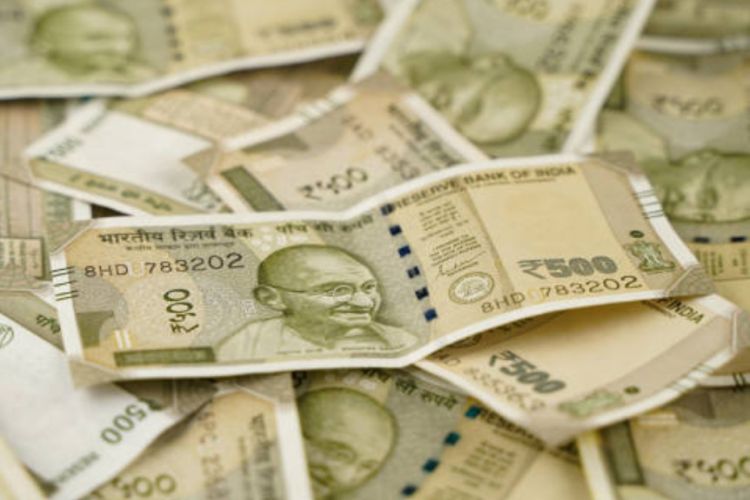
Currency in circulation: Digital payments have changed how Indians transact. QR codes sit on vegetable carts, paan stalls, temple counters and wedding venues. UPI keeps setting new monthly records. Yet cash in the system is also climbing. That is the puzzle flagged in SBI Research’s recent note: currency in circulation touched about ₹40 lakh crore for the fortnight ended January 31, 2026, even as digital payments dominated transaction growth.
The contradiction shrinks once you separate absolute cash demand from relative dependence on cash. The stock of cash can rise even as the economy becomes less cash-reliant, because the base—the size of the economy—is expanding. The ratio tells you that story. The cash-to-GDP ratio has eased to ~11%–11.2% in FY26, down from about 14.4% in March 2021. Cash is growing, but GDP and digital rails are growing faster.
READ | India eyes UPI global expansion to complete fintech revolution
What do UPI records suggest and what they don’t
One reason the “cash paradox” sounds counterintuitive is that UPI growth is often stated without a hard anchor. Here is one: January 2026 saw about 21.7 billion UPI transactions worth roughly ₹28.33 lakh crore, per NPCI data reported widely.
That scale matters. But it mainly proves that digital is taking incremental transaction growth. It does not, by itself, tell you why the stock of cash remains large.
Store-of-value demand and precautionary cash
The draft treated cash mainly as a payments instrument. It is also a store of value for many households and small firms—cash for emergencies, for outages, for privacy, or simply for peace of mind.
This matters because when cash is held for precautionary and store-of-value motives, it can stay in wallets and cupboards even as day-to-day payments migrate to UPI. That is one reason CiC can rise while cash use as a payment medium falls.
Denomination mix and what it signals
If you want to know whether cash is behaving like “transaction cash” or “stored cash”, the denomination mix is a useful diagnostic.
Recent RBI-linked reporting shows ₹500 notes dominate the value of notes in circulation (about ~86% by value), with some denominations (for example, ₹200) showing faster growth in volume/value in 2024–25. A cash stock that is heavily concentrated in higher denominations is consistent with cash being held beyond small change transactions.
READ | UPI goes global and smart with IoT-enabled payments
Interest rates, inflation, and opportunity cost
Another missing macro channel is the opportunity cost of holding cash. When deposit rates are unattractive relative to inflation or when households want immediate liquidity, holding some cash becomes easier to justify. The point is not that rates alone drive CiC, but that cash demand responds to the same incentives that shift money between deposits, cash and other liquid assets.
This helps explain why CiC can remain firm even in a fast-digitising economy: digital rails reduce transaction friction, while real-world incentives still keep a floor under “just-in-case” cash.
Why informal work still runs on notes
Cash remains embedded because a large part of India’s work and enterprise is still informal. Daily-wage work, seasonal labour and self-employment often run on immediate settlement, low overhead, and minimal paperwork.
For many micro-businesses, cash is not just a payment method. It doubles as a basic accounting system. Instant settlement without compliance anxiety still matters, even when the same shopkeeper accepts UPI at the counter.
Network reliability and the fail-safe argument
Smartphone penetration is no longer the binding constraint. Reliability is. Patchy networks, inconsistent connectivity and occasional service disruptions make cash a default back-up in many semi-urban and rural settings.
So the payments ecosystem is not binary. It is hybrid. People switch instruments depending on context—QR when it works, cash when it must. Cash is still the only instrument with zero infrastructure dependency at the point of use.
Currency in circulation and household savings
Even with rising inclusion, many households—especially in lower-income and rural segments—still hold cash as a form of liquidity management. A small cash buffer for medical needs, school fees, travel, or seasonal spending is a practical choice.
This matters because higher incomes and rising consumption increase the demand for transaction balances. Even if a rising share of transactions migrates to digital modes, a bigger economy can still carry a larger absolute cash stock.
Compliance anxiety among small traders
The behavioural response to compliance is also part of the story. Small traders often believe digital trails invite scrutiny. SBI Research itself pointed to GST compliance notices as one factor that may have shifted behaviour in some pockets.
This does not mean enforcement is wrong. It means formalisation has transition costs. When those costs feel unpredictable, cash becomes a defensive choice.
READ | NPCI’s Netbanking 2.0 looks to replicate UPI success, but challenges loom
Seasonality and the scale effect
India’s cash demand spikes during predictable cycles—festivals, harvest-linked spending, and other high-cash occasions. The deeper driver is simpler: when the volume of economic activity rises, the absolute demand for cash can rise with it.
The latest CiC reading underscores that scale effect: CiC at about ₹40 lakh crore as of January 31, 2026, with year-on-year growth of about 11.1%.
A less-cash, not cashless, trajectory
Could digital payments eventually dominate so thoroughly that cash shrinks in absolute terms? Possibly, but that is not the near-term direction.
UPI has permanently lowered the friction and cost of small-value payments and brought millions of merchants into the formal payment network. More consumption is being transacted electronically, and the cash-to-GDP ratio suggests relative dependence will keep falling.
But for the foreseeable future, cash will coexist with digital rails. In an economy moving at multiple speeds, plural payments are not a failure of modernisation. They are a description of reality.
The policy challenge is not to eliminate cash. It is to make the digital alternative progressively more attractive—more reliable, more inclusive, and less intimidating for small enterprises that fear unpredictable compliance shocks. India’s destination is not a cashless economy. It is a less-cash one.