





The sharp escalation in West Asia has pushed crude prices sharply higher. Brent crude moved past $108 a barrel after Israel’s strikes on Iran’s South Pars gas field triggered retaliatory attacks across energy infrastructure in the Gulf. It briefly touched $119, the highest level in more than three years. Markets are now pricing in the risk of prolonged supply disruption, not just a passing spike.
India is firmly in the line of fire. As the world’s third-largest oil importer, it remains heavily dependent on the Gulf for crude, liquefied natural gas and LPG. The shock is already visible in higher import costs, tighter supply conditions and renewed inflation risks.
READ | Iran war is becoming a losing game for every player
Crude oil prices and India’s import dependence
India imports more than 85% of its crude requirement. That leaves the economy exposed to every external oil shock. A $10 rise in crude prices typically widens the current account deficit by about 0.3-0.4 percentage points of GDP. It also strains the fiscal arithmetic through higher subsidy needs and pressure to shield consumers from pass-through.
The move from roughly $74 a barrel before the conflict to well above $100 has altered the macroeconomic picture. A larger oil bill worsens the trade balance. It also puts pressure on the rupee, which then makes all imports costlier.
The risk is amplified by the uncertainty around the Strait of Hormuz. Markets react more sharply to a threatened chokepoint than to price volatility alone. For India, the exposure is substantial. Nearly 40% of crude imports, about half of LNG supplies and close to 90% of LPG imports come from the Gulf.
LPG imports and the cost of emergency sourcing
The government’s response shows the seriousness of the disruption. Efforts to increase LPG imports from the United States and secure cargoes from Argentina suggest that the immediate goal is supply security, not cost efficiency. Such sourcing comes with a freight premium and longer supply lines.
READ | India gas supply: Why the Iran conflict may not choke urban kitchens
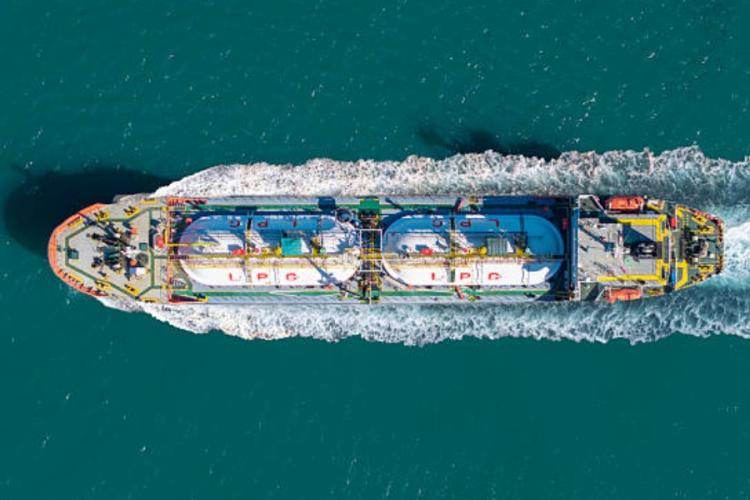
Thirteen vessels carrying more than 350,000 tonnes of LPG are already on their way from the US. That is not a routine logistical adjustment. It is an emergency diversion to prevent domestic shortages, even at a higher landed price.
India has diversified crude sourcing in recent years, especially through imports from Russia and the United States. That flexibility is weaker in LPG and LNG. This is where the present crisis bites harder. A crude shock can be partly managed through sourcing shifts. A gas and LPG shock reaches households faster.
Inflation risks from fuel and gas disruption
The inflation impact will not remain confined to global markets. Retail fuel prices have not yet been raised, but that only shifts the burden to oil marketing companies. Sooner or later, either pump prices must rise or the fiscal cost of compensation will increase.
The transmission goes beyond petrol and diesel. Higher LPG costs hit household budgets directly. Higher energy costs also raise input prices for manufacturing, transport and services. That feeds into core inflation.
Oil remains a basic input across the economy, from freight to fertilisers to petrochemicals. When energy prices stay high, freight costs rise, margins shrink and demand weakens. Export sectors, already dealing with fragile external demand, face another squeeze through costlier inputs.
Rupee pressure and RBI policy dilemma
The rupee has also come under pressure, touching 93 to the US dollar. Currency weakness compounds the oil shock by making imports more expensive in domestic terms.
India’s foreign exchange reserves offer a buffer, but not immunity. If oil stays elevated, that cushion begins to thin. The Reserve Bank of India then faces a familiar problem: inflation needs control, but growth also needs support. An oil shock narrows room for monetary manoeuvre.
Energy security now goes beyond crude oil
What makes this episode more serious than a standard oil spike is the spread of disruption across multiple energy streams. The attacks have not been confined to crude production. Gas facilities and refining infrastructure have also come under threat. This is a supply-chain shock across hydrocarbons, not a single-commodity event.
READ | West Asia war puts the rupee under fresh pressure
That matters for India because its dependence is not uniform. Crude imports can be diversified to a degree. LNG and LPG imports are harder to replace quickly. That is why the household dimension of this crisis is real. The pressure is not only on refineries and import bills, but also on kitchen fuel availability.
India’s energy strategy needs deeper insulation
India’s diplomatic outreach across West Asia and other major capitals shows that energy security and geopolitics are inseparable. But diplomacy can only reduce risk at the margin when conflict is active.
The larger lesson is structural. India needs bigger and better-managed strategic reserves, more diversified supply arrangements, and greater domestic production where commercially viable. It also needs to reduce the share of imported hydrocarbons in household energy dependence.
There may not be an unchecked price spiral. Global demand is weaker than in past oil shock episodes, and strategic reserves can provide temporary relief. India has also managed fuel volatility before through tax changes, subsidies and administrative price control. But these tools buy time; they do not remove vulnerability.
The choices remain awkward. Shielding consumers protects demand but weakens public finances. Passing through prices preserves fiscal space but risks inflation and political backlash. Emergency diversification improves supply security but raises costs. That is the reality of an energy system still exposed to a volatile region. Until that dependence is reduced, affordability, accessibility and resilience will not move together.