





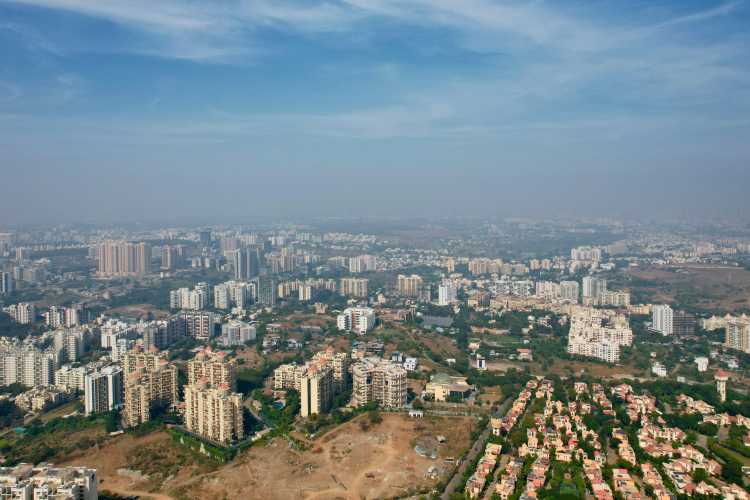
India’s urban policy: India is still not very urban by global standards. According to World Bank estimates a little over a third of Indians live in urban areas. The 2011 Census had identified 7,933 urban settlements. Number of Class I cities, with more than one lakh people, increased from 107 in 1961 to 468 in 2011. Number of smaller towns rose from 3,485 to 7,467 during the period.
Yet 70% of the urban population lived in Class I cities. Small towns made up 94% of all urban settlements but housed only 30% of urban residents. India has no shortage of towns. It has a shortage of functioning urban centres outside the large cities.
READ | Delhi urban heat island exposes planning neglect
The pattern differs from Europe, where urban growth is spread more widely across small and medium towns. India has 14 of the world’s 100 largest urban centres, while Europe has only Paris and Madrid on that list. About 16.5% of India’s population lives in metropolitan areas with more than ten million people, against 8.3% in Europe.
India’s urbanisation is concentrated around a few large cities. Europe’s is spread across a wider network of towns.
Small towns remain outside India’s urban missions
Union government programmes have reinforced this concentration.
The Smart Cities Mission covered about 100 cities. AMRUT covered 500. Only nine Smart Cities and 23 AMRUT cities were small towns. The two schemes covered 29% and 58% of the urban population respectively. But they reached only 1.25% and 6.3% of India’s towns. Large cities received the money, administrative attention and political visibility.
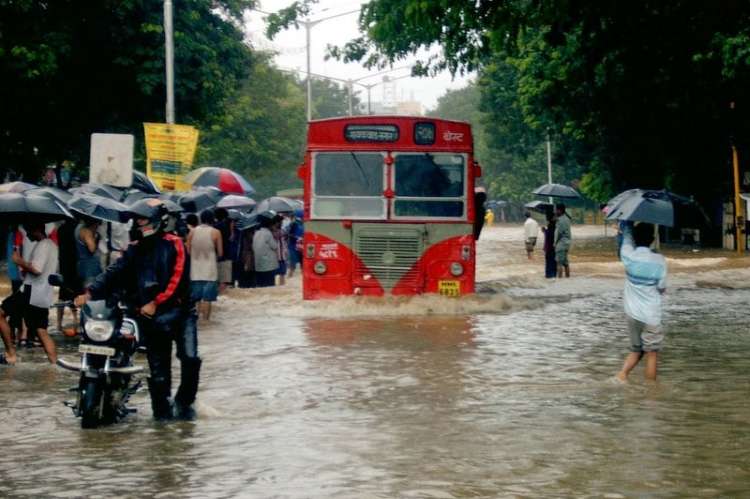
Other programmes, including the Swachh Bharat Mission, PMAY, HRIDAY and the North Eastern Region Urban Development Programme, have supported urban infrastructure. They have not given small towns a clear place in national urban policy.
These towns are usually treated as smaller versions of cities. They are not. Their finances are weaker, their administrations thinner and their links with surrounding villages much closer.
READ | Urban heat in India is a planning failure, not just climate change
Small towns can narrow regional disparities
India’s regional inequalities are also urban inequalities.
States and districts with few productive towns offer little non-farm employment outside their capitals. Workers either remain in agriculture or move to a distant metropolis. This leaves many districts without a local market for labour, services or small industry.
A functioning district town can support several surrounding rural blocks. It can provide schools, hospitals, wholesale markets and jobs that would otherwise be found only in a large city.
This would spread economic activity across more districts. It would also reduce the dependence of entire regions on one state capital or industrial centre.
India needs more steps between the village and the metropolis. At present, much of that middle is missing.
India’s urban policy: Small towns offer growth
India’s urban strategy has relied heavily on large infrastructure projects in major cities. AMRUT and the Smart Cities Mission together involved expenditure running into several lakh crore rupees.
This has not stopped congestion, housing shortages or pollution. Building in an already crowded city is expensive. Land costs are high, construction disrupts existing settlements and new transport links often push development farther towards the edge.
Small towns offer cheaper land and housing. Roads, water supply and industrial areas can be built before congestion becomes severe. Workers face shorter journeys and lower rents.
The case is not that small towns should replace large cities. Mumbai, Delhi, Bengaluru, Chennai and Hyderabad will remain major centres of finance, technology and specialised services.
The problem is excessive concentration. Sending most new investment to the same metropolitan regions raises the cost of each additional job and house.
Small towns can make migration easier
Rural-to-urban migration accounted for only about 21% of India’s urbanisation, or roughly 19 million net migrants, according to the 2011 Census data used in the draft.
Migration remains low for several reasons. Language, caste ties, family obligations and the continued dependence on agriculture restrict movement. The gap between rural and urban employment or public services is also too small in many regions to justify the cost of moving to a large city.
A nearby town changes the calculation. Housing costs less. Migrants remain closer to their families. Language and social barriers are lower.
Small towns can therefore provide the first step out of agriculture. A worker may move 30 kilometres to a district town even when moving 1,000 kilometres to a metropolis is impossible.
But migration will follow jobs. Declaring a settlement urban, or building a municipal office, will not create an economy.
READ | Urban incomes growth masks real inequality divide
Industry must give small towns a reason to grow
Large and medium firms often seek cheaper land outside metropolitan limits. Small towns near major cities can offer such locations while retaining access to suppliers, roads and large markets.
The towns gain only if industry creates local jobs. A factory that imports its workers, draws water without paying the municipality and sends its profits elsewhere will do little for the town around it.
Industrial growth must be linked to local transport, housing and skills. Otherwise, the result will be another unplanned urban fringe.
Small towns can also support the shift from agriculture to manufacturing and services. India has struggled to move workers out of low-productivity farm employment. That transition cannot be carried by a few dozen large cities.
Demand from surrounding villages can sustain trade, repair services, food processing, construction and small manufacturing. Some towns will later attract larger firms. Others will remain local service centres. Both have an economic role.
India will urbanise whether governments prepare for it or not. If investment remains concentrated in megacities, housing costs, congestion and pollution will worsen.
Small towns need municipal capacity, basic infrastructure and an economic purpose. Without these, India will continue to have thousands of towns on paper and only a few hundred cities that offer a credible urban life.
Dr Sabyasachi Tripathi is Associate Professor and Prof Jyoti Chandiramani Director at Symbiosis School of Economics, Pune. Dr Jadhav Chakradhar is Assistant Professor of Economics, Centre for Economic and Social Studies (CESS), Hyderabad.