





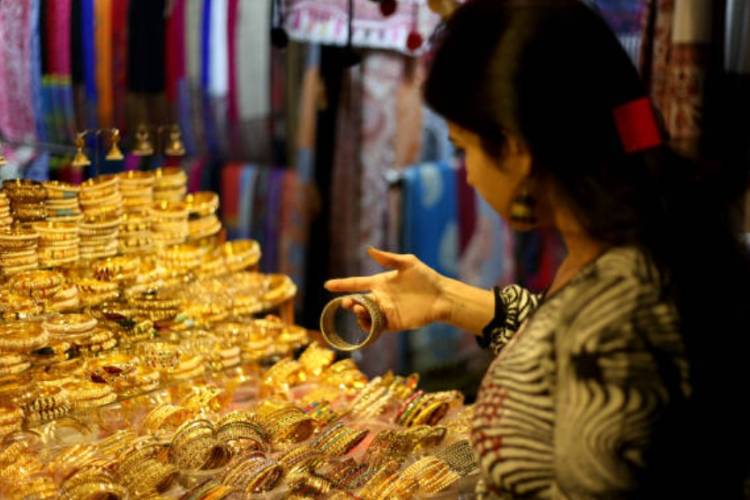
India’s gold demand: Indians’ attachment to gold is old, durable and practical. It runs through weddings, inheritance, distress sales, and household savings. Gold is wealth, but more importantly, it is safety.
A walk through any Indian market explains why. Shops offering cash against gold are visible almost everywhere. Their presence is a reminder that gold is not merely ornament. It is instant capital when formal credit fails, when savings are thin, or when a household faces an emergency.
READ | Gold imports, oil prices expose limits of austerity calls
Previous generations did not buy gold only to display status. They bought a buffer against hard times. Policymakers have often described this as an “unproductive” use of savings. That misses the point. For households, gold is insurance without paperwork.
The contradiction is familiar. India’s gems and jewellery industry is a major employer, contributor to exports, and part of the country’s cultural economy. Yet gold remains a persistent worry for policymakers because it accounts for a large share of imports and adds pressure to the current account.
Gold imports and the failure of prohibition
The state’s old instinct was to suppress demand. The Gold Control Act of 1968, associated with Prime Minister Indira Gandhi and Finance Minister Morarji Desai, tried to conserve foreign exchange by restricting private gold ownership.
The law barred citizens from holding gold bars and coins. Existing holdings had to be converted into jewellery and declared. Goldsmiths were restricted to small stocks, licensed dealers faced tight limits, jewellery purity was capped, and unrecorded transactions became criminal offences.
The objective was clear: reduce demand for imported gold and protect foreign exchange reserves. The outcome was the opposite.
Gold smuggling expanded. Corruption grew. Legitimate jewellers were squeezed. Organised syndicates found a profitable opportunity. The law did not extinguish demand; it merely pushed supply into illegal channels.
Nor did the larger macroeconomic problem disappear. India still faced balance of payments stress in the 1970s, the early 1980s, and finally the 1990-91 crisis. The Gold Control Act was repealed in 1990. The appetite for gold survived it.
READ | Gold prices are telling something central banks will not say aloud
Gold tariffs and the return of smuggling
Liberalisation changed the state’s approach, but not the underlying tension. Import duties were lowered sharply after the old control regime ended. They later began to rise again, especially after 2013, as policymakers tried to contain the import bill.
The pattern is again visible. In the 2024 Union Budget, the government reduced the duty on gold to curb illegal inflows. In May 2026, it reversed course and raised import tariffs on gold and silver from 6% to 15%, citing the need to curb overseas purchases and ease pressure on foreign exchange reserves. Reuters reported that domestic gold futures jumped 7.2% after the move, while bullion dealers warned that the higher duty could revive smuggling by widening the incentive for grey-market operators.
The lesson is not complicated. Excessive restrictions do not reduce India’s demand for gold. They change the route through which gold enters the country.
The state has also tried softer instruments. Gold exchange-traded funds, sovereign gold bonds, and gold monetisation schemes were designed to shift households from physical gold to financial gold. These schemes recognise that the objective should be to manage demand, not deny it.
Their success has been limited because physical gold serves a purpose that financial products cannot fully replace. Jewellery is social capital. Coins and bars are private savings. In distress, a gold ornament can be pledged or sold without explaining income, creditworthiness, or intent.
Gold demand is a household hedge
India’s gold demand is not simply a taste for luxury. It is a response to uncertainty. It reflects gaps in social security, unstable incomes, weak trust in formal finance, and the need for a portable asset that retains value across generations.
READ | Gold prices reflect global distrust in dollar, US policy
The policy gap is not merely on the demand side. India also sits on a vast stock of household gold that rarely returns to the formal market because assaying, trust, tax treatment, and liquidity channels remain weak. If households buy gold because they distrust formal safety nets, they will not easily surrender it to schemes they do not understand or trust. The weakening of gold monetisation channels underlines the problem. The government discontinued the medium- and long-term components of the Gold Monetisation Scheme from March 26, 2025, while RBI FAQs say renewals of such deposits are no longer permitted.
The better answer is not prohibition, but a credible market for recycled gold, transparent pricing, reliable hallmarking, and emergency credit products that can compete with the neighbourhood gold lender.
This does not make gold the best financial investment. It often is not. But households are not building ideal portfolios on spreadsheets. They are managing risk in the conditions they know.
That is why bans failed. That is why punitive duties encourage smuggling. And that is why appeals to postpone purchases are unlikely to work when prices rise or the rupee weakens. Recent reporting after the May 2026 duty hike made the same point: higher tariffs are unlikely to dent demand because gold remains culturally embedded and functions as a financial hedge.
The government’s task is not to cure Indians of gold. It is to reduce the macroeconomic cost of that preference. That means stable duties, credible financial substitutes, better monetisation of idle gold, and a financial system that households trust in bad times.
Gold is not India’s irrational obsession. It is a rational hedge in an economy where many households still feel exposed. Policy will work only when it starts from that fact.
Suparshva Jain works with TCS Research.