





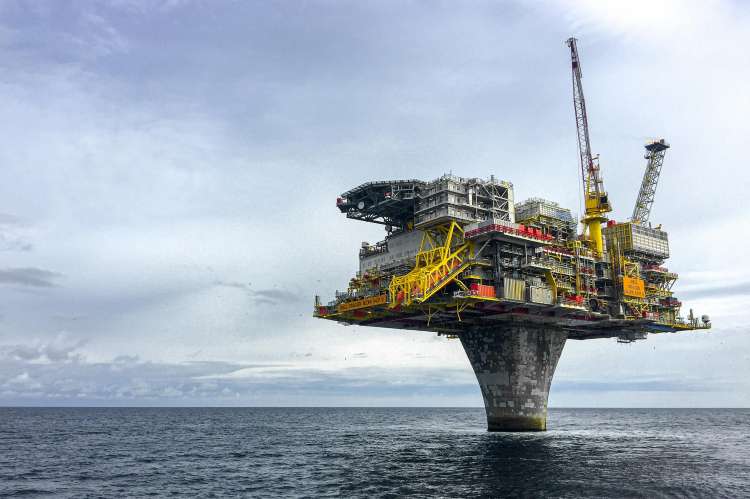
Iran conflict and energy security: Markets love drama. A missile strike lands, crude jumps, insurers panic, and experts rummage through the 1970s for analogies. The latest US-Israel attack on Iran has triggered that familiar script. The Strait of Hormuz is again being treated as the hinge on which civilisation turns.
That is an exaggeration. But it would be equally foolish to dismiss the danger. Hormuz remains one of the world’s most critical energy chokepoints. Even if no tanker is sunk and no formal blockade is declared, fear itself can do the damage. Ships delay sailings; LNG cargoes change course. War-risk insurance climbs. Freight costs jump. Oil becomes dearer before any physical shortage appears.
READ I Iran conflict could trigger a global energy shock
Strait of Hormuz crisis can raise oil prices
The first effect is not scarcity. It is a risk premium. That matters because a risk premium on energy behaves like a tax on the world economy. It pushes up transport costs, fertiliser prices, petrochemical inputs and inflation expectations. Import-dependent economies pay first and pay most.
India knows this well. So do Japan, South Korea and much of Europe. A sustained rise in oil prices widens current account deficits, weakens currencies, complicates monetary policy and squeezes household demand. Central banks then face an ugly choice: cut rates to support growth or hold back because imported inflation has not gone away.
That is the bad news. The good news is that this is not 1973. The global economy is less energy-intensive than it once was. Energy sources are more diversified. Strategic reserves are larger. Price shocks still hurt, but they do not paralyse the world in the old way.
READ I India-Russia oil ties in a shifting global order
Iran conflict and lessons for energy security
The more important question is what countries do after the first panic. Every energy shock teaches the same lesson: dependence on narrow supply routes is a bad idea. Yet governments and firms have a short memory. They return to the cheapest route, the most efficient chain, the narrowest buffer. Crisis exposes the cost of that laziness.
If Hormuz is threatened, the rational response is not to hold endless conferences on stability. It is to reduce exposure. That means more strategic reserves, more diversified sourcing, more flexible shipping routes and, above all, faster investment in domestic energy capacity.
READ I Global economy’s 2026 optimism masks deep fault lines
Renewable energy and strategic importance
This is where the current crisis may leave a lasting mark. Renewable energy has long been sold as a moral obligation. That was never its strongest political argument. Its stronger argument is strategic. A country that generates more of its power at home, from solar, wind, hydro, storage and better grids, is less vulnerable to distant conflict. Energy transition, in that sense, is not just climate policy. It is insurance.
That does not mean oil will be dethroned next year. Fossil fuels still dominate transport, petrochemicals and industrial heat. Nor does every country have the fiscal space, grid strength or mineral access to move quickly. But the direction of policy can change much faster than the structure of supply. Crises have a way of clearing bureaucratic cobwebs. Permits move faster. Subsidies become easier to justify. Domestic capacity gets a national-security label and acquires urgency.
Iran conflict and global trade resilience
The same logic applies to trade. For years, boards celebrated efficiency and consultants worshipped lean supply chains. That model worked in calm weather. It works less well when one maritime corridor can rattle prices across continents. Redundancy is not elegant. It is expensive. But it is now cheaper than fragility.
This is likely to shape the next phase of globalisation. Not a retreat from trade, but a redesign of it. More warehousing. More route diversification. More friend-shoring where possible. More tolerance for cost in exchange for resilience. Economists may grumble about efficiency losses. Geopolitics is imposing them anyway.
World economy will reward policy credibility
There is another lesson here. Countries that offer predictable rules, secure contracts and diplomatic restraint will gain. Capital is nervous by nature. It does not mind ideology as much as it minds disorder. In a more fractured world, trust acquires a price. Reliable jurisdictions will attract money, supply chains and technology. Unpredictable ones will watch the bill for brinkmanship arrive.
That is one reason why the emerging multipolar world may prove less chaotic than many fear. More centres of power do not automatically mean more instability. They can also mean more options, more redundancy and fewer single points of failure. But that will depend less on slogans about sovereignty and more on the mundane virtues of credibility, logistics and rule enforcement.
Technology can create civilian economic spillovers
The original draft also made a larger claim about technology, especially artificial intelligence, converting military capability into civilian abundance. That argument works only if stated carefully. War does not become virtuous because some defence technologies later find civilian uses. But it is true that modern military systems generate spillovers: satellite imaging, advanced communications, power management, resilient logistics and autonomous navigation all have broad economic applications. AI can improve the productivity of those systems in civilian settings, from disaster response to freight optimisation to grid management.
Still, one should not get carried away. Technology does not abolish conflict. It does not make cooperation morally superior in some automatic way. It merely changes incentives at the margin. Those margins matter, but they do not write history by themselves.
Rising oil prices and weak global growth
What does write history, more often than not, is cost. And prolonged conflict is becoming very costly. The world economy entered 2026 with only modest growth and limited room for policy errors. A sustained oil spike would hit consumption, investment and trade together. Governments can posture for a while. They cannot repeal arithmetic.
That is why the Iran conflict is unlikely to produce an endless spiral. Not because statesmen will suddenly discover wisdom, but because the economic penalties of escalation will mount too quickly. Even those with no moral discomfort about war tend to develop practical doubts when balance sheets deteriorate.
So the sensible conclusion is neither panic nor utopianism. The Iran shock will not break the world. It will, however, remind governments and firms of several truths they have preferred to ignore: that chokepoints are dangerous, that cheap dependence is often not cheap, that resilience deserves a premium, and that domestic energy capacity is worth more than the accountants once admitted.
If those lessons stick, Iran conflict may do some good after doing some damage. That is usually how the world changes. Not through grand moral awakening. Through repeated reminders that bad systems are expensive to maintain.
READ I Why Trump tariffs and protectionism may misfire

Shailesh Haribhakti is a Chartered and Cost Accountant, an internal auditor and a certified financial planner. He is a board chairman, audit committee chair and independent director at some of the country's most preeminent organisations. He is a thought leader on the Indian economy and public policy.