





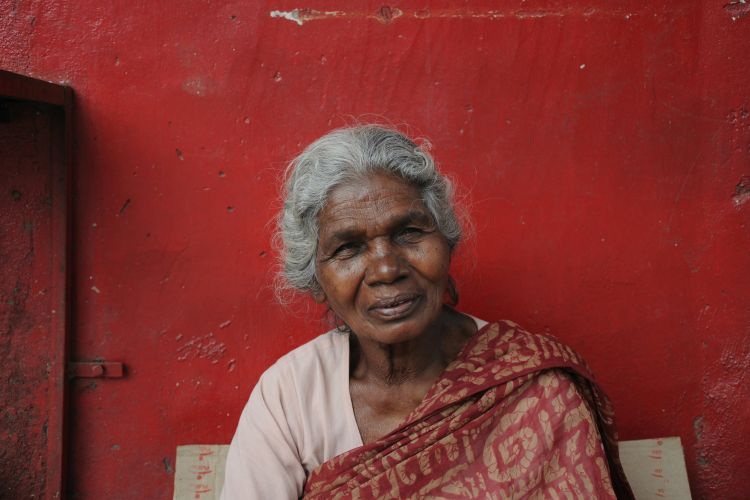
Migrant women policy gaps: When 68-year-old Kamla Devi left her village after her husband’s death, the move was framed as care. Her son brought her to the city, where she now cooks, watches grandchildren, and manages the household while remaining economically dependent and socially invisible. “I eat in this house, but I have no place in it,” she says. Her experience is not unusual. It reflects a growing but largely unacknowledged reality- older rural women migrating to Indian cities under compulsion, not choice, and ageing into invisibility.
This is not a marginal problem. It is the consequence of a policy imagination that still assumes migrants are young, male, and mobile, while older women are sedentary dependents embedded in stable rural families. When widowhood, family fragmentation, or rural economic collapse force older women to move, they fall outside every administrative category the state is prepared to recognise.
READ | Women in manufacturing: The missing link in India’s growth story
A welfare architecture built for someone else
India’s social protection systems were not designed for ageing migrant women. Most schemes hinge on fixed residence, intact documentation, and family-based care assumptions. Old-age pensions under the National Social Assistance Programme require local verification. Urban health services presume stable addresses. Housing schemes privilege nuclear households with formal tenure. None of these conditions reflect the lived realities of older women who migrate late in life.
The outcome is predictable. A 2024 BMC Public Health study found that only 17.8% of older migrant women reported high levels of social support, significantly lower than men. Research by United Nations Women and the Centre for Equity Studies shows that women constitute nearly 30% of the elderly population in urban slums, yet they are the least likely to access pensions, healthcare, or housing entitlements. These exclusions are often attributed to poverty or family neglect. In practice, they are institutional outcomes.
Urban ageing a quiet demographic risk
India is ageing faster than its systems are adapting. According to the Ministry of Statistics and Programme Implementation, the population aged 60 and above crossed 149 million in 2021. By 2050, nearly one in five Indians will be elderly. Urban centres will absorb a growing share of this population, including women displaced from rural areas by agrarian stress, declining joint families, and longer female life expectancy.
READ | Women’s self-employment surges, but gaps persist
If current policy blind spots persist, cities will face a silent crisis. Untreated chronic illness and mental health conditions among elderly women will place additional strain on already stretched urban health systems. Low-income households will absorb care responsibilities without state support, deepening intra-household economic stress. Urban inequality will not only widen across income lines, but across age and gender.
Mental health cost of displacement
The psychological dimension of this migration remains largely unaddressed. Older women who move after decades of rural rootedness experience a sharp rupture from social networks, cultural familiarity, and identity. Many such moves follow trauma—widowhood, abandonment, or economic collapse. Once in cities, isolation deepens.
Cultural norms discourage older women from articulating distress. Scholars describe this as a “gendered silence” around ageing and mental health. The absence of geriatric counselling services in urban primary health centres ensures that anxiety, depression, and cognitive decline remain undiagnosed. What is framed as personal resilience often masks prolonged emotional deprivation.
Informality, dependence, and housing insecurity
Economic vulnerability compounds this invisibility. Most ageing migrant women spent their working lives in informal agriculture, animal care, household labour without wages, savings, or pensions. Migration does not end dependence; it merely relocates it. Some women enter low-paid urban domestic work or caregiving, sectors marked by informality and wage theft. Others remain unpaid contributors within extended families.
READ | Women-owned MSMEs remain stalled at micro scale
Housing insecurity intensifies risk. Many live in informal settlements without tenure, legal recognition, or basic services. For older women, the absence of secure housing translates directly into heightened exposure to violence, eviction, and health hazards.
Recognition before rescue
India does not lack schemes. It lacks recognition. Ageing migrant women are not treated as a distinct policy constituency. Documentation requirements, mobility barriers, and the assumption that families will absorb care costs systematically exclude them from protection. The result is structural invisibility.
An inclusive urban future demands a shift in approach. Social protection must become portable and individual-centred, allowing pensions and health entitlements to follow people rather than addresses. Urban primary healthcare needs gender-sensitive geriatric services, including mental health support. Cities must invest in community spaces and housing solutions that reduce isolation and restore dignity.
Older rural women’s migration is not simply a movement across geography. It is a passage into invisibility created by systems that were never designed for them. The policy question is no longer abstract. Can a country that speaks of demographic dividends afford to ignore the women who sustained its households, fields, and informal economies, only to let them age into erasure?
Ansh Sharma is a graduate student of psychology and economics, and Dr Aneesh KA is Assistant Professor at CHRIST University, Delhi NCR Campus.