





Turbulence in US-Canada trade ties: The deterioration in economic ties between Washington and Ottawa is not a transient personality clash. It reflects a structural shift in how the US, under Donald Trump, now treats even its closest trading partners: tariffs as leverage, trade agreements as conditional favours, and predictability as dispensable. Canada’s response under Mark Carney suggests adaptation rather than capitulation. The future of the relationship will be defined less by reconciliation than by managed volatility.
Trump’s threat of a blanket 100% tariff on Canadian exports if Ottawa deepens trade with China was theatrically excessive, but strategically revealing. The administration’s objective is not enforcement of trade rules but deterrence of autonomy. Canada’s limited accommodation with Beijing—narrow tariff relief on canola and controlled access for Chinese electric vehicles—was enough to trigger warnings about sovereignty and survival. The message was unmistakable: diversification itself is being treated as disloyalty.
READ I Trump’s tariffs tax Americans, not foreign exporters
US-Canada trade too crucial to decouple
This posture collides with economic reality. Canada supplies roughly four million barrels of oil a day to the United States, anchors Midwestern refining, and sits at the centre of tightly integrated automotive supply chains. Industry warnings that tariffs on auto parts would rapidly shut US factories are not lobbying hyperbole; they reflect the logic of continental manufacturing built over three decades. A punitive tariff regime would injure American jobs before it disciplines Canadian policy.
That asymmetry of US-Canada trade explains the repeated pattern of escalation without execution. Trump has threatened tariffs on Canada, Europe and Iran-linked trade, then retreated. The volatility is real; the follow-through is selective. Markets and firms are learning to price in noise while betting that catastrophic outcomes will be avoided. This is not stability, but it is a new equilibrium.
READ I Trump’s Board of Peace: Why the new body will lack credibility
Trump tariffs fuel diversification
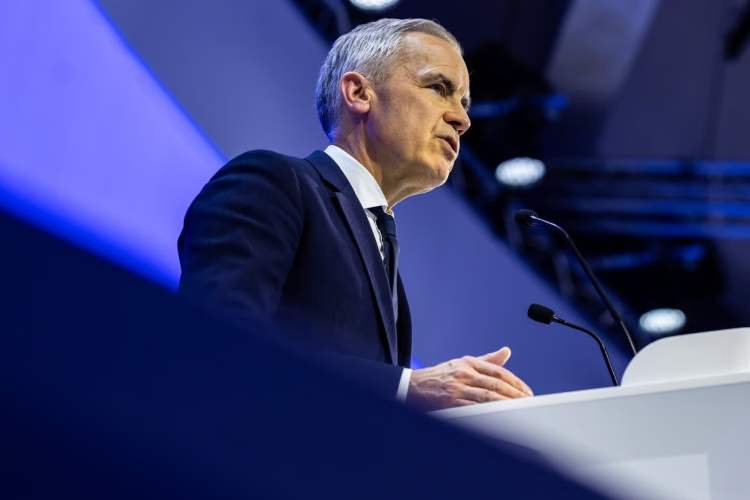
Canada’s recalibration is therefore rational. Carney’s speeches at the World Economic Forum framed the moment as a rupture in the postwar order and urged “middle powers” to resist coercion. That rhetoric is not mere signalling. It has been followed by action: a diplomatic reset with China, outreach to Europe and Asia, and a stated target to lift non-US trade materially over the next decade. None of this alters the arithmetic—about 70% of Canadian exports still go south—but it changes incentives at the margin.

The China opening illustrates both ambition and constraint. Tariff relief for canola matters politically in Saskatchewan; limited EV access tests the boundary of US tolerance without collapsing Canada’s auto sector. China, for its part, gains a symbolic counterweight to Washington. Yet even optimistic projections leave Beijing a distant second market. Diversification reduces vulnerability; it cannot replace geography.
READ I Europe’s Greenland dilemma as Trump threatens force
US demands and Canada’s options
Washington’s leverage now runs through the review of the USMCA. Testimony by Jamieson Greer before Congress clarified US demands: deeper access to Canada’s dairy market, revisions to streaming and news laws affecting US tech firms, the end of provincial liquor boycotts, and relief on sub-national procurement and electricity disputes. The list is long because the method is transactional. Compliance buys calm; resistance invites pressure.
Ottawa’s room to manoeuvre is constrained by domestic politics. Dairy supply management remains politically untouchable. Cultural policy has bipartisan support. Provincial retaliation on liquor reflects public anger over tariffs and sovereignty rhetoric. Polling shows Canadian views of the United States at multi-decade lows, reducing incentives to strike a hurried deal. As one analyst noted, Canada may now prefer no deal to a bad one, even at economic cost.
Security relations under a cloud
Security complicates commerce. Carney has raised defence spending and signalled openness to US missile-defence cooperation, while publicly resisting imperial overtones—from Greenland to “51st state” taunts. The separation of security cooperation from trade coercion is deliberate. Ottawa wants to demonstrate reliability as an ally without accepting economic subordination.
For the United States, the contradiction is stark. The administration argues that facts will ultimately prevail, that tariff-free trade with Canada benefits American workers. Yet it simultaneously undermines the very predictability on which those facts operate. Declaring USMCA “irrelevant” while demanding concessions under it weakens credibility and encourages hedging.
The likely trajectory is neither rupture nor reset. It is a thinner partnership: trade that continues because it must, alongside diplomacy that frays because it can. Canada will keep diversifying at the margins, insulating key sectors, and building coalitions with other middle powers. Washington will retain leverage but deploy it episodically, constrained by domestic economic blowback.
In that sense, the future of US-Canada trade will be managed rather than repaired. Integration will persist where supply chains make it unavoidable. Trust will not. For both countries, the task is to prevent volatility from becoming policy—and to recognise that leverage has limits on a continent built on interdependence.