





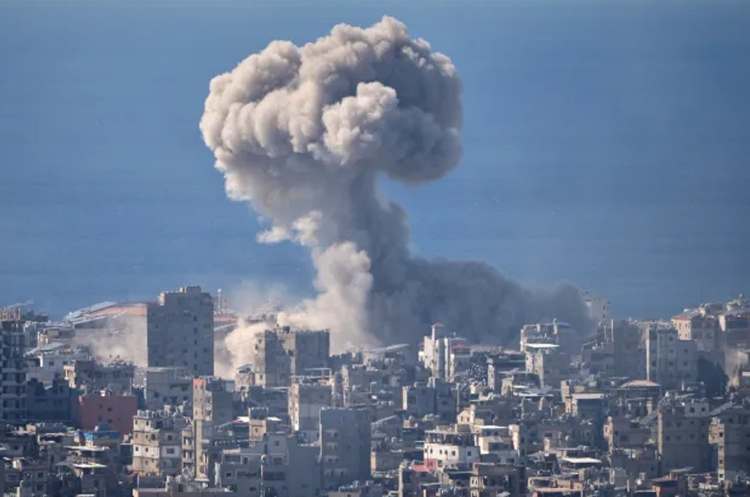
The Iran war is now old enough to expose its first large illusion. Air power can destroy targets, but it cannot by itself settle the political question at the core of this conflict. The US and Israel have inflicted heavy damage on Iranian military and nuclear-linked sites since the war began on February 28. Yet Iran’s regime remains in place, the Strait of Hormuz remains disturbed, energy markets remain jumpy, and diplomacy is further away than before. That is why this war may linger.
None of the principal players can yet claim a result that justifies stopping, while each is already paying a price for continuing.
READ I India gas supply: Why the Iran conflict may not choke urban kitchens
Iran war and the limits of bombing
Washington’s public case is that its objectives are narrow and unchanged: degrade Iran’s missile-launching capacity, weaken its defence-industrial base and prevent it from obtaining a nuclear weapon. Israel’s stated goals have ranged more widely, from crippling Iran’s missile and enrichment capacity to hints of regime change and, now, talk of a possible “ground component”. That widening gap matters. A war with limited military aims can, in theory, be terminated once enough damage is done. A war that slides toward regime change becomes harder to end, because survival itself becomes the enemy’s war aim. That is precisely where Iran now appears to be.
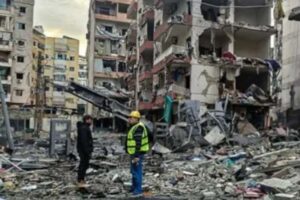
The military record already suggests why the campaign has not produced closure. Israeli and American officials speak of thousands of strikes and deep penetration of Iranian territory. But Rafael Grossi of the IAEA has publicly disputed claims that Iran’s nuclear capacity has been eliminated, saying key questions remain unanswered and that inspectors still do not know the status of some underground facilities. If that is so, the Iran war has not yet delivered the one outcome most often invoked to justify it. It has instead strengthened the case of Iranian hardliners that deterrence must be rebuilt, not bargained away.
READ I India’s metals policy must adapt to the Iran conflict
Tehran gets a cheaper path to endurance
Iran does not need battlefield parity to keep this war alive. It needs only the capacity to impose recurring economic pain. That is what control over disruption in and around Hormuz offers. The strait handled more than one-quarter of global seaborne oil trade in 2024-25 and about one-fifth of global LNG trade, much of it destined for Asia. The International Maritime Organisation has now asked for a safe corridor to evacuate stranded seafarers, while Reuters reported that Iran is even considering a post-war transit-fee regime. This is not a sign of strength in the conventional sense. It is leverage born of geography.
That leverage has already been demonstrated. After Israel struck Iran’s South Pars gas field, Tehran retaliated not merely against Israel but against Gulf energy infrastructure, including Qatar’s Ras Laffan industrial city, Kuwaiti refining assets and Saudi-linked facilities. Brent crude briefly rose above $119 a barrel before easing, not because the danger passed, but because markets began to price in emergency counter-measures by the United States and its partners. A country under bombardment has shown that it can still raise the cost of war for countries far beyond the battlefield.
This changes the military arithmetic. Iran can ration its missile fire, disperse production, preserve enough assets for periodic disruption and present mere endurance as victory. CSIS has warned that Tehran’s strategy is not calibrated retaliation but deliberate escalation across multiple theatres. Crisis Group has made a similar point from another angle: this is no longer a contained exchange but a sprawling regional war with many pathways to further widening. A regime that believes the war is about its survival will accept levels of material damage that democratic adversaries, facing voters and markets, find harder to absorb indefinitely.
READ I Remittances to India rise as Iran war triggers panic transfers
A political problem for Trump
For President Donald Trump, the contradiction is now visible. He has rejected ceasefire efforts, said no unconditional talks are on offer, and insisted that only he will decide when enough has been achieved. Yet the same administration is exploring sanction relief for stranded Iranian oil and further strategic stockpile releases to calm markets. That is not the posture of a side confident that military pressure alone will end the crisis. It is the posture of a government discovering that energy prices, allied hesitation and domestic political limits narrow strategic freedom faster than Pentagon briefings admit.
The United States is already in the familiar Middle East trap: it can escalate more easily than it can define a politically saleable end-state. Hegseth says there is no timeline. Congress is being prepared for very large supplemental funding. American casualties, though modest by Iraq-war standards, have already risen. If the Iran war drifts on without either a negotiated nuclear arrangement or a decisive collapse of Iranian state capacity, Washington will have exchanged a difficult but active diplomatic track for a more expensive and open-ended coercive one. Oman says progress had been made in the February talks. That claim cannot be verified in full, but the broad fact is beyond dispute: a diplomatic channel existed, and war closed it.
Conflict does not serve Israel’s larger security
Israel may still believe time is on its side. It has degraded Iranian assets, exposed deep intelligence penetration and demonstrated freedom of action in Iranian airspace. It also has the clearest immediate military logic for prolonging operations: destroy as many missiles, launchers, depots and command nodes as possible before any ceasefire. But Israel’s problem is the gap between tactical success and strategic settlement. Unless the Iranian state falls, and there is little evidence of imminent collapse, much of what has been destroyed can be rebuilt. Netanyahu has all but acknowledged this by arguing that Iran’s regime cannot be toppled from the air alone.
That leaves Israel with an unattractive choice. It can stop and risk an angry, battered, more clandestine adversary rebuilding for the next round. Or it can continue and deepen the regional backlash, including from Gulf states that do not support Tehran but do not wish to have their energy systems turned into collateral targets. Reuters reported that Trump had to ask Israel not to repeat strikes on Iranian energy assets after the South Pars attack helped trigger Iranian attacks on Gulf facilities. A war that begins in the name of restoring deterrence can end by diffusing insecurity across the entire region.
War hurts the Gulf, Asia and the wider economy
The Gulf Arab states are perhaps the clearest proof that the Iran war is damaging the interests of actors beyond the three combatants. Saudi Arabia, the UAE, Qatar, Kuwait and Bahrain did not seek this conflict, yet their energy and logistics assets are now exposed. The EU has called for a moratorium on strikes against energy and water facilities.
The IEA notes that around 80% of oil and oil products passing through Hormuz in 2025 were headed to Asia. India, China, Japan and South Korea do not need a formal widening of the war to suffer from it; a prolonged disruption in shipping, LNG and refining flows is enough.
The Iran war may therefore linger not because any side is winning, but because each side still thinks time could improve its bargaining position. Iran believes survival under fire restores deterrence. Israel believes more strikes can still change the balance irreversibly. Trump appears to believe pressure can yet force a better deal than diplomacy could. All three may be mistaken.
The likelier outcome is a longer period of coercive instability: intermittent strikes, shipping disruption, energy volatility, proxy violence and stalled nuclear oversight. In such a conflict, there will be no clean victor. There will only be a widening circle of losers.