





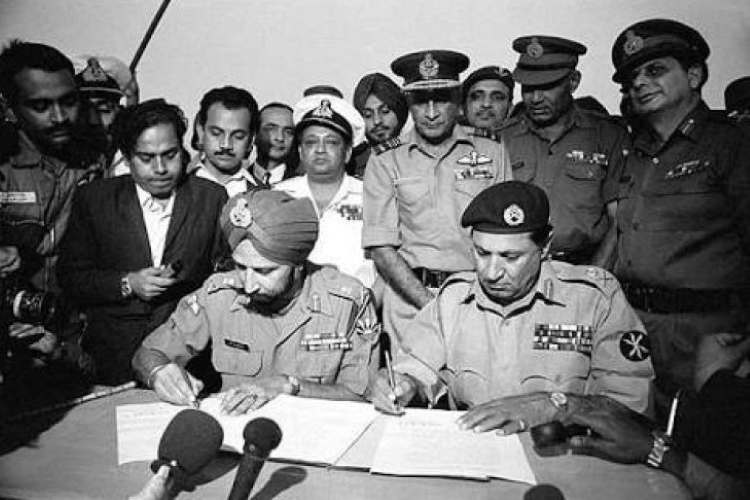
India-Bangladesh ties after BNP victory: India did not “lose” Bangladesh in a single moment. It spent years narrowing a complicated, sovereign relationship into a comfortingly simple one: Delhi’s alignment with Sheikh Hasina and the Awami League as the default guarantor of security cooperation, transit access, and a friendly political line in Dhaka.
When that political settlement collapsed after the 2024 uprising, the India-Bangladesh ties were left without ballast. What followed- safe haven for Hasina, a hesitant recalibration with the interim administration, and a sharper turn in India’s own domestic rhetoric—converted Bangladeshi scepticism into a wider, younger anger that now shapes Dhaka’s politics and foreign policy choices.

The February 12 election has now given that anger a durable political frame for India-Bangladesh ties. The BNP, led by Tarique Rahman, has returned to power with a sweeping mandate, while Jamaat-e-Islami has posted its strongest showing; the youth-born National Citizen Party has been reduced to a token presence in parliament.
The Awami League remains barred, Hasina remains in India, and the interim leadership under Muhammad Yunus has still not secured her return despite formal requests. If Delhi’s working assumption was that a post-Hasina election would mechanically restore equilibrium, the results suggest the opposite: Bangladesh’s next government is likely to bargain harder with India, not soften its domestic incentives to keep distance.
The immediate context is the February 12, 2026 election, the first since the student-led upheaval. With the Awami League barred, the contest has shifted to coalitions led by the BNP and Jamaat-e-Islami, with a Gen Z-backed National Citizen Party in the mix. India’s “known quantity” is not merely out of power; it is structurally excluded from the race. That fact forces a blunt conclusion: Delhi’s neighbourhood policy towards Bangladesh was built on a single pillar, and India invested too little in anything else.
READ I US-Bangladesh deal narrows India’s US textile advantage
Backing Hasina, and owning her endgame
For many Bangladeshis—especially those politicised by the 2024 violence—India is no longer seen as a neighbour managing legitimate interests. It is seen as complicit in Bangladesh’s democratic erosion, because India treated disputed elections and shrinking civic space as acceptable collateral for a stable partner. That belief is not confined to activists; it has entered mainstream political language and campus culture, expressed as resistance to “hegemony” rather than a quarrel with Indian people.
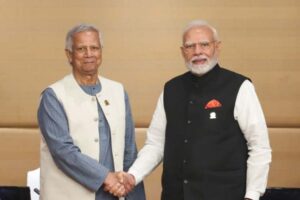
The problem for Delhi is that this perception has acquired an evidentiary spine. The UN human rights office documented severe violations during the July–August 2024 protests and placed responsibility on state security and political structures aligned with the former government. In such a climate, India’s decision to host Hasina—while Dhaka sought her return and courts proceeded against her—became more than a bilateral irritant. It became the symbol of India choosing an individual over accountability in Bangladesh.
A foreign policy built on personal ties can be efficient in calm periods. In a rupture, it turns into reputational debt.
READ I Bangladesh’s exclusionary election and its tryst with democratic renewal
The interim became political, and India misread it
The Yunus-led interim arrangement was never going to be ideologically comfortable for Delhi. It is rooted in a legitimacy claim that directly indicts the old order. But India’s early posture looked transactional and cautious rather than strategic — engagement without a visible political reset. That created room for Bangladesh’s new elite consensus to harden: India could work with Bangladesh only through preferred intermediaries.
Delhi has since widened outreach—contacts with the BNP leadership and even Islamist actors are now part of the open conversation. But the sequence mattered. Recalibration after the fact reads like tactical salvage, not respect for Bangladesh’s political transition. The result is that India is negotiating from a weaker social foundation even when state interests still converge on border management, transit, and security coordination.
READ I Undoing 1971: Bangladesh’s new power play alarms India
Identity politics crossed the border
Diplomacy is shaped as much by perceptions as by formal decisions. India’s domestic discourse—on migration, citizenship, and minorities—has increasingly spilled into Bangladesh’s political bloodstream. When prominent Indian political and media voices frame Bangladesh through the lens of “infiltration” or civilisational threat, the message received in Dhaka is not limited to electoral theatre in India. It is interpreted as the worldview of the Indian state.
This is where the India-Bangladesh ties have become structurally fragile. Bangladesh is a Muslim-majority polity with its own contested debates on identity. The more India’s public rhetoric sounds like majoritarian suspicion, the easier it becomes for Bangladeshi parties across the spectrum to mobilise “sovereignty” against Delhi without paying an electoral price. Chatham House has pointed to identity politics in both countries as a key constraint on any reset—because it narrows the room for compromise even when governments want it.
Water, borders, and the proof of asymmetry
Anti-India sentiment is not powered only by high politics. It is fed by issues that look, to Bangladeshis, like daily proof that India treats the relationship as unequal.
Water sharing is the classic example. Teesta remains unresolved; broader river management lacks the transparency and reciprocity that would signal parity. Border killings and harsh enforcement practices—whatever the legal justifications offered—are experienced as a valuation of Bangladeshi lives. These are not episodic irritants. They are the kind of long-running grievances that become politically usable when trust collapses.
International Crisis Group’s recent work on “after the golden era” frames the core issue plainly: India must treat Bangladesh as a partner with domestic constraints, not as a subordinate expected to absorb Indian political costs.
Trade coercion is easy; trade confidence is hard
Economic ties remain large, but the composition matters. Bangladesh’s trade with India sits around $13.5 billion, heavily tilted towards Indian exports. When political relations sour, a lopsided economic relationship is easily cast as leverage rather than interdependence.
Recent restrictions on Bangladeshi exports routed through India and tighter import channels have been read in Dhaka as punitive signalling, not routine trade administration. Whether or not every measure was intended as coercion, the cumulative effect has been to reinforce the story that India responds to political disagreement with economic pressure.
In the same period, Bangladesh has pursued external economic hedges. A new Bangladesh–US trade arrangement and promised commercial purchases underline that Dhaka is actively diversifying and seeking predictability from multiple partners.
China and India-Bangladesh ties
China did not create the rupture, but it is exploiting it. Beijing has stepped up diplomatic visibility and positioned itself as a high-volume economic partner without the cultural and identity frictions that accompany India’s politics. Bangladesh-China trade is roughly $18 billion annually, and Chinese goods dominate Bangladesh’s import basket.
More importantly, China is expanding into security-industrial space—reportedly including a defence-linked drone factory near Bangladesh’s border with India. That is not a symbolic project. It is a signal that Dhaka is willing to add a strategic dimension to the China relationship when ties with India are politically costly at home.
This is the strategic price of losing social legitimacy: it reduces India’s ability to set the boundaries of “normal” external engagement in its immediate neighbourhood.
Bangladesh will bargain harder
Geography still constrains both sides. Bangladesh is bordered by India on three sides, depends on transit corridors and regional connectivity, and has deep cultural and economic ties across a 4,096-km frontier. India, for its part, needs cooperation to manage cross-border crime, insurgent logistics, and stability in the Northeast.
But the relationship has shifted from alignment to bargaining. Dhaka’s next government—now backed by the BNP’s parliamentary majority—will have incentives to demonstrate distance from India to satisfy domestic sentiment, while privately seeking workable arrangements on trade and transit. India will still be too large to ignore, but it will no longer be treated as the default, benign partner. It will be treated as a powerful neighbour whose demands must be negotiated, not accommodated.
That is the operational meaning of “losing a reliable friend”. Not hostility as policy, but the end of automatic trust.
What a credible reset would require
A reset in India-Bangladesh ties cannot be delivered through photo-ops or selective outreach. It requires three shifts, each politically difficult in India.
First, Delhi must decouple Bangladesh policy from Hasina’s personal fate. Continuing ambiguity around her status keeps the relationship tethered to Bangladesh’s most divisive recent wound.
Second, India must reduce the gap between official diplomacy and domestic political rhetoric. If majoritarian language is allowed to define the public frame, diplomatic repair will remain shallow.
Third, India must rebuild “equal sovereignty” signalling in the domains that shape everyday perceptions: border management practices, water diplomacy transparency, and predictable trade administration.
None of this guarantees affection. But it can restore functionality—enough to prevent strategic drift towards Beijing from becoming structural.