





Different shades of health inequity: The World Health Organisation defines equity as the absence of avoidable or remediable differences among groups of people, whether those groups are defined socially, economically, demographically, or geographically. In practice, this is not a semantic distinction. It is the difference between noticing unequal outcomes and asking whether the gap is unjust, preventable, and policy-responsive.
Inequality is easiest to see. Two children stand under a fruit tree. One reaches the fruit because the branch leans towards them. The other cannot, not because of effort or merit, but because of position. The outcome differs. Nothing justifies the difference. That is inequality. Equality is the usual administrative response. Give both children the same ladder. The gesture looks fair. It also ignores why the gap exists. If the branch is still out of reach for one child, equal inputs preserve unequal outcomes.
Equity starts from the specific disadvantage. It changes the ladder, not the rhetoric. One child may need a taller ladder because the branch is further away. Equity accepts that uniform support can be a way of refusing to see unequal constraints. “Justice” is the harder step. It is not better ladders. It is straightening the tree so ladders matter less.
READ I Educated youth unemployment explains India’s jobs crisis
Maternal mortality, child deaths, and life expectancy
Health inequities are systematic differences in health outcomes rooted in the social conditions in which people are born, grow, live, work, and age. Maternal mortality remains one of the clearest indicators because it reflects both access to care and the frictions that block it.
In evaluations of policy shifts intended to improve maternal and child outcomes, immunisation can improve while antenatal check-ups and maternal mortality show little movement. The reason is rarely a lack of knowledge that antenatal care matters. It is the presence of specific, repeated barriers that make that care costly in time, money, safety, and social permission.

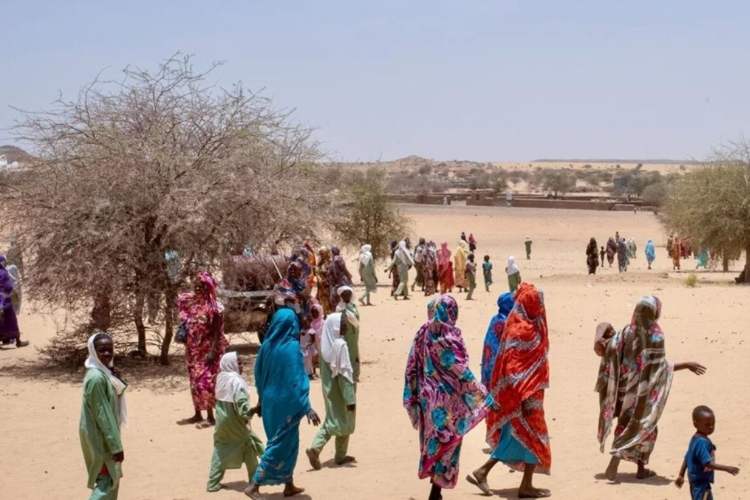
The global gradient is stark. Roughly 830 women die every day from complications during pregnancy and childbirth. The distribution of those deaths is not accidental: the burden concentrates in low- and middle-income regions, while high-income countries record far fewer. Under-five mortality tells a similar story. About 16,000 children die each day before their fifth birthday, often from pneumonia, malaria, diarrhoea, and other conditions that are preventable or treatable when systems function.
Life expectancy compresses these inequities into a single number. The gap can reach 34 years between countries. A child born in Sierra Leone can expect to live around 50 years; a child born in Japan around 84. These are not biological destinies. They are policy environments.
READ I Trump’s tariffs tax Americans, not foreign exporters
The problem is not only North versus South
The mindset shift from the Millennium Development Goals to the Sustainable Development Goals matters. The MDG era leaned towards averages: improve the national mean and call it progress. The SDG frame is more demanding. It forces attention to the variance, the distribution, the groups left behind. It also makes it harder for high-income countries to treat health inequity as someone else’s problem.
In the US, African-Americans are about 13% of the population but account for a disproportionately large share of new HIV infections. There is no genetic explanation that can plausibly carry that weight.
In the United Kingdom, child poverty is geographically uneven. Cities such as Glasgow, Blackpool, and Manchester carry far higher rates than affluent areas such as parts of Hampshire. Within Glasgow, male life expectancy ranges from roughly the mid-60s in poorer neighbourhoods to over 80 in wealthier ones. The “tube stop” statistic in London captures the same point in a different form: travelling east from Westminster, each stop has been associated with nearly a year of life expectancy lost.
Health inequity is not a defect of poor countries. It is a feature of unequal societies.
READ I Delhi air pollution crisis a failure of prevention, not prediction
The economic bill is real, and it compounds
Some consequences are direct. Tuberculosis remains a disease of poverty. Most TB deaths occur in the developing world. Non-communicable diseases now do similar damage at scale: a large share of premature NCD deaths occurs in low- and middle-income countries, and the costs of treatment can drain households quickly.
The household channel matters because it turns illness into a financial shock. Cancer, diabetes, obesity-related complications, and chronic respiratory disease can force catastrophic expenditure, push families into poverty, and then lock them there. At that point, the health system is not only treating disease. It is financing a poverty trap.
Governments carry costs too. The European Parliament has estimated that losses linked to health inequity cost around 1.4% of European Union’s GDP. That is not just a moral failure. It is lost productivity, lower tax receipts, higher welfare payments, and higher health spending.
A healthy workforce is not a slogan. It is a growth condition.
Low-cost fixes exist
One uncomfortable truth is that many “low-hanging fruit” interventions are already known and, in some settings, even provided free. The puzzle is not invention. It is adoption.
Bed nets in malaria-endemic regions are effective. Yet they may be repurposed for other household uses when the benefit is not understood or not felt as immediate. Chlorine can reduce diarrhoeal disease; oral rehydration salts can prevent many deaths from dehydration. Both can be close to free in public health terms. Yet demand can remain weak.
The same pattern appears in high-income settings: breastfeeding rates do not rise simply because evidence exists; vaccine hesitancy can grow despite information campaigns.
This is not primarily irrationality. It is lived constraint. People do not take up solutions they do not trust, do not understand, cannot sustain, or cannot use without social risk. The ladders exist, but they are not always in the right place. Sometimes people cannot see them. Sometimes they cannot climb without falling.
Social determinants are the machinery of health inequity
Health behaviours and health choices sit inside layered environments: individual factors, social networks, living and working conditions, education, food systems, unemployment, water and sanitation, access to services, housing, and wider economic and cultural conditions.
That is why maternal health, obesity, and preventable infections behave like “wicked problems”. They are produced by interactions across levels. They persist because a single policy lever is rarely enough.
Government action still matters. Sugar taxes, restrictions on unhealthy food environments around schools, free meal plans, and nutrition education can shift behaviour. But these are only credible when communities can access healthier alternatives and when public services are trusted.
The poverty trap model makes the logic explicit. Low income drives low education and low access to care, which reduces human capital and productivity, which reinforces low income. At the household level, low savings limit investment and growth. At the individual level, delayed treatment leads to worse disease and higher costs, which deepen poverty and reduce the ability to work or study. The trap extends across generations when children grow up with constrained nutrition, schooling, and support.
Health inequity is not episodic. It reproduces itself.
What slums reveal about disclosure
Research in urban slums in India highlights how health inequity operates through perception and social permission.
First, health meanings are shaped by religion, culture, family dynamics, and the built environment. A woman’s risk is not only medical; it is also about whether toilets are safe to use at night, whether domestic violence is present, and whether basic facilities are accessible.
Second, illness disclosure is constrained by stigma, gender roles, marital status, and the identity of confidants. Men may discuss politics and work in public spaces yet avoid “house problems,” including health. Women may face more direct constraints on what can be said, to whom, and at what cost.
Third, provider choice is shaped by perceptions of the public system. Where public infrastructure is seen as unreliable or indifferent, treatment is delayed until illness becomes severe. At that point, households often turn to private care as a last resort, or to traditional providers who are familiar and socially safer. The consequence is not only delayed treatment but financial exposure.
Discrete choice experiments in slum settings suggest what patients value when they do choose: appropriateness of care, familiarity, trust, and the attitude of the provider. The private-versus-public label matters less than whether the patient expects competent care delivered respectfully.
For women, the social conditions of disclosure make “friendliness” and trust more than bedside manner. They are access conditions.
Health literacy and health inequity
Health systems assume patients recognise symptoms as problems and connect problems to solutions. In deprived settings, that link can be missing without anyone being negligent. It can be absent because information has never travelled through trusted channels.
A telling example comes from research on improved cooking stoves in Bangalore slums. When asked why she was coughing, a woman replied: “Because I’m a woman.” The cough was normalised because everyone around her had the same exposure. Without health literacy, the intervention is not an upgrade. It is an alien object.
If equity requires tailored ladders, health literacy is often the first rung.
Organisational innovation can close demand gap
Technological solutions alone do not fix health inequity when the binding constraint is recognition, trust, and navigation. Inclusive health delivery models in India illustrate why.
Well-known cases such as Aravind Eye Care, Narayana Health, and the 1298 ambulance service can be described in the standard business model frame: value proposition, value creation, and value capture. What stands out is the stage before that: value discovery.
These organisations invest in making needs visible and solutions socially acceptable. Eye camps in rural areas diagnose patients where they live, explain treatment, and organise transport with community support. This is not marketing fluff. It is the mechanism through which latent need becomes expressed demand.
The model is simple: engage the community, leverage local human resources, use economies of scale, and cross-subsidise to keep unit costs low. But without value discovery, the model does not start.
A parallel example in the UK comes from a specialised midwifery group in Leeds working with vulnerable women such as asylum seekers, refugees, homeless women, and women from marginalised ethnic groups. Their care model is built around home visits, a trust-based relationship, and coordination with agencies including charities and, where necessary, police. Vulnerability is treated as uniquely experienced, not administratively categorised. The result is bespoke, need-based care that women would not access through mainstream pathways.
This is equity as practice: reduce friction, build trust, redesign delivery.
Product design must respect culture
Menstrual health management in India shows how design choices intersect with acceptance. Research using a sociological lens and discrete choice experiments suggests that environmental impact can dominate preferences for menstrual products. Reusable or traditional products, when properly designed and distributed with credible education, may be more acceptable than imposing disposable, plastic-based products modelled on Western markets.
The lesson is not romanticism about tradition. It is that adoption depends on fit: cultural practice, disposal norms, and household realities.
Indian medical device innovators are creating markets
A final frontier is technological innovation in resource-constrained settings, especially where “non-consumption” is widespread because problems are not perceived as treatable or affordable.
Research on Indian medical device firms across neurology, chronic kidney disease, digital eye imaging, prosthetics, and cardiovascular diseases points to a recurring challenge: these companies must build a market while building the device. The system is triadic: device firms, physicians and hospitals, and patients. Physicians must be convinced clinically; patients must be convinced that benefits justify out-of-pocket spending.
Several mechanisms recur: immersive need-finding rooted in patient environments; rapid iteration and adaptation; technology leapfrogging unconstrained by legacy platforms; and constant reconciliation across stakeholders so that clinical requirements, infrastructure constraints, and cultural practices are addressed simultaneously.
Diffusion depends on trust scaffolding through certification and validation, and on ecosystem construction involving hospitals, universities, government agencies, and NGOs. One striking feature is the perception of competition: when the market is large and under-served, more entrants can be a sign the market is being created, not cannibalised.
This is the systemic character of health inequity in miniature. It requires systemic solutions and institutions willing to build them.
Edited excerpts of a presentation by Professor Federica Angeli, Chair in Public Management and Strategy, University of York, at an event organised by EGROW Foundation.