





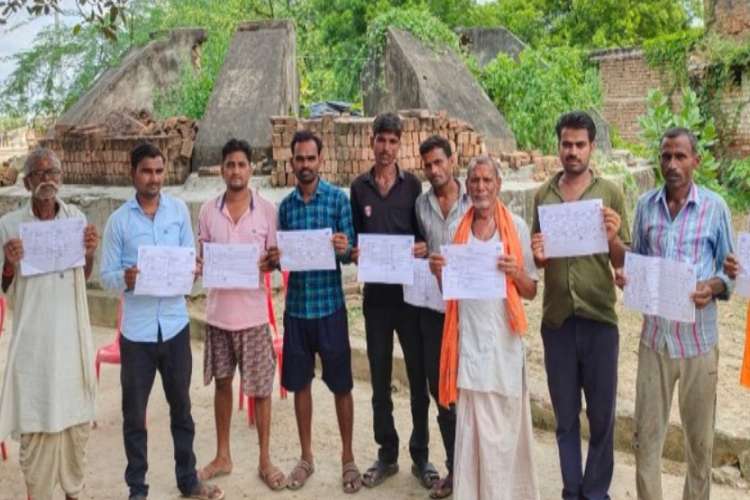
Land in India is often unusable as an economic asset. Patchy records and disputes keep it outside the formal system. In rural India, households hold valuable residential land but lack documents to convert it into credit. Banks avoid assets that are not clearly recorded or legally verifiable.
A working paper by the Economic Advisory Council to the Prime Minister points to a shift. Districts covered by the SVAMITVA Scheme have seen sanctioned loan amounts rise by 23%.
READ | Satellite data reshaping agriculture, rural credit
Rural credit constraints and collateral gaps
Policy has long tried to move borrowers away from moneylenders, traders, and informal networks. Banking access has expanded, but formal credit remains uneven. The constraint is collateral. Agricultural land is often recorded. Village residential property is not. Titles are unclear. Boundaries are unsurveyed. Ownership is not legally recognised.
This keeps a large share of rural wealth outside the lending system.
SVAMITVA Scheme’s intervention
SVAMITVA maps inhabited rural land using drones and issues property cards. It makes residential assets legible to the state and to banks. At launch, the government indicated it could unlock large economic value from rural property. The number is indicative. The underlying point holds: rural property is underused capital.

Earlier approaches focused on supply—more bank branches or subsidised loans. Instruments like priority sector lending and Kisan Credit Cards helped. They did not fix the collateral problem. SVAMITVA addresses that directly.
Evidence from implementation
The EAC-PM paper treats SVAMITVA as both a technical and institutional reform. It converts informal holdings into verifiable assets.
Using a difference-in-differences framework, the study finds a significant rise in loan sanctions in treated districts. Effects are stronger for previously excluded groups. Borrowers from backward classes show an additional 21% increase in sanctioned amounts. Among women, gains are concentrated at the lower end: the bottom 20% see a 24.6% rise.
READ | India’s credit landscape: Rural women drive economic change
For Muslim women, the study estimates a 5.8% increase over the common post-treatment effect. The overall 23% rise is not trivial in a system where credit growth is incremental. As of 2025, more than 3.17 lakh villages have been surveyed and 2.25 crore property cards issued.
Distributional gains and limits
The gains are not uniform. They are sharper among those earlier excluded from formal finance.
But formalisation has limits. Land is also social and political. Mapping can surface disputes. Survey accuracy matters. Formal titles do not guarantee lending. Banks must accept these records as collateral and adjust risk frameworks.
Legal status and enforceability
Property cards issued under SVAMITVA are not equivalent to conclusive land titles in most states. Land remains a state subject, and legal enforceability depends on state land laws, mutation systems, and dispute resolution processes.
In several states, SVAMITVA records are integrated with existing land record systems, but they do not automatically confer ownership free of contestation. This affects their use in secured lending. Banks require clarity on enforceability in the event of default, which in turn depends on state-level legal processes.
Bank adoption and credit transmission
Formalisation expands the pool of potential collateral. It does not ensure lending. Banks need standardised documentation, valuation norms, and internal risk frameworks to treat SVAMITVA property cards as acceptable security.
Without adjustments in credit appraisal and risk-weighting practices, the transmission from property records to credit flow can remain partial. Early gains in loan sanctions suggest movement, but scale will depend on institutional adoption across the banking system.
READ | Below-normal monsoon may unsettle India’s rural recovery
Fiscal implications for states
Clearer property records have fiscal consequences. They expand the base for property taxation and improve the ability of local governments to assess and collect revenues.
For panchayats and states, this can strengthen own-source revenues and support local infrastructure and service delivery. The effect is gradual and depends on state policies on property tax and valuation, but it links SVAMITVA to broader fiscal capacity.
The EAC-PM suggests a similar approach for urban areas. Informality is not confined to villages. Slums and peri-urban settlements face comparable gaps in documentation.
SVAMITVA is still being rolled out. Outcomes will depend on execution: coordination across central and state agencies, integration with land record systems, and alignment with banking practices. Without this, property cards remain documents, not collateral.
The scheme addresses a structural gap in India’s credit architecture. It links land records to finance. Early evidence shows an increase in loan sanctions, with stronger effects for underserved groups.
That is sufficient for cautious optimism. It also underlines a broader point: technical reforms at the base of the system can shift economic outcomes.