





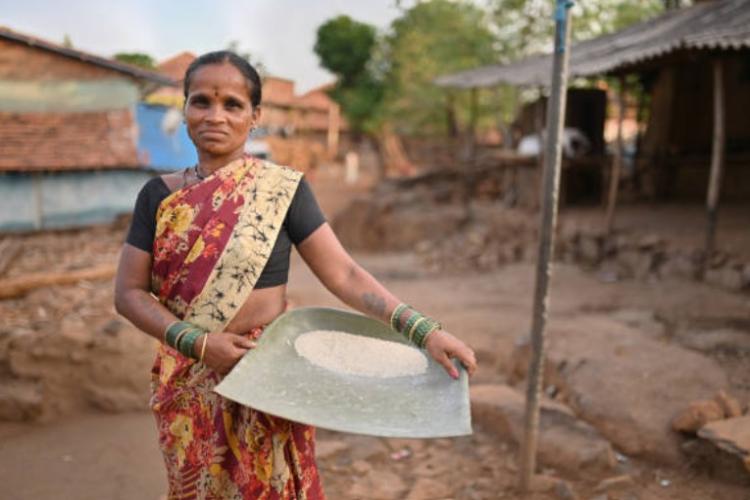
MGNREGA reform: For nearly two decades, the Mahatma Gandhi National Rural Employment Guarantee Act has functioned as something more durable than a welfare programme. It has operated as a basic insurance mechanism for rural India. When agriculture faltered, migration stalled, or informal jobs vanished, MGNREGA absorbed the shock. It set a national wage floor, financed village-level assets, and most importantly, it turned work into a legal right rather than an administrative favour. That legal spine, more than the number of workdays, explains why the programme endured political and fiscal cycles.
The Union government now proposes to replace it with the Viksit Bharat Guarantee for Rozgar and Ajeevika Mission (Gramin) Bill, the most significant reworking of rural employment policy since 2005.
READ | Government transforms MGNREGA into water security scheme
A higher ceiling, but a familiar constraint
The Bill begins from a plausible diagnosis. Rural India in 2025 is not rural India in 2005. It raises the annual employment cap from 100 to 125 days per household, at a time when real rural wage growth has been uneven and climate-related income shocks are becoming more frequent. Official data from the Ministry of Statistics and Programme Implementation (MoSPI) show that real rural wages have stagnated in several large states despite headline GDP growth.
But the historical record suggests that statutory ceilings were never the binding constraint. Data from the Ministry of Rural Development show that average employment under MGNREGA has remained between 45 and 55 days per household for most of its life, outside crisis years such as the pandemic. The problem has been approval and execution, not legislative ambition.
From automatic response to administrative discretion
The most consequential shift lies elsewhere. MGNREGA’s defining feature was its demand-driven design. A household demanding work had to be given employment within 15 days or paid an unemployment allowance. The proposed law, however, replaces this with normative funding, aligning rural employment with the architecture of centrally sponsored schemes.
READ | Rethinking rural inflation: New CPI series could boost MGNREGA wages
The Centre argues that this will improve fiscal predictability, reduce arrears, and allow better asset planning. That argument has administrative merit. Demand-driven schemes do complicate budgeting. But an employment guarantee that does not automatically expand during distress stops behaving like insurance. It becomes discretionary, exposed to rationing precisely when rural households need it most.
MGNREGA reform: Payment certainty weakened
What receives too little attention in the redesign is the payment system itself. Over the past five years, MGNREGA has been progressively tied to Aadhaar-Based Payment Systems, app-based attendance through the National Mobile Monitoring System, and centralised fund releases via the Single Nodal Agency.
Evidence from Ministry of Rural Development dashboards and independent evaluations shows that payment delays are now closely linked to Aadhaar seeding failures, biometric mismatches, and connectivity gaps. These frictions disproportionately affect older workers, women, and migrants. Under a rights-based framework, workers at least retained legal recourse. Under a norm-based system, procedural failures risk becoming silent exclusions.
An employment guarantee is only as credible as the certainty of payment. On that test, the redesign weakens what it does not explicitly repeal.
A heavier burden on states, unevenly borne
The Bill also alters the fiscal balance. States will now bear roughly 40% of total expenditure, compared to their current responsibility for material and administrative costs. The stated intent is to deepen state ownership and accountability.
Experience suggests caution. The Reserve Bank of India’s State Finances report (2024) shows that many poorer states already face constrained fiscal space and reduced spending autonomy due to the growing proliferation of centrally designed schemes. Wealthier states may be able to leverage the new framework effectively. Fiscally stressed states—often those with higher rural poverty—may struggle to provide their share. The redesign risks widening, rather than narrowing, regional disparities.
This shift revives an old and unresolved federal question. Should social protection be standardised from Delhi, or should states be trusted with flexible transfers and local design? MGNREGA struck a careful balance: uniform legal rights with decentralised execution. The new framework tightens central budget control while transferring greater fiscal risk to states. That asymmetry is unlikely to be stable over time.
Seasonal suspensions and fragile labour markets
One contentious provision allows states to suspend public works for up to 60 days during peak agricultural seasons. Critics have long argued that MGNREGA distorted rural labour markets by pushing up farm wages.
The evidence is more measured. Studies by the Institute of Economic Growth and the World Bank show that while MGNREGA did raise rural wages, the effects were uneven and not uniformly harmful, particularly in labour-surplus regions. Suspending public works assumes that private agricultural employment will be available at fair wages. In regions affected by mechanisation, fragmented landholdings, or declining farm profitability, that assumption is fragile.
Women and work: a quiet reversal risk
One of MGNREGA’s least acknowledged achievements has been its impact on women’s labour participation. Women consistently account for over 55% of total person-days, making it one of the few large-scale public programmes to deliver independent income to rural women.
Asset-heavy works, seasonal suspensions, and reduced labour intensity risk reversing this gain. Longer distances to worksites, higher physical intensity, and irregular availability all work against female participation. The loss is not only social. Women’s earnings under MGNREGA have acted as a stabiliser for household consumption in poor districts.
READ | MGNREGA: States should follow Jharkhand’s BHGY lead
Better assets, fewer jobs
The Bill’s strongest provision is its sharper focus on durable assets—water conservation, climate-resilient infrastructure, and mitigation works. Poor asset quality has been a persistent weakness of MGNREGA, documented by the Comptroller and Auditor General.
But there is a trade-off. Asset-focused programmes tend to privilege technical complexity over labour absorption. International experience shows that as asset standards rise, employment intensity often falls. In an economy with persistent rural underemployment, that balance matters.
Legal enforceability quietly diluted
What ultimately distinguishes the new framework from MGNREGA is not branding or budgeting, but legal enforceability. Under the existing Act, unemployment allowance and delayed payments are statutory liabilities, enforceable through courts and labour authorities. The new framework relies more heavily on administrative rules and guidelines, which can be altered without parliamentary scrutiny.
That shift changes the nature of the citizen–state contract. A guarantee that cannot be enforced in law is a promise, not a right.
No employment guarantee can substitute for broad-based job creation. India must generate better-paying work in agriculture, manufacturing, and services so that reliance on public works naturally declines. Until that happens, weakening the legal, payment, and gender foundations of the country’s most dependable rural safety net is a risk India should take with care.