





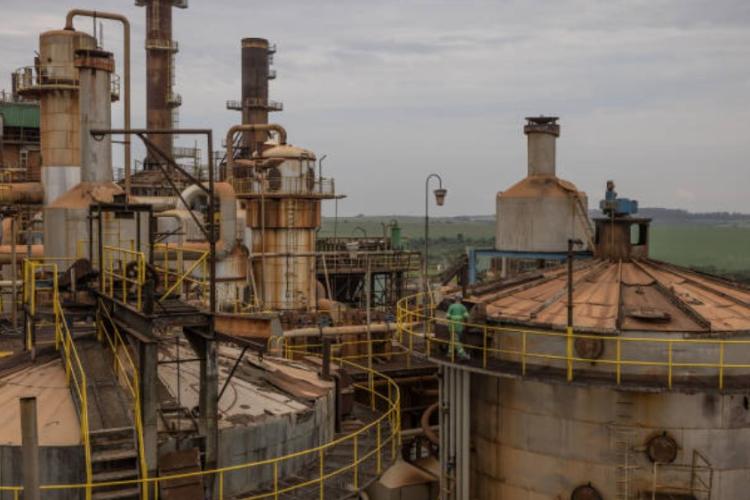
India’s ethanol blending policy: Ethanol has come a long way from being a byproduct of the sugar industry to becoming an important part of India’s energy security strategy. Petrol sold across the country now contains 20% ethanol, a target India reached five years ahead of the original 2030 deadline. Average blending rose from about 1.5% in 2013-14 to 19.2% in 2024-25 and 20% during November 2025-June 2026.
The transition required much more than mixing additional ethanol into petrol. The government created a market through administered procurement prices, widened the permitted feedstock base, encouraged distillation capacity and used oil marketing companies as the procurement channel. Ethanol procurement rose from about 38 crore litres in 2013-14 to more than 1,200 crore litres projected for 2025-26, while production capacity expanded to about 2,000 crore litres by 2026.
READ | Ethanol petrol needs trust before higher blends
Uttar Pradesh illustrates how the policy has reshaped the industry. The state is India’s largest producer of sugarcane and ethanol. Its ethanol output rose from about 1.8 billion litres in 2023-24 to 2.23 billion litres in 2024-25, an increase of more than 23%. Current investment proposals in the state’s distillery and alcohol supply chain exceed ₹1,000 crore. Allied Blenders and Distillers is investing ₹600 crore in expanding its manufacturing footprint, including a greenfield distillery.
Ethanol blending policy
India’s ethanol policy has changed the economics of the sugarcane value chain. A sugar mill no longer has to depend solely on sugar sales. Depending on government allocations and market conditions, sugarcane juice, sugar syrup and molasses can be diverted towards ethanol. The Department of Food and Public Distribution permits ethanol production from B-heavy and C-heavy molasses, sugarcane juice, sugar and sugar syrup. Grain-based routes using damaged foodgrains, maize and surplus Food Corporation of India rice have also been encouraged.
The NITI Aayog roadmap for ethanol blending anticipated the need for both molasses-based and grain-based capacity. It also highlighted the water implications of relying heavily on sugarcane. Its assessment estimated that producing one litre of ethanol from sugar could involve about 3,000 litres of water, based on the water required to cultivate the crop and produce sugar. The roadmap therefore recommended shifting some cultivation towards less water-intensive crops and promoting advanced biofuels, including second-generation ethanol from agricultural residues.
The programme has also produced measurable energy-security gains. Government estimates show that ethanol blending between ESY 2014-15 and July 2025 substituted about 245 lakh metric tonnes of crude oil and generated foreign-exchange savings of more than ₹1.44 lakh crore. The programme has created a predictable source of demand for sugarcane and other permitted feedstocks.
READ | India’s ethanol blending push faces US trade pressure
The achievement, however, needs to be put in perspective. E20 means that one-fifth of the petrol pool is ethanol. Four-fifths remains petrol. Ethanol blending has reduced India’s exposure to imported oil at the margin, but it has not removed that dependence.
Nor is it automatically cheaper than petrol. Its expansion has depended heavily on government policy. For ESY 2024-25, the administered ex-mill price was ₹65.61 a litre for ethanol made from sugarcane juice, sugar or sugar syrup, ₹60.73 for B-heavy molasses and ₹57.97 for C-heavy molasses. Prices for some grain-based ethanol are determined by the oil marketing companies.
That procurement framework has given distillers a basis for investment. If producers expect OMC procurement to continue and feedstock economics to remain viable, investment in plants, storage and logistics becomes easier to justify. The expansion underway in Uttar Pradesh illustrates how that policy signal has translated into capacity.
The vehicle fleet becomes the constraint
The more difficult question begins after E20. India’s ability to raise blending further will depend on more than the number of distilleries it can build.
Ethanol contains less energy per litre than petrol, so fuel efficiency can fall when vehicles designed for lower blends use E20. The NITI Aayog roadmap estimated a 6-7% efficiency loss for four-wheelers originally designed for E0 and calibrated for E10 when using E20. It also noted that changes to engine hardware and tuning can reduce the penalty. For vehicles designed and calibrated for higher blends, the impact is smaller.
That makes vehicle technology an important constraint on further expansion. India can produce enough ethanol and still face difficulties if fuel specifications, vehicle design, storage systems and retail infrastructure do not evolve together.
The government itself has recognised that higher blending cannot simply be declared. In July 2026, it said that no decision had been taken to increase nationwide blending beyond 20%. Any future move to higher blends, it said, would follow scientific and technical studies and consultations with automobile manufacturers, oil marketing companies and research institutions. E85 has been introduced for certified flex-fuel vehicles, but this does not constitute an increase in the nationwide base blend.
This is an important distinction. Earlier projections of E30 or higher blending should not be treated as current national targets. The immediate policy position is E20, with higher blends subject to further decisions.
The original NITI Aayog roadmap had anticipated a transition problem. It recommended retaining E10 as a protection grade for older vehicles while E20-compatible vehicles entered the market. The Society of Indian Automobile Manufacturers had also sought advance notice of fuel changes because manufacturers require time to develop, test and homologate vehicles for higher blends.
That transition is now part of the policy challenge. India’s vehicle fleet contains millions of vehicles designed before E20 became the national standard. Newer vehicles are increasingly compatible with E20, while older vehicles remain in use. The relevant measure of the programme for these consumers is therefore not simply the blending percentage at the pump. It is the cost of operating and maintaining the vehicle.
READ | India’s ethanol blending strategy faces a flex-fuel roadblock
Higher blending needs a different policy test
India has demonstrated that a government can create demand for a new fuel, alter feedstock economics and mobilise private investment at scale. The next question is whether the same policy framework can accommodate the interests of motorists and automobile manufacturers without weakening the energy-security gains already achieved.
The economics also deserve closer scrutiny as the programme expands. Ethanol’s administered prices support producers and agricultural suppliers, while its lower energy content affects the amount of fuel required to travel a given distance. A policy that evaluates ethanol only by its price per litre can therefore miss the consumer’s actual calculation: the cost of travelling a kilometre.
The feedstock question is equally important. Sugarcane has helped India scale ethanol rapidly because the country already possessed a large sugar industry and distillation infrastructure. But the NITI Aayog roadmap’s warning about water use remains relevant. Greater reliance on maize and other feedstocks can diversify supply, while second-generation ethanol offers a route that uses agricultural residues rather than diverting crops into fuel.
For now, the government has reached a sensible point at which to assess what E20 has delivered before committing to a higher nationwide blend. The evidence already shows substantial investment, higher domestic ethanol production and lower crude-oil use. The next phase should establish how those gains interact with vehicle efficiency, consumer costs, feedstock availability and water use.
India has completed the first major stage of its ethanol programme: creating demand, building production capacity and reaching E20. The harder policy question is whether the country can make the economics of the next stage work across the entire system, from farms and distilleries to engines and motorists. That question cannot be answered by adding more distilleries alone.