





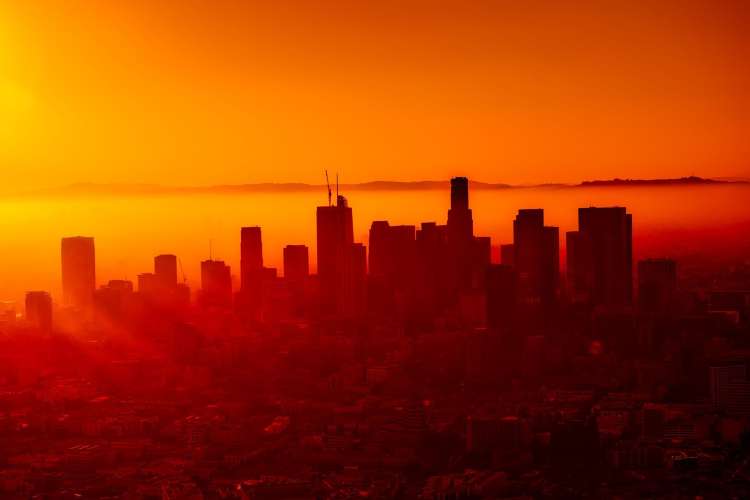
Delhi’s urban heat island: Every summer, Delhi discovers that it is hot. Meteorologists are summoned to television studios. Climate change is invoked. The monsoon arrives and the question fades: why do some residents face a much harsher city than others?
This May, Delhi’s land surface temperature touched 54.61°C in some areas. That is not the air temperature reported by the India Meteorological Department. It is the heat stored in roads, roofs and walls, the heat that radiates at night, and the heat that makes sleep without a cooler a health risk. Centre for Science and Environment found the highest surface temperatures in Karala, Mundka, Begumpur, Bawana, Chhawla and Khera.
Climate change is part of the story. El Nino and a warming planet are part of it too. Delhi’s more local failure is less convenient. The city has been built to retain heat. Three decades of housing neglect have produced a slow oven for poorer residents.
READ I Heatwaves and floods expose India’s urban policy gaps
Delhi urban heat island
Concrete and asphalt store solar energy through the day and release it after sunset. Soil, water and tree cover cool a city through shade and evaporation. Remove enough of them, and the city loses its night-time recovery. The next day begins from a hotter base.
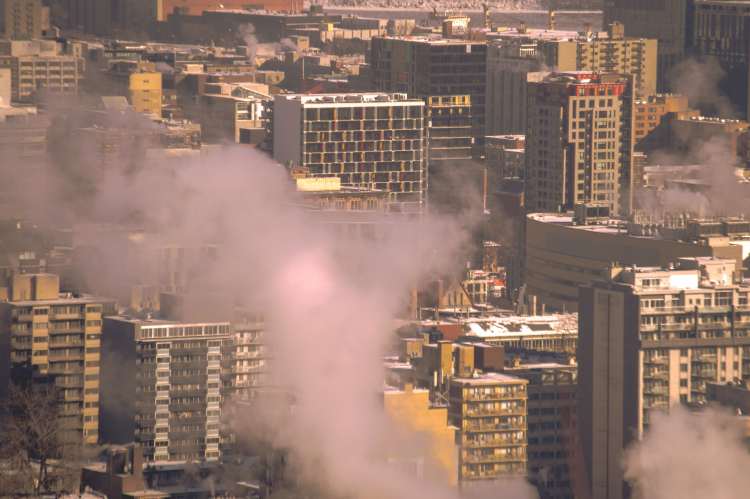
CSE’s June 2026 report found that 75.78 per cent of Delhi’s area is persistently heat-stressed. Green cover fell from 25.36 per cent in 2014 to 14.14 per cent in 2024. Waterbody footprints fell from 1.25 per cent to 0.99 per cent. Delhi’s core cools 3.8°C less than its peri-urban edges, which leaves dense neighbourhoods carrying heat through the night.
This is not an accident of weather. It is the physical form of the city. Dense low-rise buildings, narrow lanes, little cross-ventilation, vanished water bodies and poor tree cover have made parts of Delhi thermally hostile.
READ I Heatwaves push peak power demand past 270 GW
Unauthorised colonies and Delhi heat
Delhi’s housing market has long pushed migrants and low-income families into unauthorised colonies. DDA says around 40 lakh residents live in such colonies. The Centre’s April 2026 note on regularisation puts the figure at 45 lakh, and covers 1,511 of Delhi’s 1,731 unauthorised colonies for regularisation on an “as-is, where-is” basis.
These neighbourhoods were built outside the planning framework that fixes road width, open space, parks, drainage and public amenities. The city tolerated them because it was cheaper than providing affordable legal housing at the scale Delhi needed. Regularisation became an election-time promise. Planning did not follow.
The thermal cost is now visible. Where there is no room for trees, there is no shade. Where water bodies were filled, there is no cooling sink. Where lanes are too narrow and houses press against each other, heat has nowhere to go. The hottest neighbourhoods are the ones the state failed to plan for.
Mundka and Bawana do not decide Delhi’s planning priorities. Nor are they where heat deaths are usually counted. Yet they are where many construction workers, street vendors, factory hands, domestic workers and delivery workers live or work.
READ I Heatwaves and ageing in India
Informal workers face Delhi heat
CSE says 80 per cent of Delhi’s workforce is in the informal sector. For these workers, heat protection is not a clause in an employment contract. A worker who stays home in 45°C heat loses wages. A worker who goes out risks illness.
The Lancet Countdown’s 2025 India data sheet estimates that heat exposure caused India to lose 247 billion potential labour hours in 2024, a record 419 hours per person and 124 per cent more than the 1990-99 level. Agriculture accounted for 66 per cent of the loss and construction for 20 per cent. Delhi’s outdoor and semi-outdoor workers sit inside that national number, but face a sharper urban exposure.
Heat action plans often stop at advisories, drinking water points and temporary shelters. These are useful during a spell of extreme heat. They do not change the surface temperature of a roof, the absence of shade on a street, or the heat trapped in a room at midnight.
Regularising Delhi colonies
Cool roofs should be standard in Delhi’s building rules, especially in heat-stress wards. Tree cover cannot be waived in informal settlements because the lanes are narrow. That is where it is most needed. Water bodies need enforceable protection, not post-facto sympathy after encroachment.
Regularisation is unavoidable. The residents of unauthorised colonies are not leaving. But legal recognition without retrofitting will freeze the same heat risk into law. The April 2026 “as-is, where-is” approach should be tied to roof treatment, lane-level shade plans, waterbody protection and minimum ventilation norms wherever reconstruction is allowed.
Delhi’s heat is often described as a climate problem arriving from outside. In the colonies where people suffer most, it has an address and a paper trail. It was made through planning files, housing failures and regularisation promises spread over decades. The monsoon will lower the temperature. It will not fix the city.
Aashriya Jain is an intern, and Dr Isha Sharma Assistant Professor in Economics at School of Social Sciences and Fellow, Centre for Studies in Population and Development, at Christ University Delhi NCR Campus.