







Need robust supply chains for further expansion of exports: India’s electronics exports rose 44% to $31.97 billion in April–September 2026, the commerce ministry reported on November 17. Smartphones still accounted for more than half the total, but other electronics exports grew faster, helped by shipments of printed circuit boards, communications equipment and storage devices.
The figures show that India is finding buyers for a wider range of electronics. How much resilience that gives the country depends on where manufacturers get their inputs and how quickly they can replace a supplier or reroute a shipment. That is the test for an industrial policy that has so far rewarded the expansion of production.
READ I India-US trade deal needs enforceable tariff terms
How disruptions travel through supply chains
A company’s supply chain extends well beyond the factory gate. It begins with raw materials, passes through firms that refine them or turn them into parts, and continues through assembly, warehousing and delivery. The international division of labour has allowed companies to locate each stage where costs, infrastructure and access to suppliers suit them best. China’s rise as a manufacturing centre illustrates the advantage of having many of those suppliers close together. A firm can source parts from several countries and still depend on a single industrial cluster for a component it cannot readily replace.
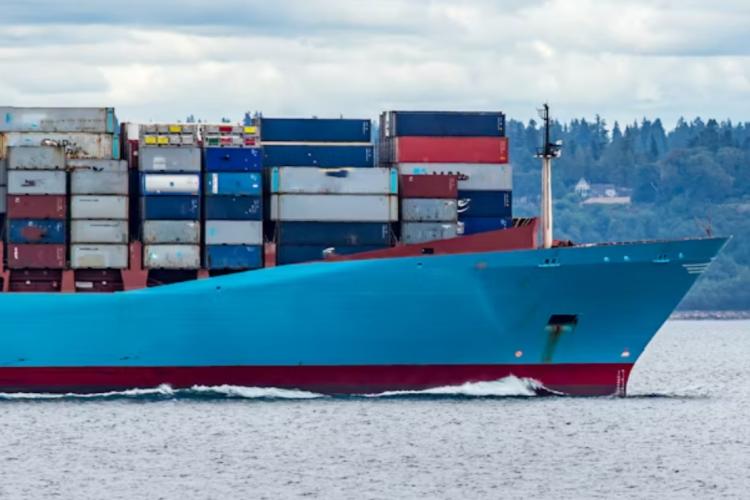
Transport routes can create a similar concentration of risk. Attacks by Yemen-based Houthis on commercial shipping from late 2023 prompted carriers to divert vessels away from the Red Sea and the Suez Canal around the Cape of Good Hope, causing huge supply chain disruptions. The Strait of Hormuz presents a different problem. In the first half of 2025, it carried oil flows equivalent to about a fifth of global petroleum liquids consumption. Pipelines that bypass the strait can take only a portion of those flows. A container line can sail a longer route at a cost. For some Gulf oil cargoes, the physical alternatives are much more limited.
READ I Quad Manila Summit pledges face a supply chain test
Firms need alternatives they can use
Digital tracking can tell a manufacturer where a shipment is and whether the stock on hand will last until it arrives. Keeping a production line running may require a second supplier whose parts have already passed testing. Manufacturers need to know where their direct suppliers buy critical inputs, since two vendors can depend on the same producer further upstream. Sharing inventory and delivery data with suppliers gives firms more time to act. The value of that information depends on whether arrangements for alternative supply are already in place.
Governments can help by simplifying customs procedures and making it easier to move freight between ports, roads and rail. They can also support reserve stocks or alternative sources where a prolonged interruption would be costly, as with certain pharmaceutical ingredients or energy supplies. There is a case for domestic capacity in some of these markets. Applying the same policy across industries would raise costs and could leave firms dependent on a small number of domestic suppliers. The OECD’s assessment of supply chain resilience makes the case for keeping trade open while reducing specific dependencies.
READ I BRICS supply chain resilience needs a practical framework
Manufacturing incentives face a supplier test
The production-linked incentive scheme gives India a way to attract manufacturing as companies diversify their operations. The rise in exports of mounted circuit boards points to activity beyond finished handsets. Export values, however, measure what is shipped. They leave open how much value is added in India and whether manufacturers can replace imported inputs at short notice. A review of the incentives should look at which components Indian firms can supply competitively and where a shortage would still hold up production.
The same care is needed in judging logistics reforms. PM Gati Shakti and the National Logistics Policy aim to improve freight planning and coordination. A study by the Department for Promotion of Industry and Internal Trade and the National Council of Applied Economic Research estimated logistics costs at 7.97% of GDP in 2023–24. That estimate gives policymakers a benchmark. For a manufacturer deciding how much stock to hold, a more immediate measure is how often a consignment misses its scheduled connection or spends an extra day at port.
The Quad can widen access to critical inputs
India, Japan and Australia launched their Supply Chain Resilience Initiative in April 2021, after the pandemic exposed dependence on concentrated sources of essential goods. The Quad, which also includes the United States, adopted a critical minerals framework in May 2026. At their November 17 summit in Manila, the leaders announced an inaugural business forum. It gives companies a place to discuss what stands between a proposed minerals project and a commercial supply contract.
For Indian manufacturers, the value of these partnerships will depend on whether they can buy processed materials at prices that keep their products competitive. A mine in a partner country gives buyers little room to switch if its output still has to pass through the same refinery. The practical test for the Quad is whether a buyer can sign a contract today for material that would still reach its factory during a disruption.
READ I Ease of doing business is measured in days

Dr Ravindran AM is an economist based in Kochi. He has more than three decades of academic and research experience with institutions such as CUSAT, Central University of Kerala, Cabinet Secretariat - New Delhi, and Directorate of Higher Education Pondicherry.