





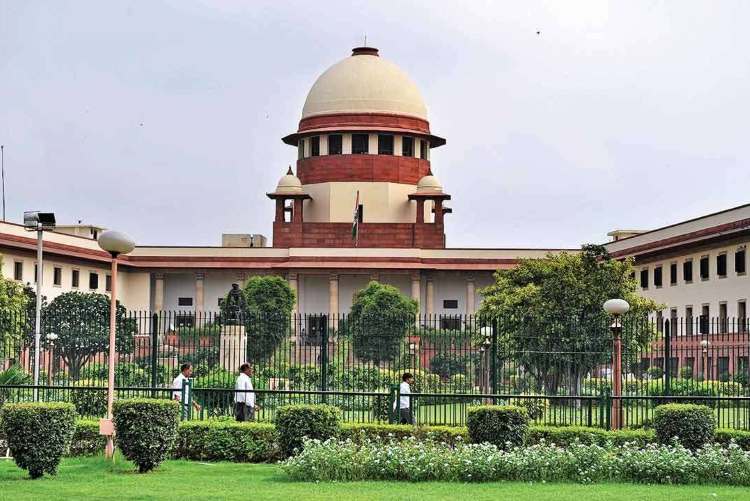
India’s Supreme Court has for the first time placed menstrual health squarely within the protection of Article 21. In a public interest litigation filed by Dr Jaya Thakur, the Court held that the right to life includes the right to menstrual health, and issued binding directions to all schools- government, aided, and private—to provide free sanitary pads, functional gender-segregated toilets, safe disposal systems, and compulsory menstrual health education.
This is not an incremental welfare order. By reading menstrual health into Articles 14, 21, and 21-A, and anchoring enforcement in the Right of Children to Free and Compulsory Education Act, 2009, the Court converts a long-treated policy concern into a constitutional entitlement tied to dignity, equality, and education.
The judgment also does something international law has largely avoided. Where global treaties approach menstruation indirectly—folded into sexual and reproductive health or water and sanitation—the Court names menstrual health explicitly and attaches enforceable obligations. In doing so, it moves India from compliance to doctrinal leadership.-
READ I Healthcare allocation rises, but structural gaps remain
Menstrual health crisis the court confronted
The petition did not arise in abstraction. Girls have been barred from examinations for menstruating. A child in rural India was killed by her brother after menarche was misread as illness or possession. These are extreme outcomes of a wider failure: the routine absence of menstrual hygiene management education and infrastructure in schools.
India’s policy response over the past decade has been fragmented. Schemes under the National Health Mission, SABLA, Rashtriya Kishor Swasthya Karyakram, Swachh Vidyalaya, and multiple state pad-distribution programmes have existed in parallel. Implementation has not kept pace. Studies repeatedly document uneven funding, weak monitoring, supply failures, and a silence around menstruation that persists in classrooms and households.
READ I Duopoly in aviation sector cannot be fixed by CCI action alone
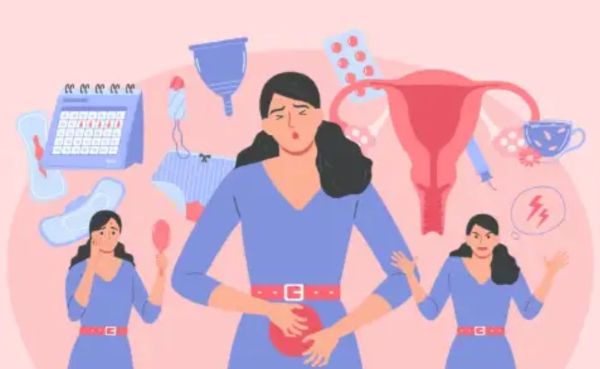
The consequences are measurable. An estimated one-fifth to one-quarter of adolescent girls miss several school days each cycle. Many encounter menarche without prior information. The burden is heavier for rural students, Scheduled Castes and Tribes, children with disabilities, and those in government schools with inadequate water and sanitation.
International treaty bodies have flagged these failures for years. CEDAW’s 2017 review of India pointed to gaps in RTE funding, teacher training, and sexual and reproductive health education. The CRC has repeatedly urged integration of menstruation into compulsory curricula for all students. The Thakur petition translated these critiques into a constitutional claim.
READ I India-US trade framework: The coercion behind concessions
Education as a multiplier right
The Court’s starting point is education as a “multiplier right”. Education is not reduced to enrolment or classroom access. Drawing on ICESCR Article 13 and CRC Articles 28–29, the judgment treats attendance, participation, and continuity as integral to the right itself.
When menstruation forces girls to miss school because toilets are unusable, pads unaffordable, or privacy absent, the promise of free and compulsory education collapses. Menstrual barriers are therefore not peripheral inconveniences. They are direct violations of Article 21-A.
Substantive equality, not formal neutrality
Under Article 14, the Court explicitly adopts substantive equality. Treating boys and girls “the same” by ignoring menstruation entrenches disadvantage. Menstrual health becomes the paradigmatic structural barrier: a burden imposed only on girls, with cumulative effects on education and opportunity.

This doctrinal move legitimises targeted measures—separate toilets, free products, menstrual literacy—without apology. The Court also recognises compounded exclusion, noting that poverty, disability, rural location, and tribal status multiply disadvantage. The alignment with CEDAW’s approach to indirect discrimination is deliberate.
Article 21: Dignity, privacy, and health
The doctrinal core of the judgment is its clear holding that menstrual health is part of the right to life. Dignity is defined in concrete terms: freedom from humiliation, exclusion, and avoidable suffering. Unsafe or undignified menstrual management produces exactly these harms.
Privacy is treated as inseparable from dignity. The State’s obligation is both negative and positive—not merely to refrain from intrusion, but to create conditions that allow privacy to exist. Toilets with water, privacy screens, and disposal facilities are not amenities. They are constitutional requirements.
The reasoning builds on earlier expansions of Article 21, but applies them with unusual specificity. Menstrual health is placed within the highest attainable standard of sexual and reproductive health, with education and information treated as essential components.
Free education, properly understood
The Court makes two decisive interpretive moves on Article 21-A and the RTE Act. First, “free” education is not limited to tuition. It includes costs and barriers that prevent completion of elementary education, including the absence of sanitary products and supporting infrastructure.
Second, RTE norms bind all schools. Private institutions face de-recognition for non-compliance. Government schools trigger direct state accountability. Menstrual hygiene thus shifts from discretionary welfare to a non-derogable statutory and constitutional obligation.
This gives concrete effect to CRC obligations on child participation, health, and education, enforced through the National Commission for Protection of Child Rights and state commissions.
Beyond international law’s indirection
International human rights law recognises the interdependence of education, health, sanitation, and gender equality, but treats menstruation obliquely. CRC, ICESCR, and CEDAW subsume it within broader frameworks of SRH and WASH. Even CEDAW’s General Recommendation 36, while explicit about products and sanitation, stops short of recognising menstrual health as a standalone right.
The Supreme Court goes further. By naming menstrual health as an Article 21 entitlement and prescribing enforceable duties—free ASTM-compliant pads, monitored toilets, mandatory curricula—it constitutionalises what treaty bodies exhort but cannot compel. India moves from reporting compliance to setting a doctrinal benchmark.
From doctrine to entitlements
The remedial directions are unusually precise. Every school must provide functional, gender-segregated toilets with water, privacy, disability access, and handwashing facilities. Free oxo-biodegradable sanitary napkins meeting ASTM D-6954 standards must be available through vending machines or designated points. Schools must establish menstrual hygiene corners stocked with emergency supplies.
Disposal systems must comply with Solid Waste Management Rules, with covered bins and regular maintenance. NCERT and SCERTs are directed to integrate menstruation, puberty, and conditions such as PCOS into curricula designed to dismantle stigma. Teacher sensitisation is mandatory. Public campaigns are mandated across media platforms.
These are framed as minimum constitutional standards, not optional scheme add-ons.
Accountability, not symbolism
The Court is explicit about India’s implementation deficit. To counter it, the judgment constructs a layered accountability framework. District Education Officers must conduct annual inspections focused on menstrual hygiene infrastructure and education. These inspections must incorporate anonymous student surveys, embedding lived experience into enforcement.
Inspection reports must accompany RTE notices. The National and State Commissions for Protection of Child Rights are empowered to recommend corrective action. A continuing mandamus requires the Union government to coordinate and report state compliance within three months, preventing diffusion of responsibility.
From judgment to classroom
The judgment answers a long-standing question in menstrual health advocacy: can constitutional law reach the classroom? By giving precise content to dignity, equality, education, and health, the Court makes menstrual justice justiciable.
Whether this succeeds will depend on budgets, administration, and political will. Progress will not be measured in law reports, but in classrooms where girls no longer miss school, toilets are usable, teachers speak without euphemism, and menstruation is treated as biology rather than taboo.
The Court has left little ambiguity. The choice before the State is compliance or contempt—implemented through infrastructure, funding, and oversight, or exposed by its absence.
Justy Thomas is the Founder of the initiative M for Menstruation and Managing Director of Connecting Health Education Equality Rights (CHEER) Foundation.