





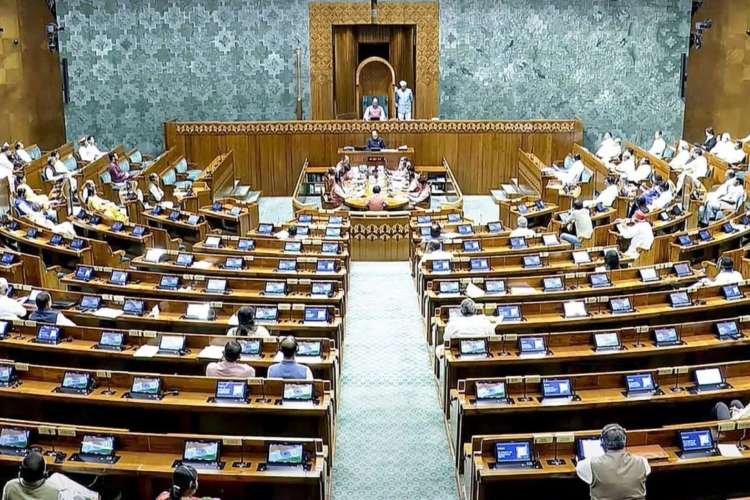
Lok Sabha expansion hits a wall: As the noise around last week’s parliamentary exchanges recedes, including a rare legislative setback for the Modi government, the core issue is clearer. Strip away delimitation anxieties, the north–south divide, and the question of whether women’s reservation can be accommodated within current capacity. What remains is simpler: what does expanding the Lok Sabha to 850 seats mean for representation?
Half a century ago, Rein Taagepera proposed a rule of thumb. The size of a legislature, he argued, tends to approximate the cube root of a country’s population. The logic was functional: as populations grow, the trade-off between communication and representation requires predictable scaling.
The theory has been debated, with some work suggesting a square-root relationship. Even so, applying the cube-root rule to India’s 2011 population of 1.21 billion yields a lower house of about 1,065 members. By that measure, 850 is not excessive. It underlines how long India has operated with a representation deficit.
READ I Energy poverty challenge in the net-zero transition
Uneven representation across states
The imbalance is sharper at the state level. In several states, the share of Lok Sabha seats falls short of population share. Representation is diluted. Four of the ten most populous states fall into this category.
Across nine states, each MP represents more people than the national average of 2.2 million. In Bihar, the figure is about 2.7 million and likely higher with updated data. These are not just large constituencies. They are unwieldy.
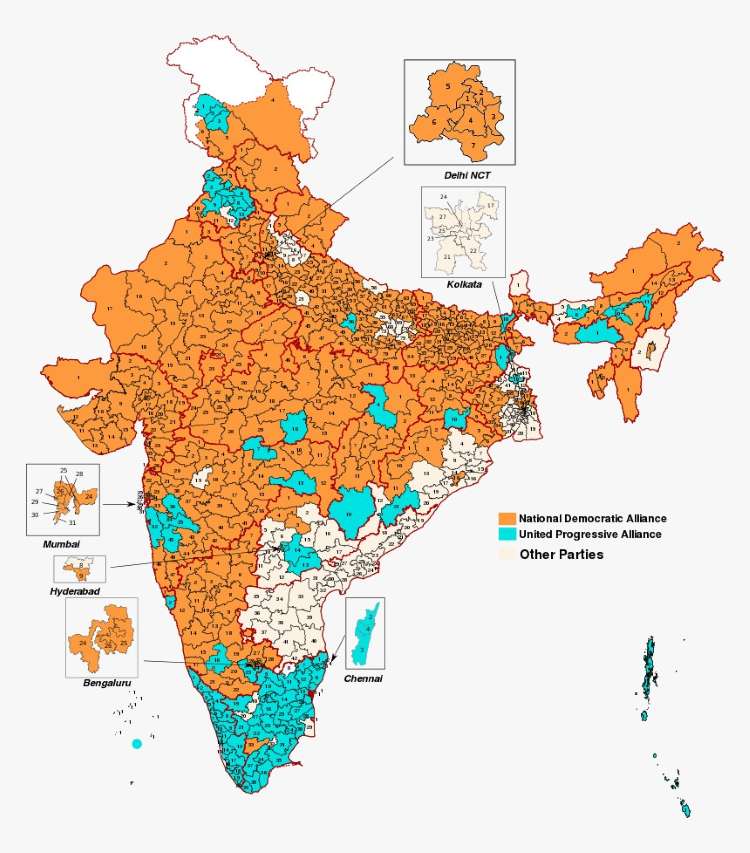
At that scale, communication breaks down. Taagepera’s premise begins to fail. Large constituencies widen the scope for selective neglect. Areas outside an MP’s political base can be ignored. Smaller constituencies reduce that space.
READ I Climate migration is already reshaping India’s cities
Formal versus substantive representation
Numbers do not settle the question. Hannah Pitkin’s distinction between formal and substantive representation complicates the arithmetic. Increasing seats improves the formal aspect: the legal fact of representation. It does not ensure substantive representation: whether MPs can act effectively for constituents.
An MP representing 2.2 million people cannot meet this expectation through parliamentary attendance alone. The visible work inside the Lok Sabha is a fraction of the role.
READ I Fiscal deficit risks rise as subsidy pressures return
Expanding workload of MPs
The job spans legislation, constituency service, party obligations, bureaucratic oversight, and public engagement. Constituency offices reflect this. Citizens arrive with documents seeking intervention, access, or resolution. Public meetings are rarely ceremonial. They often involve direct mediation of livelihoods or function as grievance forums. MPs link citizens to administrative systems that remain opaque.
Institutional roles add to this load. District Development Coordination and Monitoring (DISHA) Committee meetings are among the few forums where bureaucratic accountability is tested in public. MPs also inspect projects and influence local development planning under schemes such as the PM Khanij Kshetra Kalyan Yojana.
Political science frames this as a tension between relational and functional roles. The relational role is proximity: presence, responsiveness, visibility. The functional role is institutional: lawmaking, scrutiny, policy.
In India, the relational role dominates. The current debate on expanding Lok Sabha seats focuses on the functional- legislative efficiency and fiscal cost. It largely ignores the existing relational burden that expansion is meant to ease.
Lok Sabha expansion – A delayed correction
If representation is more than arithmetic, this imbalance matters. A system where one MP represents nearly three million people is stretched and diluted.
Opponents of Lok Sabha expansion, however, frame the issue less as a correction and more as a structural risk. They point to the impending end of the constitutional freeze on delimitation in 2026, after which seat redistribution will reflect post-1971 population changes.
This, they argue, could shift political weight toward faster-growing northern states, unsettling the federal balance that has held since the freeze was imposed through the 42nd Amendment and later extended.
There are also concerns about whether a significantly larger House can function effectively. More members do not automatically translate into better scrutiny, especially when parliamentary time is already compressed. Without parallel strengthening of committee systems, research support, and procedural discipline, expansion risks adding scale without improving substance.
The Lok Sabha expansion is not a reform. It is a correction. The delay is harder to justify than the expansion.
Sakshi Abrol is a doctoral researcher at Right Livelihood College (RLC), University of Bonn, Germany.