





Iran war exposes the limits of monetary policy: The war between the United States and Iran has become a test of monetary policy. The conflict, which began with US and Israeli strikes on 28 February 2026, has disrupted energy supplies, raised inflation and prompted central banks to tighten interest rates. Yet higher borrowing costs cannot produce more oil or reopen the Strait of Hormuz. They can suppress demand and prevent temporary price increases from becoming entrenched. The distinction is important for energy-importing economies such as India, where the cost of containing inflation may include slower investment, weaker consumption and pressure on public finances.
The economic consequences are those of a negative supply shock. Oil becomes more expensive because less is available, or because buyers fear further disruption. Production costs rise across industries, reducing the goods and services that economies can supply at prevailing prices. Monetary tightening can contain the subsequent increase in demand-driven inflation, but cannot reverse the initial disruption.
READ | Provoking Iran raises questions of UN Charter violations and unlawful aggression
Strait of Hormuz and the oil supply shock
Before the February strikes, the Strait of Hormuz carried roughly one-fifth of global petroleum liquids consumption and a substantial share of international liquefied natural gas trade. The disruption to commercial shipping exposed the vulnerability of economies dependent on imported energy.
Oil demand and supply respond slowly to price changes. Motorists cannot immediately abandon petrol vehicles, industries cannot quickly replace petroleum-based inputs, and producers cannot bring new capacity online within weeks. Even a relatively small reduction in available supplies can therefore produce a large price increase.
Brent crude climbed towards $119 a barrel in the weeks following the strikes. Prices subsequently retreated as the United States and Iran reached an agreement in June to end the fighting, before renewed hostilities and restrictions on shipping reversed part of the decline. The June understanding collapsed within weeks, leaving the conflict unresolved.
The price swings show how expectations influence the oil market. Traders price the probability of future supply losses alongside current availability. A diplomatic agreement can reduce that risk premium quickly, although rebuilding inventories and restoring confidence in shipping routes may take longer.
Consequently, even an agreement to reopen the strait would not necessarily restore earlier prices immediately. Governments and companies may retain larger precautionary inventories, while insurers and shipping operators continue to charge for the possibility of renewed disruption.
READ | The Iran crisis runs through banks as much as oil routes..
Why higher interest rates cannot solve an oil shortage
Central banks face an uncomfortable choice when energy prices rise. Allowing the initial increase to pass through the economy protects output, but risks encouraging workers and companies to expect sustained inflation. Raising rates can contain those expectations, though at the expense of employment and investment.
The International Monetary Fund’s October 2026 World Economic Outlook projects global inflation at 4.7% this year, easing to 4.1% in 2027. Global growth is expected to slow to 3.1% in 2026 before recovering to 3.4% next year. Energy importers remain particularly vulnerable.
Orthodox monetary theory recommends looking through a temporary supply shock, provided inflation expectations remain anchored. If higher energy costs begin influencing wage negotiations and prices across the economy, tightening becomes more defensible.
The distinction is difficult in practice. Higher transport costs feed into food and manufactured goods. Businesses may raise prices to recover expenses without any increase in underlying demand. Central banks must determine whether these changes represent unavoidable adjustments to a supply shock or the beginnings of persistent inflation.
The cost of getting that judgment wrong can be substantial. Economists use the sacrifice ratio to describe the loss of output associated with reducing inflation by one percentage point. When inflation originates in constrained energy supply, monetary policy may require a larger reduction in domestic demand to achieve the same result.
The case for tightening is therefore conditional. Evidence of broadening price pressures and rising inflation expectations can justify action. An indiscriminate response risks sacrificing growth without materially reducing the economy’s dependence on imported oil.
READ | Mecca Joint Defence Agreement raises stakes for Iran, India
Rising bond yields add to the fiscal burden
The consequences of the conflict extend into government borrowing costs. Rising US Treasury yields reflect several possible influences, including inflation expectations, anticipated monetary tightening, fiscal deficits and the additional compensation investors demand for holding long-term bonds.
These explanations carry different implications. If yields are responding mainly to the energy shock, easing oil prices should eventually reduce inflation expectations and borrowing costs. If investors are demanding a higher premium for financing persistent fiscal deficits, yields could remain elevated even after energy markets stabilise.
The war itself may aggravate fiscal pressure. Military expenditure, higher interest payments and support for households affected by energy prices can increase government borrowing requirements. The IMF’s April 2026 analysis of defence spending found that military build-ups have historically involved substantial increases in expenditure, much of it financed through debt.
Higher sovereign borrowing costs can also raise financing costs for businesses. Governments that subsidise fuel prices extensively may protect consumers temporarily, but risk worsening deficits and adding to the pressures already affecting bond markets.
For emerging economies, the interaction is more difficult. Higher US yields can attract international capital towards dollar assets, weakening their currencies and raising the local-currency cost of imported oil. Central banks must then consider exchange-rate stability alongside domestic growth and inflation.
India’s oil dependence exposes the rupee
India illustrates the difficulties facing energy importers. The country depends on overseas suppliers for nearly nine-tenths of its crude requirements. Higher international prices increase its import bill, while a weaker rupee makes those purchases more expensive in domestic currency.
The pressure was visible in the April-June 2026 balance of payments. India’s petroleum, oil and lubricants imports rose to $60.6 billion from $49.2 billion a year earlier. The merchandise trade deficit widened to $86.1 billion from $68.9 billion.
The current account deficit nevertheless remained relatively modest at $4.2 billion, or 0.5% of GDP, because services exports and remittances offset much of the merchandise trade gap. Net services receipts reached $51.6 billion, compared with $47.9 billion a year earlier.
Foreign capital flows were less reassuring. Portfolio investment recorded a net outflow of $9.6 billion during the quarter, compared with an inflow of $1.6 billion a year earlier. Foreign exchange reserves declined by $8.1 billion on a balance-of-payments basis, excluding valuation changes. Including valuation effects, the decline was $22.5 billion.
These figures demonstrate both India’s resilience and its exposure. A large services surplus and remittances provide protection against imported energy inflation. Portfolio outflows, however, can complicate financing even a manageable current account deficit.
Nor can the effect of higher oil prices be measured by the import bill alone. Expensive crude raises costs for transport, fertilisers, petrochemicals and manufacturers. Where domestic fuel prices are restrained, some of the burden shifts to oil marketing companies or public finances. Where prices are allowed to adjust, households and businesses bear more of the immediate cost.
The Reserve Bank of India faces an additional constraint. With relatively open capital flows, it cannot indefinitely stabilise the exchange rate while keeping monetary conditions insulated from changes in global interest rates. Intervention can smooth currency movements, but sustained external pressure may require adjustments in interest rates, liquidity or the exchange rate.
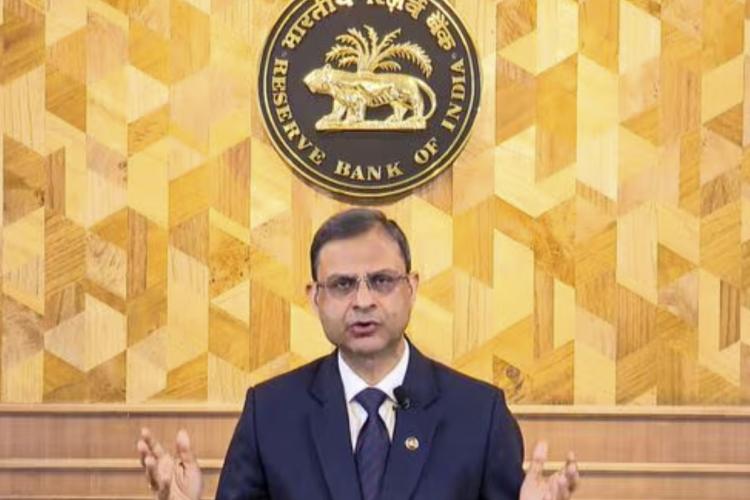
At its October 5-7 meeting, the RBI’s Monetary Policy Committee raised the repo rate by 25 basis points to 5.50%, its first increase since February 2023. It also adopted a stance of calibrated tightening.
The central bank raised its growth projection for 2026-27 to 7.1% from 6.7%, while increasing its inflation forecast to 5.2% from 5.0%. Its assessment recognised the impact of energy prices and adverse weather, alongside evidence that inflation was spreading beyond its initial sources.
The RBI’s decision illustrates the dilemma. Growth remains strong enough to permit some tightening, and signs of broader inflation cannot be ignored. Yet higher interest rates also raise borrowing costs for businesses already contending with expensive imported inputs.
Energy security requires more than monetary restraint
India’s relatively small current account deficit is an important defence against the oil shock. Strong services earnings, remittances and foreign exchange reserves provide room to absorb temporary pressures. The vulnerability increases if expensive crude coincides with sustained portfolio outflows and weaker global demand for Indian exports.
Three outcomes remain possible. A negotiated reopening of the Strait of Hormuz could ease energy prices and financial conditions. A prolonged stalemate would maintain pressure on importers and complicate monetary policy. Further escalation could combine persistent inflation with slowing growth.
Policy must account for the possibility that supply disruptions endure. Strategic petroleum reserves can provide temporary protection, while diversified import arrangements reduce exposure to particular routes and suppliers. Over time, lower petroleum intensity and a broader export base would improve the economy’s capacity to withstand such shocks.
Fiscal responses also require discipline. Temporary, targeted assistance to households and smaller businesses may be justified when energy prices rise abruptly. Blanket fuel subsidies, however, can impose large and open-ended costs on public finances and weaken the incentive to conserve expensive energy.
Central banks should respond to evidence that inflation expectations are becoming unanchored, rather than attempting to offset every increase in imported energy prices. Governments must address the underlying exposure through energy investment, supply diversification and credible fiscal management.
Diplomacy may eventually restore commercial shipping through Hormuz. Until then, India’s interest rates will remain an imperfect defence against a disruption originating thousands of kilometres away.
Pehal Khanna is a student and Kritishnu Sanyal Assistant Professor at Department of Economics, School of Social Sciences, Christ University.