





The obituary of international law has been written many times over the past few decades. Yet the law itself has not disappeared. What has become harder to defend is the claim that it operates as an even-handed restraint on state power. Powerful states invoke international law when it advances their interests, while the same rules can be weakened, reinterpreted or ignored when they become inconvenient. The result is a system in which formal equality among states coexists uneasily with profound differences in their ability to shape and evade the rules.
That contradiction was laid bare by the US-led invasion of Iraq in 2003. The United States and Britain went to war without a new UN Security Council resolution explicitly authorising the use of force. Resolution 1441, adopted unanimously in November 2002, declared Iraq in material breach of its disarmament obligations but did not itself authorise military action. Washington and London nevertheless argued that earlier Security Council resolutions provided a legal basis for the invasion. The argument remained deeply contested, and the absence of a fresh authorisation exposed the limits of a system in which the most powerful states could act first and contest the legality later.
READ I International law and Trump’s threats to global order
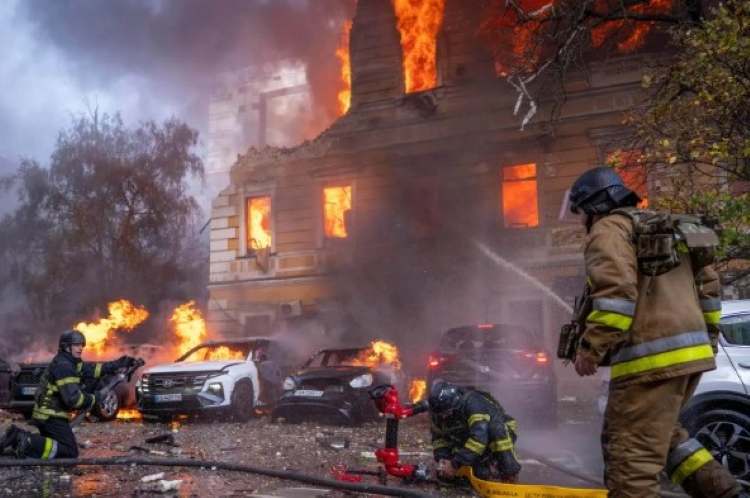
Russia’s full-scale invasion of Ukraine in February 2022 was a clear breach of the UN Charter’s prohibition on the use of force. Western governments responded with sweeping economic sanctions and a renewed emphasis on territorial sovereignty and the rules governing interstate conflict. The response was justified by the gravity of Russia’s actions. Yet it also revived an older question in much of the Global South: why does international law appear to carry such different political weight depending on who violates it? The issue is not whether Russia’s invasion was unlawful. It was. The harder question is whether a system can command lasting legitimacy when its strongest members have greater scope to enforce the rules against others than to subject themselves and their allies to comparable scrutiny.
Uneven enforcement of sovereignty
Russia’s full-scale invasion of Ukraine in February 2022 was a clear violation of the UN Charter’s prohibition on the use of force. Western governments responded with extensive sanctions and renewed emphasis on territorial sovereignty and the rules governing interstate force. Those measures were legally and politically consequential. But they also exposed an uncomfortable asymmetry in the international system: the capacity to enforce international law remains concentrated in the hands of states with economic, military and institutional power.
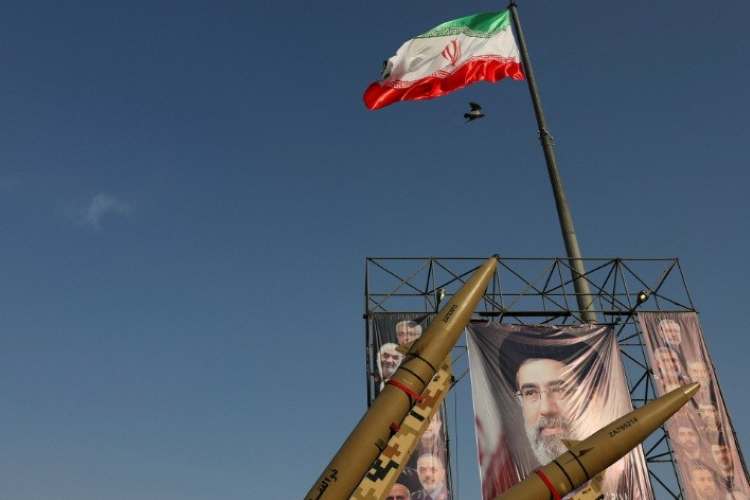
This does not make Russia’s invasion of Ukraine any less unlawful. Nor does Western inconsistency make the prohibition on aggression less important. The harder question is why the language of international law acquires such different political force depending on the identity of the violator and the strategic interests of the states capable of imposing consequences.
For much of the Global South, that question is not theoretical. The credibility of the international system depends on whether the rules are applied with comparable seriousness when the victims are outside the geopolitical centres of power.
READ I India-Russia oil ties in a shifting global order
Gaza and the crisis of enforcement
The war in Gaza has made that credibility problem still harder to ignore. The International Court of Justice did not declare Israel guilty of genocide in its provisional-measures orders, as is sometimes claimed. It found that the circumstances required urgent provisional measures under the Genocide Convention and ordered Israel to take measures within its power to prevent acts falling within Article II of the Convention. The Court subsequently reaffirmed those measures and, in May 2024, ordered Israel to halt its military offensive in Rafah insofar as it could inflict conditions of life capable of bringing about the physical destruction of the Palestinian group in Gaza.
The distinction matters because the authority of international law depends on precision. The provisional measures were legally binding, but the Court has no independent enforcement arm. Their effectiveness therefore depends heavily on the willingness of states and international institutions to give effect to them.
The Security Council has repeatedly demonstrated the political limits of that enforcement system. The United States vetoed a proposed Gaza ceasefire resolution in February 2024, again in November 2024, and vetoed another ceasefire resolution in June 2025 despite the other 14 Council members voting in favour. The veto is an ordinary feature of the Charter’s institutional design, but its repeated use in circumstances involving grave civilian suffering illustrates the gap between legal obligation and political enforcement.
That gap has consequences beyond Gaza. If international humanitarian law is invoked with force against adversaries but becomes politically negotiable when an ally or strategic partner is involved, states outside the Western alliance system have little reason to accept claims that the existing order is genuinely universal.
READ I BRICS must prove that its economic ambitions can survive geopolitics
International law and a system shaped by power
There is a danger, however, in treating the failures of enforcement as proof that international law itself is meaningless. The law still constrains states, establishes standards, creates institutions and provides weaker states with legal language through which to challenge stronger ones. The problem lies in the distribution of power surrounding those rules.
The Security Council veto is perhaps the clearest example. Five permanent members possess a privilege unavailable to the overwhelming majority of UN members. A resolution can secure the support of almost the entire Council and still fail because one permanent member votes against it. That structure was designed in 1945 to reflect the distribution of power at the end of the Second World War. It remains largely intact despite the profound transformation of the international system since then.
The result is a recurring contradiction. International law proclaims sovereign equality, while its principal enforcement institution embodies a hierarchy of power. The contradiction becomes most visible when powerful states invoke rules against their adversaries while shielding partners from comparable consequences.
For countries of the Global South, this history helps explain the growing scepticism towards the phrase “rules-based international order”. The objection is not necessarily to rules. It is to a system in which the rules appear universal in principle but selective in enforcement.
International law therefore does not need an obituary. It needs a more honest account of its political foundations. Its authority will remain contested so long as the institutions responsible for enforcing it reproduce the inequalities of the international system.
No one killed international law. Its deeper problem is that its protection has never been distributed equally. Unless the structural inequalities of the Security Council, including the veto, are confronted and enforcement becomes less dependent on geopolitical privilege, international law will continue to occupy an uneasy position: binding in principle, powerful when backed by states, and vulnerable when those states decide that their interests come first.
Dr Karun Sanjaya is Assistant Professor, Government Law College,Kozhikode. Dr Kavya Sanjaya is Assistant Professor, Christ University, Bengaluru.