





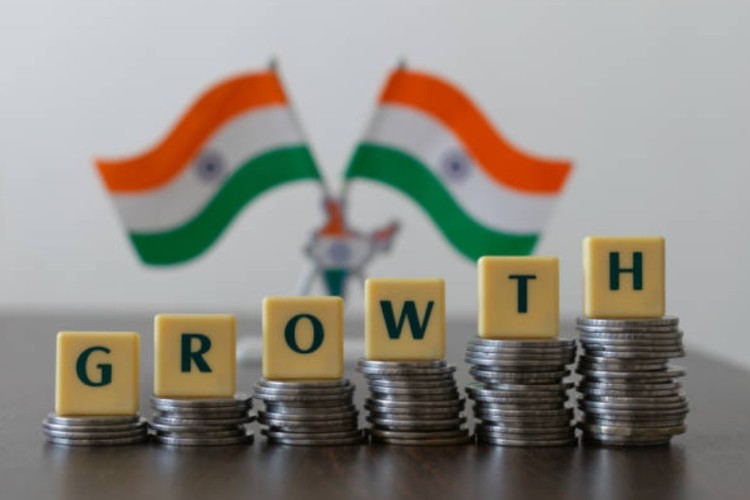
Indian economy: India’s economic story since Independence is often told as a triumph over the old “Hindu rate of growth”. That is true, but only in part. The country’s central economic challenge now is not merely how fast it grows, but whether growth creates productive jobs, builds human capital, draws more women into the workforce, supports urban transition, and is backed by a state capable of turning policy into outcomes.
In the decades after Independence, India chose a state-led model built on planning, import substitution and public sector dominance. That strategy created industrial capacity, higher education institutions and a durable administrative state. It also created layers of control that protected inefficiency. For a labour-surplus economy, growth of 3–4% was never enough.
READ | Maharashtra economy: Regional imbalance threatens long-term gains
The break came in 1991. The balance of payments crisis forced India to abandon an exhausted model. Industrial licensing was dismantled, tariffs were reduced, and private enterprise gained room to operate. The results were visible within a decade. By the early 2000s, India was growing at 7–8%, powered by investment, openness and a fast-expanding services sector. Technology, finance and telecommunications became engines of growth.
But India’s post-1991 growth has carried a structural flaw. Unlike East Asia, India did not build its rise on labour-intensive manufacturing. It moved from farms to services without creating enough factory jobs in between. Output rose, but employment did not keep pace in the formal economy. Nearly 90% of the workforce still remains in informal work, where wages are low, contracts are weak and social protection is thin. That is not a side effect of the growth model. It is the core weakness.
Monetary policy and investment gap
Monetary and financial reforms have shaped this phase more than is often acknowledged. The Reserve Bank of India moved from direct credit allocation to a framework centred on price stability and credibility. Inflation targeting reduced volatility. Financial inclusion drives and digital payments widened formal access and lowered transaction costs.
Yet macro stability has not revived private investment in the way policymakers once assumed. Even when inflation eased and liquidity was ample, corporate investment remained hesitant. Weak credit transmission, stressed bank and corporate balance sheets, and unresolved structural bottlenecks blunted the effect of lower interest rates. Monetary policy can stabilise conditions. It cannot remove the obstacles that hold back investment.
READ | Women workforce rise hides a deeper care economy crisis
That distinction matters. India’s policy debate often expects too much from rate cuts and too little from structural reform. Businesses invest when demand is credible, regulation is predictable, logistics are efficient and contracts are enforceable. Cheap money alone does not deliver any of that.
Human capital and employment quality
The employment problem is not only about the number of jobs. It is also about the quality of labour. A workforce cannot move into more productive sectors if schooling is weak, learning levels are poor, vocational training remains detached from industry needs, and public health deficits reduce productivity. India’s growth model has long relied on islands of excellence in engineering, management and services. It has not built broad-based human capital at the scale the economy now requires.
Female labour-force participation makes this failure sharper. An economy cannot claim to be using its demographic advantage when a large share of women remain outside paid work or concentrated in poorly paid informal activity. This is not merely a social issue. It is a growth issue. Labour markets, workplace norms, transport, safety, childcare and local job opportunities all shape whether women can enter and remain in the workforce.
Inequality and uneven growth
India’s growth record has also been uneven in distribution. Poverty has fallen substantially, and that achievement should not be minimised. But employment quality remains poor for a large share of the workforce. Regional disparities remain sharp. Some states have built strong industrial ecosystems, better infrastructure and more capable institutions. Others have not. That divergence shapes access to jobs, credit and opportunity.
Rising inequality adds to the problem. An economy can post impressive headline growth while leaving large sections trapped in low-productivity work. That weakens demand, strains social cohesion and narrows the political base for reform. Growth that is seen as exclusionary eventually runs into resistance.
State capacity and reform credibility
India still has important advantages. Its demographic profile, digital public infrastructure and sustained public investment in roads, railways, logistics and energy create a stronger base than before. But advantages are not outcomes. Global uncertainty, climate pressures, skill gaps and weak manufacturing competitiveness remain binding constraints.
The ambition to become a manufacturing hub will stay rhetorical unless governments address the old constraints with unusual seriousness. Land remains difficult. Labour regulation remains uneven across states. Logistics have improved, but not enough to neutralise cost disadvantages. Access to credit is still unreliable for smaller firms. What India needs is not another slogan around manufacturing, but reform credibility that businesses can price in.
That credibility depends on the state. India’s problem is not only policy design, but policy execution. Regulatory uncertainty, judicial delay, weak contract enforcement, fragmented administration and uneven implementation across states continue to raise the cost of doing business. Public investment can crowd in private capital only when the institutional environment is stable enough for firms to respond.
Urbanisation and the grassroots economy
Another weakness in India’s growth model is its incomplete urban transition. Productive employment outside agriculture depends on cities that can absorb labour, support small firms, connect workers to markets and reduce the costs of mobility. India’s cities remain major sites of growth, but they are held back by weak planning, inadequate transport, unaffordable housing and strained local governance. Without better urbanisation, labour cannot move easily from low-productivity work to higher-productivity activity.
One part of this story is often treated as peripheral when it is not. Since the early 2000s, microfinance has evolved from a poverty programme into a more commercially viable channel of formal credit. By lending to low-income households, women entrepreneurs and informal enterprises, microfinance institutions have deepened economic activity where conventional banking has often failed to reach.
READ | Indian economy needs a hard oil shield
This matters because inclusive growth is built from below as much as from the balance sheets of large firms. Financial inclusion is not simply a welfare device. It expands the productive capacity of households and small enterprises that sit outside the formal core of the economy. In that sense, microfinance belongs in the growth conversation, not at its margins.
India growth story beyond headline GDP
India’s near-term prospects remain favourable. Domestic demand is holding up. Public capital expenditure has supported activity. Inflation has eased. Exports have shown resilience in parts. Digitalisation continues to improve market access and transaction efficiency. These are real strengths.
But the measure of success lies elsewhere. India has already shown that it can grow faster than it once did. The harder task is to create productive employment at scale, improve labour quality, draw more women into the workforce, reduce regional and social imbalances, and build resilience into the economy.
No single lever can deliver that. Liberalisation was necessary, but not sufficient. Fiscal support matters, but it cannot substitute for productivity gains. Monetary stability is essential, but its reach is limited when the underlying constraints are structural. Durable growth requires coordination across macroeconomic policy, institutional reform, human capital formation and state capacity.
India’s growth story is impressive. It is also incomplete. The next phase will be judged less by the speed of expansion than by whether growth generates good jobs, reduces inequality and broadens economic security. That is where the real test lies.
Rajesh Pal is Professor, Department of Economics, Mahatma Gandhi Kashi Vidyapith, Varanasi.