





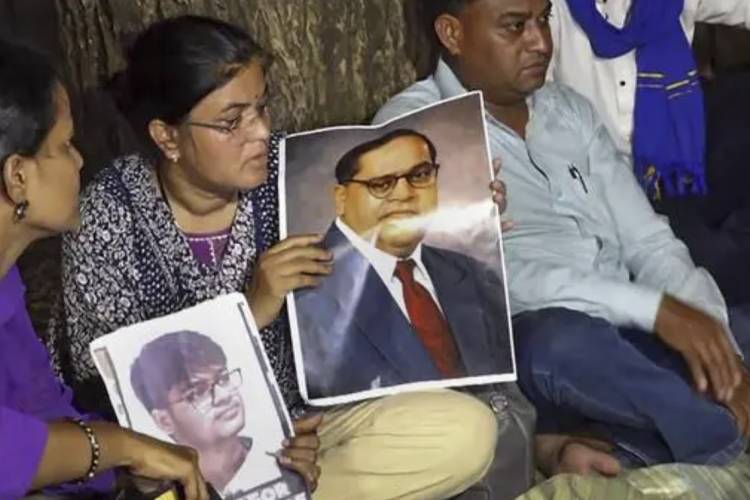
IIT Bombay case: Academic integrity needs due process- The death of Sahil Wakode, a second-year BTech student at IIT Bombay, has brought an uncomfortable question to the centre of the debate over academic integrity. How should an institution respond when a student is accused of using unfair means without allowing a disciplinary incident to become a crisis in itself?
Wakode died by suicide on September 18, hours after he was allegedly found using a mobile phone during a mid-semester examination. His parents have alleged caste-based harassment and have accused faculty members of conduct that contributed to his death. IIT Bombay has denied the caste-discrimination allegations and said that no disciplinary action had been initiated against him. The Mumbai Crime Branch is investigating the circumstances of his death and has now begun examining whether the institute followed its own procedure for handling examination malpractice.
READ | Generative AI has changed the meaning of university degree
The investigation has not established that the examination incident caused Wakode’s death. Nor has it established the allegations of caste-based harassment. Those questions belong to the police investigation and any subsequent proceedings. But the case does expose a broader institutional problem: universities must protect the integrity of assessment while ensuring that allegations of misconduct are handled through clear rules, due process and adequate student support.
Academic integrity cannot depend on discretion
Equality and non-discrimination are fundamental to India’s constitutional order. Academic institutions have a corresponding responsibility to ensure that students are not subjected to discrimination or harassment because of caste or social background. IIT Bombay itself maintains an SC/ST Students Cell to receive complaints relating to caste discrimination and harassment and says that it seeks to ensure an environment free of caste-based discrimination.
The allegations in the Wakode case therefore require an impartial examination. At the same time, an allegation is not proof. Reports published so far indicate that investigators have not found material establishing the allegations of months-long harassment or evidence linking the professor named in the FIR to the death. The institute has also denied the caste-discrimination allegations.
The same principle of fairness should apply to examination malpractice. If a student is found using an unauthorised device or other material, the institution has a legitimate obligation to investigate and, where misconduct is established, impose an appropriate penalty. Allowing cheating to go unaddressed would weaken the credibility of examinations and disadvantage students who comply with the rules.
But the invigilator who detects alleged malpractice should not become the person who decides the student’s guilt and punishment. IIT Bombay’s published academic-malpractice procedure provides for an examination of the case by an academic disciplinary committee. The institute’s rules also distinguish between different forms of malpractice and prescribe penalties. Its published rules, for example, have treated possession or use of a mobile phone during an examination as academic malpractice.
READ | NEET reforms must examine NTA, equity and exam design
That separation is important. It protects students against arbitrary treatment and protects faculty members from allegations that they acted beyond their authority. Reports on the current investigation indicate that the police are examining whether the prescribed procedure was followed in Wakode’s case.
Due process is part of academic discipline
A student accused of misconduct must have an opportunity to know the allegation, respond to it and have the evidence assessed by the competent authority. The appropriate standard here is due process within the institution, rather than the language of a criminal trial.
This is particularly important when the consequences of an allegation can affect a student’s academic record, reputation and prospects. A disciplinary system that is predictable and independent of the person who first reports the alleged violation is more likely to command acceptance among students and faculty alike.
The examination system itself has evolved in this direction. Earlier, assessment depended heavily on individual teachers and oral examinations. Large universities subsequently moved towards standardised written examinations, centralised evaluation and specialised testing agencies partly to reduce subjectivity and favouritism. The purpose was to make assessment more comparable and defensible.
Technology is now testing that system again. Generative AI has made it possible for students to obtain assistance during assessments in ways that conventional invigilation may not detect. Institutions therefore need rules that specify what constitutes prohibited assistance, how suspected violations are documented and how cases are adjudicated. A student caught with an unauthorised device cannot simply be ignored. But neither should the response depend on an improvised confrontation between a student and an individual invigilator.
READ | Graduate unemployment in India exposes a broken jobs market
Student welfare cannot be separated from academic standards
The pressure surrounding elite higher education deserves equal attention. Admission to IITs follows a highly competitive selection process, and students enter institutions where academic expectations are high. Some also carry expectations from their families and communities that can make academic setbacks particularly difficult to handle.
Experience with first-year students at an institute of excellence has shown how difficult the transition into a demanding academic environment can be. Students who have performed exceptionally well before entering college can suddenly find themselves surrounded by peers who have achieved at a similar level. A fall in grades can affect confidence, even when it says little about a student’s long-term ability.
This does not mean that academic standards should be lowered. It means that institutions need systems that recognise distress before a disciplinary or academic problem becomes a crisis.
IIT Bombay already has a Student Wellness Centre that provides individual and group counselling, psychological assessment and crisis support. Its current system includes a 24-hour helpline and round-the-clock crisis support. The issue, therefore, is not simply whether a counselling service exists. Institutions need to examine whether students know how to access it, whether faculty and mentors can recognise warning signs, whether referrals happen early enough, and whether students feel safe using the available services.
Peer groups have an important role as well. Students are often the first to notice changes in a classmate’s behaviour. Faculty members and hostel staff also need enough training to distinguish an ordinary academic setback from a situation that requires professional intervention. Families may need to be involved where appropriate, subject to the student’s privacy and the requirements of the situation.
Merit requires both rules and fairness
The larger debate over meritocracy also needs greater precision. Merit cannot mean that the student with the highest examination score is automatically the person who deserves every educational opportunity. India’s constitutional system recognises reservations as an instrument of social justice. Within an institution, however, once students are admitted, assessments should be conducted according to stated and consistently applied academic criteria.
That is why examination integrity matters. If some students can obtain marks through prohibited assistance while others follow the rules, the credibility of the assessment is compromised. The answer is not to abandon competitive evaluation but to make its procedures more reliable.
The arrival of generative AI makes that task harder. Institutions will have to distinguish between legitimate use of AI as a learning tool and prohibited use during an assessment. They will also need assessment methods that test understanding rather than merely the ability to reproduce information. But whatever system is adopted, allegations of misconduct should be investigated through a process that is transparent, proportionate and independent of the initial accusation.
The lesson from the Wakode case will ultimately depend on what the investigation establishes. It would be premature to assign responsibility for his death before the evidence is examined. But institutions need not wait for an investigation to conclude before reviewing their procedures.
Academic integrity and student welfare are not competing objectives. A credible university needs both. It must be able to say that cheating will be investigated and penalised when established, while also assuring students that an allegation will be handled fairly, that they will be heard, and that a disciplinary problem will not be treated as a substitute for attention to their wellbeing. That is how the credibility of examinations, and the trust placed in institutions that conduct them, is protected.
JP Gupta is a former IAS officer and alumnus of IIT Delhi. He is currently associated with IIT Gandhinagar as Visiting Professor.