





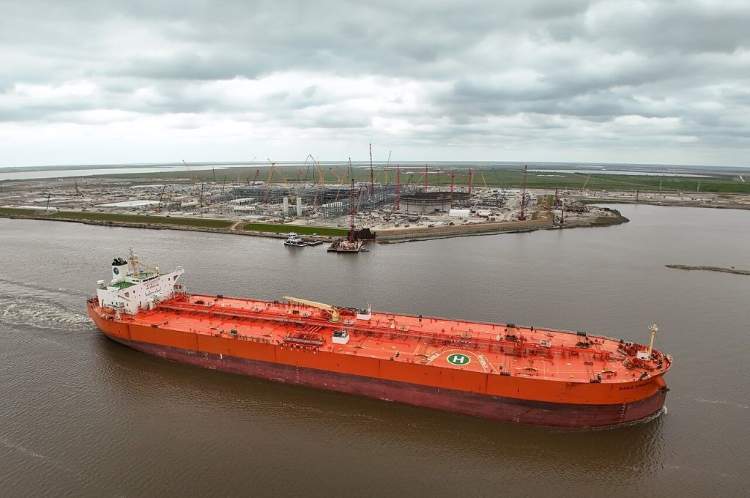
Amid the global debate on a shift to critical minerals as the next key element in the energy system, oil demand shows remarkable resilience. This owes to the historical preferences for hydrocarbons, reinforced by existing infrastructure and investment patterns.
Such an assumption overlooks the issue of ‘path-dependency’ or ‘lock-in’ of existing systems, i.e. patterns shaped by past choices that make switching to new systems costly or difficult. Any shift in the primary source of energy tends to mirror the industrial demands of the time, as technologies usually tend to develop along established energy infrastructures.
The current energy transition is driven by several concerns such as environmental risks associated with fossil-fuel based energy systems, and long-term socio-economic and developmental goals. Apart from fuelling an environmental crisis, fossil fuels are characterised by price volatility and import dependence, thus causing supply-chain disruptions and energy insecurity.
READ I India’s energy security dilemma over Russian oil
Oil demand and the quest for energy security
Following the Russia-Ukraine war in 2022, energy security has emerged as a central concern for policymakers as the conflict caused not only disruption but also a shift by European countries to seek other sources of supply. The US-Israel strikes against Iran earlier this month, Iran’s decision to shut the Strait of Hormuz has caused global oil prices to go up.
This has not just exacerbated global energy price volatility but has also exposed vulnerabilities in interconnected energy systems such as reliance on concentrated energy supplies and pipeline infrastructure. This could likely accelerate clean energy transitions alongside traditional security considerations.
Technological advances have led to cheaper renewable energy storage systems for lithium-ion and hydrogen and higher efficiency in grid integration, long-term energy storage and electric vehicle applications. This has made low-carbon alternatives increasingly competitive and created opportunities for economic diversification.
Decentralised energy systems – or renewable energy sources such as rooftop solar photovoltaic panels, wind turbines and battery storage – are anchored in critical minerals-based technologies. They offer viable pathways to expand energy access while simultaneously reducing environmental risks.
It is estimated that mineral requirements for deployed clear energy technologies could nearly quadruple by 2040. This surge reflects the rapidly expanding demand for batteries, magnets and other critical material-intensive components that underpin low-carbon energy systems.
Thus, this energy transition is expected to heighten the dependence on critical minerals.
Primacy of oil in energy economics
While this intensification of energy systems, which is dependent on increased demand for lithium, cobalt and other rare earth minerals, is expected to coincide with a gradual decline in dependence on oil and shifting of energy security to one defined by access to minerals, the global economy remains anchored in oil as a geopolitical fulcrum.
Global energy policy frameworks continue to emphasise the importance of securing oil supply chains, even as partnerships and friendshoring initiatives such as the Mineral Security Partnership as well as the FORGE initiative and Pax Silica coalition reflect a strategic push to reduce dependencies on concentrated supply sources and to lock-in access to materials essential for clean energy, defence and emerging technologies.
This is also underscored by recent US actions in Venezuela that were clearly tied to securing energy assets – Chevron, British Petroleum, Eni SpA, Shell and Repsol – and influence in a region pivotal to oil politics.
Such actions highlight that while modern energy policy incorporates material security frameworks, traditional hydrocarbon interests persist at the core of international economic strategy.
Besides, statistical evidence illustrates a moderation, rather than a collapse, in the global oil demand growth which slowed to 0.8 percent in 2024, down from 1.9 percent in 2023. It reflects structural changes and signals a gradual diversification of energy use rather than a swift displacement of oil. While these figures may suggest a gradual diminishing of oil’s relative importance, a closer examination of end-use dynamics reveals a more complex picture.
OPEC’s Annual Statistical Bulletin 2025 reports that world oil demand increased across all regions, with particularly strong growth in non-OECD Asia, most notably China and India, as well as in West Asia, Africa, Latin America and OECD Europe.
On the supply side, global refining capacity expanded by 1.04 mb/d in 2024, driven by China, India and West Asia, reflecting higher utilisation rates across both OECD and non-OECD regions. These shifts reflect a combination of production management strategies and demand fluctuations, rather than a structural retreat from oil markets.
Strategic imperatives
Post-pandemic oil demand in 2024 exceeded pre-COVID-19 levels by approximately 1.3 percent, driven largely by growth in petrochemical feedstocks, used in the production of plastics, synthetic fibres and polymers, suggesting that strategic imperatives continue to outweigh decarbonisation and complicate the narrative of a clean transition.
Forward-looking outlook anticipates a further rise in global oil demand in 2026, supported by improving macroeconomic conditions. This underscores that oil demand is influenced not only by energy policies but also by broader economic cycles and industrial activity.
Moreover, geopolitical realities continue to anchor the strategic importance of oil, particularly in the Gulf and West Asia, where hydrocarbon revenues sustain fiscal and regional power dynamics.
Sanctions have emerged as another critical factor re-shaping global oil dynamics. Restrictions imposed on Russian oil exports following the Russia-Ukraine conflict have strained global supply, even as the impact varies across oil and gas markets.
But even with inflationary pressures in energy markets, global demand largely persists, and supply adjusts through alternative channels such as Ship-to-ship (STS) cargo transfers, sale through shell companies and other sanctions evasion practices.
Together, these dynamics reinforce the paradox at the heart of the energy transition: oil demand remains resilient even as political, environmental and economic pressures mount to reduce dependence on it.
Energy transition, viewed as a linear shift from fossil-fuel based energy to renewable energy systems, is a complex phenomenon involving co-existence of both older and newer dependencies rather than replacement of one by the other.
Rather than being driven by a single technological breakthrough in energy dependencies, transitions are shaped by multiple interacting forces, known as prime movers that determine the adoption, diffusion and persistence of energy systems.
Transitions also require political willingness, legal frameworks entailing a variety of regulations apart from social acceptance. Since these factors tend to reinforce existing systems even as new ones develop, global energy transitions unfold slowly and unevenly.
Prime movers help explain continued resilience of oil. Oil’s high energy density, reliability and compatibility with existing infrastructure remain strong technological advantages, while deeply embedded supply chains, capital investment and powerful state and institutional interests underpin its economic and geopolitical weight.
Oil continues to shape international strategic calculations – as in South America, West Asia and Russia – reflecting its central role in global trade and national economies.
Nevertheless, the accelerating demand for critical minerals reflects the rapid accumulation of new prime movers around clean energy technologies.
Political strategies aimed at decarbonisation, combined with growing investment in electric vehicles, renewable power infrastructure, are strengthening the economic foundations of mineral demand. The coexistence of oil and mineral demand is not a paradox, but a defining feature of an additive and overlapping energy transition.
Both can grow simultaneously during a transition, implying that a linear shift away from oil is not possible in the near future. Consequently, oil remains at the centre of geopolitics as it shapes the strategic calculus of states, those that possess it and those that do not, owing to its unique characteristics and its uneven geographical distribution.
Yamini Agarwal is a PhD student at the Centre for International Politics, Organization and Disarmament, School of International Studies, Jawaharlal Nehru University, New Delhi. Originally published under Creative Commons by 360info .
.