





Politics and economics have always shaped one another within national borders. The same logic now operates across them. The interplay of geopolitics — the use of geography, military force, and strategy — and geoeconomics — the deployment of markets, finance, and resources — defines how nations compete. Understanding this interaction is essential to make sense of globalisation’s stresses, supply chain disruptions, and the sharpening rivalry between major powers.
History shows that economic ambition has often driven political behaviour. Colonial expansion was motivated by resource extraction and control of trade routes. The Cold War pitted two competing economic systems against each other. The late twentieth century deepened global economic interdependence through trade liberalisation, technology diffusion, and multinational production networks. That interdependence also produced fragility: the 2008 global financial crisis revealed spillover risks, while the COVID-19 pandemic exposed the vulnerability of stretched supply chains and the geopolitical stakes of vaccines and medical supplies.
READ I Can satellite internet close the digital divide?
A new era of rivalry
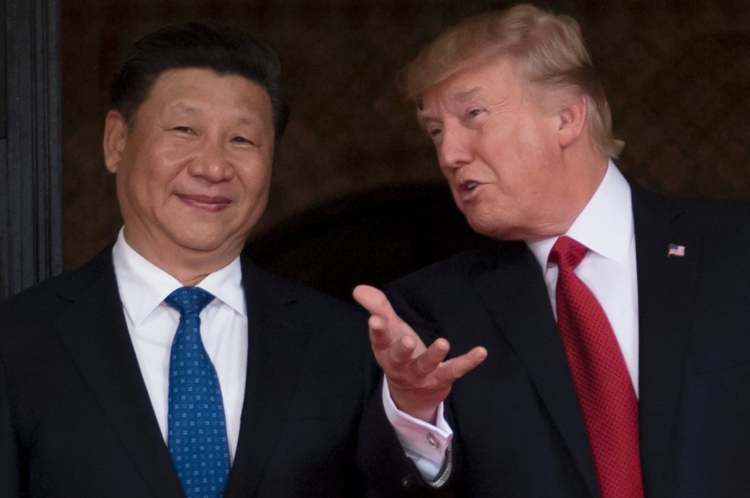
Today’s most consequential contest runs between the United States and China. Their rivalry is rooted in the quest for geopolitical primacy, and both understand that control of geoeconomic levers is essential to sustain strategic influence. Rare earth elements illustrate this link. These minerals are vital to semiconductors, defence systems, and clean-energy technologies. China controls more than 70% of global rare-earth processing, giving it significant leverage. The US retains unmatched influence through its military network, the dollar-centred financial system, and global technology hubs. But many of these levers are being contested or eroded as Beijing builds alternatives and emerging economies pursue greater autonomy.
Both powers now treat economic policy as national security. Washington is reshoring critical industries through the CHIPS and Science Act and using export controls to restrict Chinese access to advanced semiconductors. Beijing counters through industrial subsidies, digital infrastructure exports, and its command over key minerals. Their competition increasingly defines the architecture of global commerce.
How nations expand influence
The United States: American power rests on its unmatched financial reach. The US dollar still accounts for nearly 60% of global foreign-exchange reserves. Sanctions, therefore, carry disproportionate force. They have been central to Washington’s approach towards Iran, Russia, and North Korea. At home, industrial policy has returned with a strategic purpose. Semiconductor investments and clean-energy incentives show how the US now aligns markets, innovation, and security to compete with China.
China: China’s Belt and Road Initiative has financed transport and energy projects across Asia, Africa, and Europe. These investments expand its political reach through long-term debt and infrastructure dependence. China also dominates global manufacturing and leads many clean-energy supply chains. Its control over rare earth minerals and expanding digital infrastructure — including undersea cables and 5G networks — enables a form of influence rooted not in military projection but in economic enmeshment.
Russia: Russia represents the clearest case of resource leverage. For decades, Europe relied on Russian gas. After Moscow’s 2022 invasion of Ukraine, energy became a battlefield. Gas flows were curtailed to split European opinion and raise economic costs. The crisis accelerated Europe’s shift away from Russian hydrocarbons and highlighted the security dimension of energy dependence.
The European Union: The European Union projects influence through regulation. The “Brussels effect” ensures that EU rules — on data privacy, consumer protection, and climate standards — often become global norms, as firms worldwide adapt to access its large market. This regulatory power is subtle but durable, shaping technology standards and environmental rules far beyond Europe’s borders.
New battlegrounds of geoeconomic competition
Technology and innovation: Leadership in semiconductors, artificial intelligence, and digital networks has become the defining axis of modern power. The US aims to retain its technological edge, while China seeks breakthroughs to reduce dependence on Western systems.
Energy and the climate transition: Oil and gas continue to shape geopolitics, but the shift to renewables is creating new dependencies. Lithium, cobalt, nickel, and rare earths — concentrated in countries like the Democratic Republic of Congo, Australia, Chile, and China — will determine the balance of power in the clean-energy era.
Sea lanes and supply chains: The South China Sea, Indian Ocean, Suez Canal, and Panama Canal remain arteries of global trade. Control of these lanes determines access to markets and resources. The recent Red Sea disruptions showed how a single chokepoint can push up freight costs and disrupt supply chains globally.
Finance and currencies: The dollar’s primacy continues, but China is promoting the yuan for trade settlement and developing digital currency alternatives. These efforts may not overturn the dollar soon but could reshape the global payments ecosystem over the next decade.
Fragility of a weaponised economy
Economic tools may appear less violent than military action, but their effects can be severe. Sanctions often hit ordinary citizens harder than governments. Trade wars depress investment and slow global growth. Supply-chain disruptions expose structural vulnerabilities. The “weaponisation of interdependence” has made the global economy more brittle. Countries now seek to “de-risk” — reducing reliance on rivals by diversifying supply chains, forming regional blocs, and building domestic capacity. This push may enhance resilience but risks fragmenting globalisation.
Smaller economies face the hardest choices. Many are pressured to align with major powers, even when such alignment contradicts their long-term interests.
The shape of the future
Three trends will define the coming decades. The first is multipolarity. Power is spreading beyond the West, with India, Brazil, Indonesia, and others emerging as independent geoeconomic actors. The second trend is technological sovereignty. Nations want domestic control over semiconductor supply chains, data networks, and digital infrastructure, even if this results in a more fragmented global system. The third is climate geoeconomics. The race for green technologies and critical minerals will create new winners and new dependencies.
The story of global power today is not written only in defence budgets. It is visible in trade routes, shipping lanes, rare-earth supply chains, and digital networks. Geopolitics and geoeconomics have fused into a single logic of competition. The challenge lies in ensuring that interdependence becomes a stabilising force rather than a tool of coercion.
For global players, the priority must be to diversify markets, build resilient supply chains, invest in technological capabilities, and engage in rules-based cooperation. The task ahead is to turn the power of markets away from confrontation and towards shared prosperity.
B Shyam Sundar is an MBA student and Dr Sachin Sinha Associate Professor at Christ University, Bangalore.