





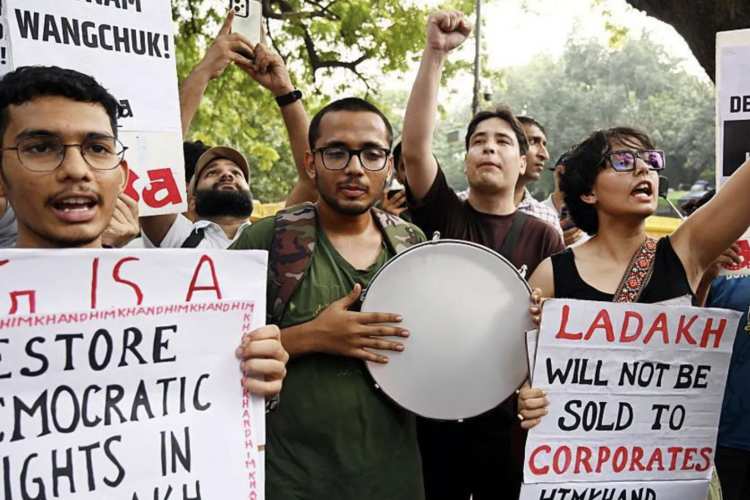
Gen Z protests: The Jantar Mantar protests in July were unusual even by the standards of a city accustomed to agitation. What began as a reaction to examination leaks became a youth mobilisation, organised and amplified online. The Cockroach Janta Party or CJP, demanded the sacking of Union education minister Dharmendra Pradhan, eventually leading to his resignation.
Students have often provided the numbers, energy and leadership to political movements. The Bihar agitation of 1974 began as a student protest before Jayaprakash Narayan gave it a wider political direction. The anti-Mandal protests of 1990 spread through campuses after the VP Singh government announced 27% reservation for Other Backward Classes in central government jobs. Student self-immolations became their most tragic feature. The Anna Hazare agitation three decades later also drew large numbers of students and youngsters.
This is not a phenomenon confined to India. Student protesters in Bangladesh turned an agitation over government job quotas into a movement that forced Sheikh Hasina from office in August 2024. In Nepal, Gen Z-led protests against corruption and a social-media ban forced Prime Minister KP Sharma Oli to resign in September 2025.
READ | Gen Z politics: How social media is rewriting strategy
Gen Z protests move between the street and the screen
The CJP movement belonged to this political tradition, but its methods are different. Its organisational terrain extends well beyond campuses, unions and political organisations. Instagram, YouTube and other online platforms carried its slogans, satire, videos and calls for mobilisation. The CJP began as online satire with only a few hundred participants before expanding rapidly.
That matters. Earlier student movements depended on meetings, pamphlets, campus networks, newspapers and political organisations to carry a message. The CJP agitation could turn an incident into a national talking point within hours. Humour and memes travelled with reports of examination leaks, unemployment and police action. The protest therefore existed on two stages at once: Jantar Mantar and the mobile phone.
This also makes comparisons with earlier agitations difficult. Solidarity, anger and youthful impatience with authority are hardly new. The communications machinery is. Gen Z can organise without much formal organisation and acquire visibility before a conventional political structure has taken shape.
READ | Why Gen Z is redefining workplace productivity
CJP protests also show the risks of virality
The advantage can become a weakness. A movement that spreads rapidly can also lose control over its message.
The CJP agitation began with identifiable demands, including action over examination irregularities and Pradhan’s resignation. As the protests expanded, other grievances and political actors entered the frame. The July 20 march ended in clashes in which Delhi Police said nearly 180 protesters and security personnel were injured. The CJP subsequently said it would continue protesting but would not attempt another march on Parliament.
This is where online politics complicates street politics. A viral protest attracts people for different reasons. Some come for the original cause, some for wider political grievances and some because participation itself has acquired social currency. Videos, slogans and provocative exchanges then begin competing with the issue that produced the mobilisation.
That does not invalidate the protest. Examination leaks are a serious grievance because students spend years and considerable family resources preparing for highly competitive tests. The CJP agitation turned that grievance into a political issue that the Union government could no longer treat as an administrative problem. Pradhan’s resignation was evidence of the pressure the movement generated.
READ | CJP movement: Digital protest is reshaping democratic accountability beyond elections
It also showed the limits of spectacle. Abuse directed at political leaders adds little to an argument about examination integrity. Violence, whoever starts it, shifts attention from the demand to the confrontation. A movement that wants accountability cannot afford to let its principal issue disappear beneath the content generated around it.
Gen Z is now an electoral constituency
Political parties have noticed. A generation dealing with competitive examinations, scarce jobs and expensive education is too large a constituency to ignore. The temptation will be to convert its anger into electoral support.
For Gen Z, that creates a different problem. Its influence rests partly on remaining harder to control than a conventional party organisation. Once a youth movement becomes an appendage of a political party, every demand begins to be judged through that affiliation.
The Jantar Mantar protests showed that a loosely organised group can force an issue onto the national agenda and extract a political response. They also showed how quickly social media can enlarge a cause until the original demand has to compete with the movement created around it.
The durability of this new form of student politics will depend on whether Gen Z can retain that distinction.
Dr Sachin Sinha and Dr Deepti Sinha are Associate Professors, Christ University, Bangalore.