





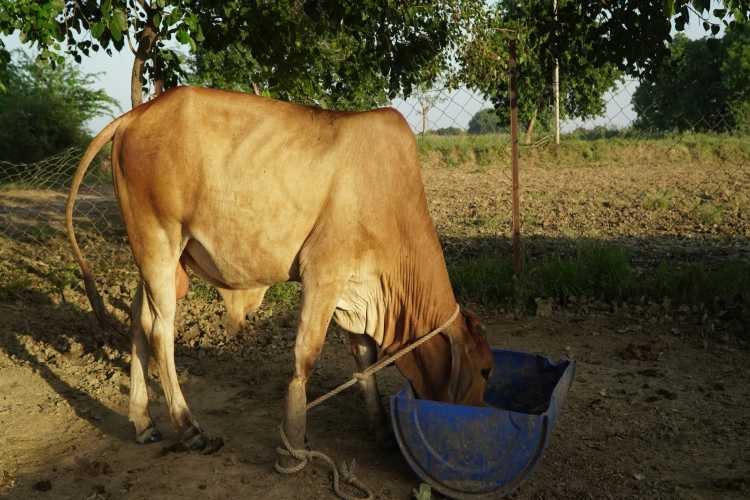
Cow protection and dairy industry: Cows have long stood at the centre of the nation’s religious and political conflicts. In the name of Hindu sentiment, cow protection has often been used against Dalits and Muslims through vigilante violence, mob lynching, and legal harassment over alleged beef consumption. It has served less as animal welfare than as a tool of communal power.
This year, ahead of Eid al-Adha, something unexpected happened. Several Muslim community organisations voluntarily announced they would not slaughter cows during the festival and urged a complete national ban on cow slaughter. Islamic practices as observed neither prohibit cow sacrifice nor beef consumption. The gesture is explicitly political and shows an attempt to defuse tension and demonstrate goodwill.
READ | Dairy industry continues to block India’s trade deals
These organisations have inadvertently exposed a contradiction that animal rights advocates have pointed to for years and that cow protection groups have never been willing to confront.
Cows and buffaloes produce milk for the same reason all mammals do – to feed their offspring. For continuous milk production, these animals must be put through repeated cycles of reproduction, typically through artificial insemination. The practice of illicit use of synthetic oxytocin injected to female cattle by many dairies to increase milk production and artificial milk ejection is also reported. Their calves are separated from them shortly after birth.
Male calves, having no commercial value in the dairy economy, are either abandoned or sold for slaughter. Female animals, once their milk-producing years are over, are most often sold to slaughterhouses. Maintaining unproductive animals is economically unsustainable for dairy farmers. Unsurprisingly, India is the largest producer of milk and one of the top exporters of beef and leather globally.
This structural logic of the dairy industry was clearly understood by Dr. Verghese Kurien, the architect of India’s White Revolution. He opposed cow slaughter ban precisely for the same reason. In his autobiography I Too Had a Dream, he writes about his time on the government’s cow protection committee, which included Rashtriya Swayamsevak Sangh (RSS) chief M.S. Golwalkar who was pushing for a ban on cow slaughter: “Of course neither did I concur with him [Golwalkar] on this nor did I support his argument for banning cow slaughter on the committee.” Dairy expansion and cow protection are not compatible. This was Kurien’s position and it remains true today.
READ | US-India trade deal nears; digital, dairy disputes weigh
This means that many of the same Hindu community members who have supported or remained silent about cow protection vigilantism are simultaneously participating in an industry that sends cows to slaughter as a routine business requirement. The Muslim community’s voluntary abstention from cow slaughter during Eid has made this contradiction visible in a way that years of animal rights advocacy has struggled to achieve. If cow slaughter is morally intolerable as cow protection groups insist, then the dairy industry as currently structured is equally intolerable.
One cannot hold both positions honestly. Thus, the stance to refuse cow sacrifice as a response to vigilante violence has also worked favourably for the marginalised communities – affecting the dairy businesses as they rely on cattle slaughter for sale of unproductive animals. Beef eating as form of political resistance, never exposed the superficial nature of religious cow protection.
Animal rights advocates have made this argument for years. It has largely been dismissed or ignored because it was economically, culturally, and politically inconvenient. A national political moment has now made it impossible to set it aside so easily.
READ | India-US trade deal: Tariff relief cannot mean surrender
Dairy industry: India’s cattle protection contradiction
If cow protection is a genuine ethical commitment rather than a political instrument, its conclusion is clear – cows cannot be protected while simultaneously being artificially inseminated, injected hormones, separated from their calves, and discarded for slaughter when they are no longer productive. Genuine protection of cows (and buffaloes) requires ending their exploitation entirely. This is a reality we need to address as a society if we are serious about cow protection or animal welfare of any kind. Broadly, the larger questions about the status of non-human animals remain at the margins. How long are we going to treat animal exploitation as a largely unquestioned and unexamined necessity?
Chaitanya Talreja is Assistant Professor at Shiv Nadar University, Chennai.