






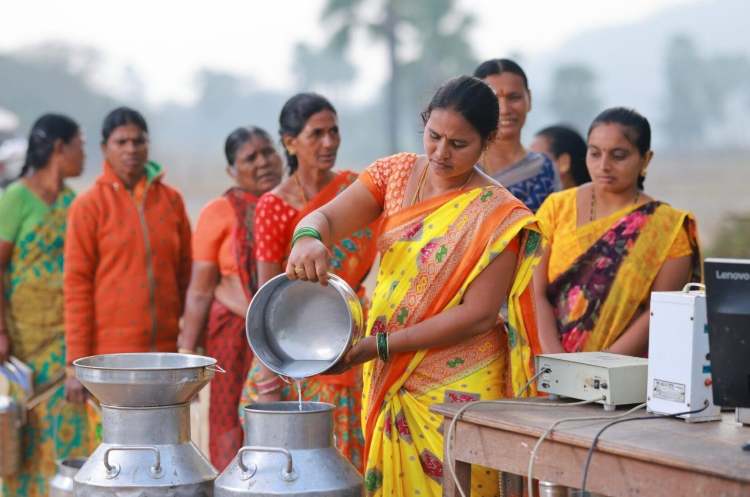
Cooperative sector reforms in India: In April, the Gujarat Cooperative Milk Marketing Federation, which markets Amul products, reported turnover of ₹73,450 crore for 2025–26. Its network brings together some 36 lakh dairy farmers. In July, the government told Parliament that about 2.50 lakh of India’s 6.63 lakh functional cooperative societies were loss-making. The figures measure different things, but they belong in the same debate.
A farmer-owned federation can build a national brand, while many societies struggle to cover their costs. Cooperatives give small producers scale, bargaining power and a share of the value their produce creates. How much of that promise they fulfil depends on how they are run and how much say their members have.
READ I India-US trade deal needs enforceable tariff terms
What the cooperative register tells us
India’s cooperative law began with the Co-operative Credit Societies Act of 1904. The 1912 Act widened its scope to cover non-credit societies and provided for federations. Village communities had long managed grazing land and irrigation channels by custom. A cooperative society also has to keep accounts, raise working capital and answer to members for the decisions it makes with their money.

The National Cooperative Database listed 8.53 lakh societies as of 15 July 2026. Of the 6.63 lakh classified as functional, 3.56 lakh were recorded as profitable and 56,689 had no financial information available. About 72 per cent of Gujarat’s functional societies were recorded as profitable. In Maharashtra, 71,593 were listed as loss-making and financial information was missing for another 39,069. A separate parliamentary reply put the number of functional societies without an audit at 68,020. The government cites about 32 crore memberships across the sector. People can belong to more than one society, and a name on the roll says little about who takes part in decisions.
Profitability is one measure of a society’s performance. A marketing cooperative can leave more money in members’ hands by paying them a better price, even if that leaves a smaller surplus in its own accounts. Persistent losses still matter. A society short of working capital will struggle to pay members on time or buy their produce through a bad season.
READ I Public infrastructure needs a budget for upkeep
Cooperative sector reform must reach farm gate
Since the Ministry of Cooperation was created in July 2021, the Centre has promoted computerisation and model bye-laws that allow primary agricultural credit societies (PACS) to diversify. By 15 July 2026, 63,686 of the 79,630 societies approved for computerisation had come onto a common software system. The decentralised grain storage programme, approved in 2023, had completed warehouses at 313 of the 1,015 societies identified for construction, adding 1.8 lakh tonnes of capacity. At the programme’s launch, the government had announced an ambition to create 700 lakh tonnes over five years. The July figures show how much construction remained even among the societies already identified.
A farmer with a few quintals of produce can rarely afford grading, storage or a brand and may have to sell to whoever arrives. Pooling produce can lower the cost per unit and give members access to buyers they could not supply individually. Processing and branding can help producers retain some of the margin that would otherwise go to intermediaries. Amul shows how this works at scale. Village societies collect the milk, district unions handle processing and a federation markets the products. Shared facilities can also help weavers and fishers reach larger markets.
The arrangement frays when the society lacks the cash to pay on time or when a few insiders set the price. A member who needs cash may sell to a trader even if the society promises a better price later. Computerisation earns its keep when members know the price before delivery, can read the accounts and get paid when promised. For women who already run self-help groups, joining a cooperative should bring a say in pricing and credit decisions and a chance to serve on its board.
READ I Ease of doing business is measured in days
Cooperative sector reform needed at state level
The 97th Constitutional Amendment added the right to form cooperative societies to Article 19(1)(c). It also inserted Article 43B, which directs the State to promote voluntary formation, autonomy, democratic control and professional management. In July 2021, the Supreme Court held in Union of India v. Rajendra N. Shah that Part IXB, which set rules for boards, elections and audits, could operate only for multi-state cooperatives. Extending it to societies within a state required ratification by at least half the states.
For most societies, autonomy therefore depends largely on state law. States should require timely elections administered at arm’s length from the government and audits that members can obtain and read. An elected board should be able to hire a chief executive with the skills to run the business and give that person enough security of tenure to make decisions. The board must still answer to members for the results.
Cooperative training needs access to the books
Parliament established the Tribhuvan Sahkari University at Anand in 2025 to strengthen cooperative education and training. The movement already has training institutes, federations and societies with decades of experience. Too often researchers never see a society’s books, while managers never see the research. Universities can work with societies willing to open their records, evaluate how they are run and use the findings in management courses. An independent forum could help those findings travel across states and give managers a place to compare results with their peers.
A farmer who supplies a cooperative should be able to use its accounts to see what the society earned from the sale and where the money went. At the next election, that farmer should have a vote on who will make those decisions in the coming year. That is what owning a share of the value chain should mean.
Dr Baikunth Roy is Associate Professor of Economics at Babasaheb Bhimrao Ambedkar University, Lucknow.