





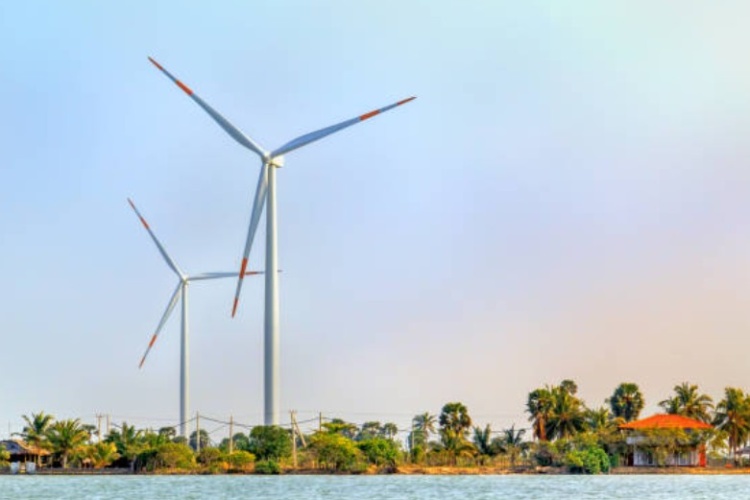
Wind energy: India’s renewable energy story has been written largely in solar. Wind energy, once the stronger segment, is now seeking a course correction. In a recent engagement between the Indian Wind Turbine Manufacturers Association and the Solar Energy Corporation of India, the industry again flagged familiar obstacles: transmission bottlenecks, underuse of high-wind sites, and delays in signing power purchase agreements. These are not new complaints. Their persistence is the problem. The draft supplied for editing identifies these same constraints and frames the issue as one of execution rather than ambition.
India cannot meet its clean energy targets through solar alone. The Centre has set a 500 GW non-fossil fuel capacity target for 2030. Wind has to do more than occupy a legacy role in that transition. It must become a dependable part of India’s renewable mix, especially as the grid absorbs higher shares of variable power.
READ | Wind energy revival is here, but bottlenecks remain
Wind energy potential remains underused
The scale of the missed opportunity is evident. The Ministry of New and Renewable Energy says India’s gross wind power potential is 695.50 GW at 120 metres and 1,163.9 GW at 150 metres above ground level, based on assessments by the National Institute of Wind Energy. Installed wind capacity, however, stood at 56.09 GW at the end of March 2026. That is an improvement, but still a small fraction of the assessed resource.
The latest capacity addition numbers show that wind is not stagnant. India added about 6.05 GW of wind capacity in FY 2025-26, its highest annual addition so far, according to the government. But this does not erase the structural weakness. A strong year after a prolonged slowdown is welcome. It is not a substitute for a bankable pipeline.
The industry’s complaint is that policy intent has not translated into project execution. Delays in finalising power purchase agreements with distribution companies create uncertainty for developers, lenders and manufacturers. Wind projects need long-term revenue visibility. Without signed contracts, financial closure slows, orders are delayed, and project timelines slip.
PPA delays are holding back capacity
Power purchase agreements are the core commercial document in renewable energy projects. They allow distribution companies to buy electricity from developers at agreed tariffs over long periods, often 20 to 25 years. Without them, auctioned capacity remains a number on paper.
In wind, the gap between auctions and execution has become a major bottleneck. Projects may be awarded by central agencies, but developers still need offtake certainty. Distribution companies, many of them financially weak, are reluctant to lock into long-term contracts when market prices appear volatile or demand projections are uncertain.
This reluctance is not confined to wind. Analysts have pointed to a broader backlog of renewable capacity awaiting power sale agreements. JMK Research estimated that about 44 GW of awarded renewable capacity was stranded with unsigned PSAs as of September 2025. That backlog reflects DISCOM caution, changing procurement preferences and grid constraints.
For wind, the effect is sharper because the best projects are site-specific. A solar project can often shift more easily across geographies. A wind project depends on resource quality, land, evacuation infrastructure and turbine logistics. Delay changes the economics.
READ | India’s nuclear energy bet gets a second wind
Grid readiness must catch up
Transmission is the second constraint. Wind is variable and location-specific. The best resources are concentrated in states such as Tamil Nadu, Gujarat, Karnataka and Maharashtra. That geography demands stronger evacuation infrastructure and better inter-state transmission planning.
Developers face curtailment risks and evacuation delays when transmission lines and substations are not ready. This raises financing costs and weakens confidence in future bids. The solution is not merely more tendering. It is transmission that arrives before or alongside capacity addition.
Renewable energy corridors, stronger inter-state links, and smarter grid management are now central to the wind question. As India’s renewable share rises, grid planning cannot remain a downstream administrative exercise. It has to shape procurement itself.
India needs better wind site deployment
The older phase of India’s wind development was shaped by land availability, state incentives and local policy structures. Scientific resource mapping did not always drive investment decisions. This left some high-potential sites underused while lower-efficiency sites absorbed capital.
Recent auctions have improved site selection, but India still needs a more disciplined approach to land and resource deployment. High-capacity wind zones should be prioritised. Transmission planning should follow credible wind maps, not merely announced capacity targets.
This matters for cost. Better sites improve generation, reduce the levelised cost of electricity, and make wind more competitive against other renewable options. Poor site deployment locks the sector into lower productivity and higher tariff pressure.
Wind can balance solar power
Solar’s dominance is easy to explain. Costs fell sharply, construction cycles are shorter, and India has abundant sunshine across much of the country. Solar projects are less constrained by narrow resource corridors. Policy support also helped create scale. Wind, by contrast, is more dependent on location, logistics and grid readiness. That made it vulnerable when auctions shifted the sector into aggressive tariff discovery without solving execution risks.
Yet solar cannot do everything. Wind generation often complements solar output, including during evening hours and monsoon periods when solar production falls. A more diversified renewable mix can reduce reliance on coal and gas-based peaking power. It can also reduce the stress created by large solar surges in the middle of the day. This is why the wind sector should not be treated as a poor cousin of solar. It serves a different grid function. India’s power system needs that diversity.
READ | India’s solar module manufacturing boom meets US tariff wall
The next phase of wind growth will not be driven by standalone wind tenders alone. India’s procurement is moving towards hybrid, storage-backed and round-the-clock renewable power because DISCOMs want firmer supply, not merely cheaper daytime electricity. This shift can work in wind’s favour. Wind paired with solar and batteries can offer better peak-hour value, reduce curtailment, and make renewable power easier for state utilities to absorb. But it also raises the execution bar.
Developers will need bankable contracts, storage access, transmission visibility and turbine supply chains that can meet tighter localisation and certification rules. Wind policy must therefore be framed as part of power-system planning, not as a separate industry rescue exercise.
Repowering can raise output without new land
Repowering old wind farms is one of the clearest opportunities. A large part of India’s earlier wind capacity uses older, smaller and less efficient turbines. Many such sites are in good wind corridors. Replacing old machines with modern, higher-capacity turbines can increase generation without requiring large new land parcels.
This is politically and administratively easier than acquiring fresh land. It also makes better use of existing evacuation infrastructure. But repowering requires clear rules on land rights, grid connectivity, revenue sharing and treatment of existing contracts. Without that clarity, the opportunity will remain underexploited.
Offshore wind remains a longer bet
Offshore wind is another frontier, especially along the Gujarat and Tamil Nadu coasts. India has announced tenders and policy intent, but progress has been slow. Costs remain high. Technology, port infrastructure, seabed surveys and grid connectivity all require preparation.
India should study the experience of the United Kingdom and Denmark, but not assume that their model can be transplanted quickly. Offshore wind can become part of the long-term clean energy mix. For now, the immediate gains lie in fixing onshore execution.
Wind energy finance needs bankable contracts
Finance is the common thread. Renewable energy projects are capital-intensive. Wind projects are especially sensitive to delays because turbines, land, grid access and contracts must align. Green finance and bond markets can help, but capital will not solve unbankable risk.
The first requirement is not a new slogan. It is contract discipline. Standardised PPAs, stricter approval timelines, credible payment security mechanisms and greater centralised procurement through agencies such as SECI can restore confidence. Escrow arrangements and guarantees can help where DISCOM risk remains high.
India’s wind energy sector does not lack potential. It does not lack domestic manufacturing capacity either. What it lacks is a predictable chain from tender to contract, from contract to grid, and from grid to generation.
The 2030 target will test India’s ability to move from capacity announcements to power delivered. Solar will remain central. But without wind, storage, hydro and stronger transmission, the transition will be narrower and more fragile than it needs to be. Wind energy can still drive the next phase of India’s renewable journey. It needs execution, not another statement of intent.