





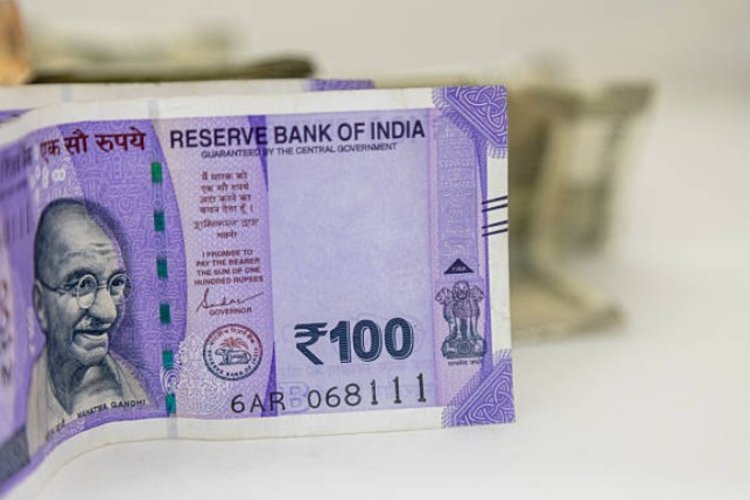
Rupee outlook: The rupee fell 12 paise on Wednesday to close at 95.74 against the dollar, after coming under pressure from high oil prices, a firm greenback and tighter global financial conditions. The exchange rate by itself tells us little about the state of India’s external finances. Oil prices are high, the dollar remains firm and global interest rates are restrictive. Each puts pressure on the rupee. Yet India is not facing the kind of external financing problem that would make a sharp fall in the currency inevitable. Services exports and remittances continue to bring in foreign exchange, capital inflows have improved and the Reserve Bank of India has substantial reserves with which to contain disorderly movements.
The more useful question, therefore, is not whether the rupee will weaken further in the coming months. It is what will determine the extent of the weakness and whether it will remain a short-term adjustment or become a persistent feature of the currency market. The immediate pressures are clear enough: a larger merchandise trade deficit, expensive energy and tighter global financial conditions. The longer-term answer is less dependent on RBI intervention. It will turn on India’s ability to earn foreign exchange through exports, services and investment faster than its demand for foreign currency rises as the economy expands.
READ | Rupee depreciation tests India’s record forex reserves
Yet India is not facing a conventional external-sector crisis. Its current account deficit remains modest relative to the size of the economy, services exports and remittances provide a large recurring supply of foreign exchange, and capital inflows have improved. The distinction matters. A weaker rupee does not necessarily signal an external financing problem; it can also be the mechanism through which an economy absorbs a change in its terms of trade.
Rupee outlook: The next few months will remain difficult
The immediate outlook is dominated by oil and global interest rates. India’s merchandise trade deficit widened in the first quarter of 2026-27 to $86.1 billion from $68.9 billion from a year ago. The current account deficit consequently rose to $4.2 billion, or 0.5% of GDP, from 0.4% in the corresponding quarter.
The July numbers offer a sharper illustration of the pressure. The current account deficit reached $7 billion, more than twice the year-ago number, while merchandise trade deficit widened to $31.7 billion. August brought some relief in trade balance, but crude imports rose 25.8% year on year and India’s crude basket averaged $90.19 a barrel.
That makes the rupee particularly sensitive to oil. Every sustained increase in the oil bill creates additional demand for dollars. If it coincides with higher US yields, the pressure is amplified because investors have less incentive to hold emerging-market assets.
The RBI can smooth this adjustment, and it has done so. But its stated policy is to allow the exchange rate to be determined by market forces while checking excessive volatility and disorderly movements. That is different from defending a fixed exchange-rate level.
For the rest of 2026, therefore, the more plausible question is the extent and speed of depreciation rather than a return to an earlier exchange-rate level. Axis Bank has argued that the rupee may need to weaken further as trade fundamentals change, although that is an institutional forecast rather than an inevitable outcome.
READ | Rupee trade gets easier, but the hard part remains
The external account provides a cushion
The medium-term picture is more reassuring.
India’s balance of payments recorded a surplus of $20.8 billion in July, compared with just $0.3 billion a year earlier. Net transfers, which include remittances, rose to $13.2 billion, while the capital account recorded a $27.7 billion inflow.
A significant part of that improvement came from the RBI’s measures to attract foreign-currency deposits. Between June 5 and August 31, the schemes mobilised $136.4 billion, including $127 billion through non-resident deposits. These flows have strengthened the immediate financing position, although they should not be confused with a permanent improvement in India’s underlying trade balance.
The underlying support comes from services and remittances. The supplied RBI material notes that the current account remained modest in 2025-26 and that the April-May 2026 current account recorded a $2.8 billion surplus, helped by services exports and remittances. It also reports gross FDI inflows of $30.7 billion in April-June, up from $26.7 billion a year earlier, and a turnaround in portfolio flows during June-July.
These flows matter because they reduce the likelihood that a wider trade deficit will translate mechanically into a balance-of-payments crisis.
The important caveat is that the quality of capital matters. Remittances and FDI provide more durable support than short-term portfolio money. Borrowing and foreign-currency deposits provide liquidity but also create future obligations. A sustainable rupee therefore requires the current account and productive capital inflows to do more of the work over time.
RBI intervention can smooth the road, not determine the destination
India enters this period with considerable reserves. The supplied RBI material puts foreign exchange reserves at about $691 billion in 2026, equivalent to more than 10 months of imports and 90.8% of external debt.
That gives the central bank substantial room to prevent disorderly movements. Recent intervention has also had a domestic liquidity consequence. The RBI has been using bond sales and foreign-exchange operations to reduce excess liquidity, which had surged after the large mobilisation of overseas deposits. Reuters reported that the banking-system liquidity surplus had been reduced by 55% by September 22.
But reserves should not be viewed as ammunition for defending a particular rupee-dollar rate indefinitely. Intervention can change the timing and volatility of adjustment. It cannot permanently offset a structural deterioration in the terms of trade, a persistent productivity gap or a sustained shortage of export earnings.
This is why the RBI’s broader foreign-exchange policy is important. Its own description of the market is one of progressive liberalisation: India has moved from the control-oriented regime of FERA to the market-facilitating framework of FEMA. The domestic foreign-exchange market has deepened considerably, with combined spot and derivatives turnover now around $80 billion a day and onshore-offshore rupee turnover substantially larger.
READ | Rupee faces sustained pressure as capital flows weaken
The long-term test is productivity
Over several years, the rupee’s trajectory will depend less on today’s oil price than on India’s ability to generate foreign exchange through exports, services, investment and productivity gains.
This is where the debate becomes more consequential. A growing economy can sustain a weaker currency if productivity and export earnings rise fast enough. Conversely, rapid domestic growth accompanied by weak export competitiveness can generate recurring demand for foreign currency and put downward pressure on the exchange rate.
India’s services exports provide a major advantage. So do remittances. The challenge is to broaden the export base, particularly in manufacturing and tradable services, while attracting FDI that expands productive capacity rather than merely financing existing assets.
The foreign-exchange market itself is also changing. The RBI’s longer-term agenda includes greater delegation to authorised dealers, better customer access to hedging, local-currency settlement and deeper use of technology. A deeper market will allow more companies, including smaller firms, to hedge currency risk rather than simply absorb exchange-rate movements in their margins.
That matters for the rupee’s resilience. A currency is better able to adjust when businesses can manage the risks created by that adjustment.
The short-term outlook, therefore, is one of continued volatility and a bias towards weakness while oil remains elevated and global interest rates stay restrictive. The medium-term outlook is less fragile because India’s balance of payments has several sources of support and the RBI has substantial reserves. The long-term outlook will be determined by something the central bank cannot manufacture through intervention: India’s capacity to earn, rather than borrow, the dollars required by a rapidly expanding economy.
A gradual depreciation need not be a policy failure. Nor is a stable rupee automatically evidence of strength. The more useful test is whether the exchange rate is adjusting to economic fundamentals without disrupting trade, investment or financial stability. That is ultimately the standard India will have to meet as its integration with the global economy deepens.