





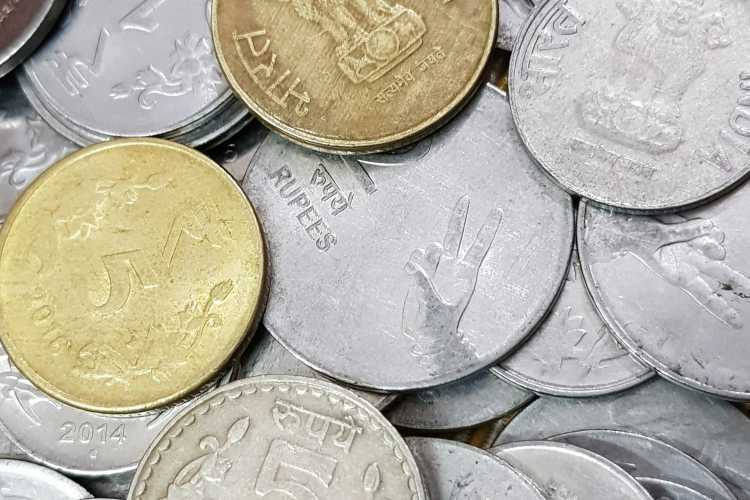
Rupee depreciation: The rupee crossed ₹95 to the dollar again on Wednesday as Brent crude rose above $100 a barrel amid another escalation in the Middle East. It closed at ₹95.1050, with traders reporting Reserve Bank of India intervention in the forex market. Oil was the immediate trigger. The larger question is how much protection India’s record foreign-exchange reserves can provide if expensive crude persists.
India is better placed to deal with currency turbulence than it was during earlier external shocks. Foreign-exchange reserves reached a record $740.8 billion in the week ended August 28. Yet reserves change the manner in which an adjustment takes place; they cannot abolish the adjustment. If the oil bill rises for long enough, somebody has to supply the additional dollars needed to pay for it.
READ | Rupee trade gets easier, but the hard part remains
Oil sets terms for the rupee
India’s dependence on imported crude remains close to 89%. The economics of a price shock are therefore unforgiving. Refiners require more dollars when crude becomes dearer. The import bill can widen the merchandise trade deficit and, if other external earnings do not compensate, the current account deficit. Importers may also bring forward their dollar purchases when they expect oil prices or the rupee to worsen. That can put pressure on the currency before the full increase in the oil bill appears in trade data. Government data put crude import dependence at 88.6% during April-January FY26.
This episode illustrates an important feature of the rupee. It can weaken even when the dollar is not appreciating strongly against every major currency. On September 9, the dollar itself was under pressure against the yen and some other currencies. India still faced a domestic shortage of dollars at the prevailing exchange rate because expensive oil had increased demand for them.
The duration of the oil shock will therefore matter more than whether Brent trades at $98 or $102 on a particular day. A brief spike can be absorbed through reserves and hedging. Several months of oil around these levels would alter India’s import bill, corporate demand for dollars and the current-account arithmetic.
HSBC offered a useful indication of the sensitivity in May. Assuming crude averaged $95 a barrel, it estimated that India’s current-account deficit could widen to 2.3% of GDP in FY27 from 0.9% in FY26. When oil subsequently fell, HSBC lowered its oil assumption to $85 and its current-account deficit forecast to 1.7%. Brent’s return above $100 does not automatically restore the earlier 2.3% forecast, but it shows why the oil assumption can change India’s external outlook so quickly.
READ | Rupee faces sustained pressure as capital flows weaken
What $740.8 billion can buy
The RBI enters this bout of rupee weakness with an unusually large reserve cushion. Its June measures brought a substantial amount of foreign currency into the banking system. By the end of August, the special swap facility had mobilised about $136.4 billion, of which roughly $127.2 billion came through FCNR(B) deposits. Overseas foreign-currency borrowings and external commercial borrowings accounted for the rest.
That mobilisation helps explain the rapid rise in headline reserves. It also requires some care in interpretation. Much of the money arrived because the RBI offered banks attractive swap terms that removed or reduced their currency-hedging cost. These flows strengthen the immediate foreign-exchange position, but they differ from export earnings or long-term foreign investment generated by the underlying economy.
The RBI therefore has considerable room to prevent disorderly currency movements. That is different from committing itself to ₹95, ₹96 or any other exchange rate.
Foreign-exchange intervention works best when the market faces a temporary shortage, speculative pressure or a sudden rush for hedges. Sustained high oil prices present a different problem. If India must buy more dollars every month to pay for crude, reserve sales merely decide how much of that demand is met by the central bank and how much is cleared through a weaker exchange rate.
This is why defending a particular number would be poor policy. The exchange rate is a market price. The RBI can influence it heavily in the short run, but maintaining an exchange rate that is inconsistent with foreign-currency demand would eventually require ever larger intervention.
Reserves are strong when dollars keep coming
The composition of foreign-currency inflows deserves as much attention as their size. Dollars attracted through a special deposit or swap window can provide valuable insurance during a difficult period. Dollars earned through exports or brought in through durable investment provide something more permanent because they do not depend on an emergency incentive remaining in place.
Portfolio capital sits somewhere in between. Global investors compare returns in India with those available in the United States and other markets, after allowing for currency risk. US interest rates, Treasury yields and expectations about Federal Reserve policy can therefore change demand for Indian assets even when nothing has changed in the domestic economy.
READ | Rupee weakness is not RBI’s biggest currency risk
That leaves the rupee exposed to two separate channels. Oil determines a large part of India’s demand for foreign currency. Global capital markets influence the supply. A prolonged deterioration on both sides would force a greater exchange-rate adjustment irrespective of the size of the RBI’s opening reserve stock.
India nevertheless has several buffers that were weaker in past episodes. The reserve stock is much larger, services exports and remittances generate substantial foreign exchange, and the RBI has a wider set of instruments for managing spot markets, forwards and banking-system liquidity. The probability of a classic balance-of-payments crisis is consequently very different from the probability of further rupee depreciation. The two should not be confused.
The problem is larger than ₹95
A weaker rupee by itself says little about the health of an economy. Exchange rates adjust to differences in inflation, productivity, interest rates, capital flows and terms of trade. Some depreciation is entirely compatible with rapid economic growth.
The economic cost depends on what is producing the depreciation. A currency falling because imports have become persistently dearer presents a different policy problem from one adjusting gradually to inflation differentials.
India’s present vulnerability begins with energy. Reducing crude dependence will take years, which makes stronger export earnings and stable long-term capital flows more important in the meantime. Policies that deepen domestic energy production, accelerate viable substitutes for imported petroleum and improve export competitiveness will ultimately do more for the rupee than intervention around a particular exchange-rate level.
The RBI’s $740.8 billion reserve stock gives India the ability to choose how abruptly the economy absorbs the latest oil shock. It cannot determine how large that shock becomes. If $100 oil proves temporary, ₹95 may soon lose its significance. If expensive oil becomes persistent, defending ₹95 will be less important than ensuring that India earns enough foreign exchange for the number itself to cease being a source of anxiety.