





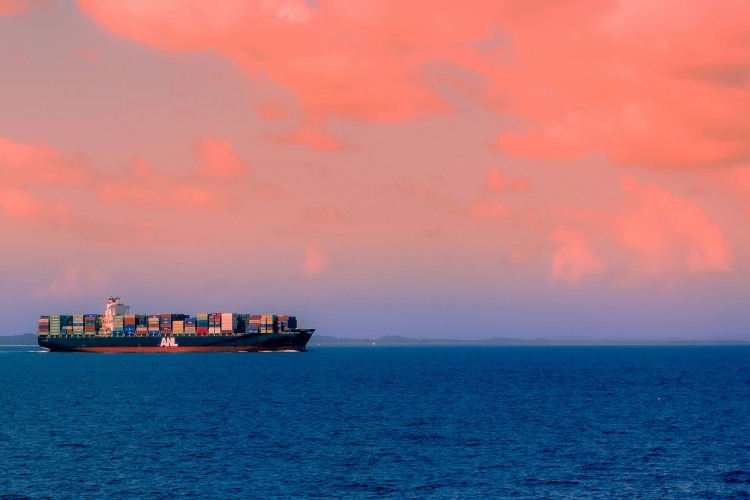
India’s coastline offers an opportunity to move large quantities of goods without adding to congestion on highways and railway networks. Yet roads and railways continue to carry most of the country’s domestic freight. On November 3, Union Minister for Ports, Shipping and Waterways Sarbananda Sonowal reiterated the government’s target of doubling the combined share of coastal shipping and inland waterways from 6% to 12% by 2047. The ambition makes economic sense, particularly for industries transporting bulk commodities. Achieving it, however, will depend on whether moving goods by water can become cheaper and more reliable than the alternatives.
India has more than 11,000 km of coastline and an extensive network of major and non-major ports. Ships can carry large cargo volumes in a single journey, consume less fuel per tonne transported over suitable distances and ease pressure on roads and railways. The advantages are particularly relevant for coal, iron ore, cement, fertilisers, petroleum products and steel.
READ | Shipping Bills: India’s maritime reforms to anchor global ambitions
These are industries in which large consignments move regularly between production centres and consuming regions. Petroleum products, thermal coal, iron ore and iron pellets are already among the principal commodities transported along India’s coast. Expanding this traffic will require addressing the operational disadvantages that have prevented coastal shipping from becoming a more attractive alternative.
Port connectivity adds to coastal shipping costs
Unlike road transport, coastal shipping requires additional cargo handling. A truck can collect goods from a factory and deliver them directly to a warehouse or retailer. A coastal shipment must first reach a port, be loaded onto a vessel, unloaded at the destination port and then transported by road or rail.
Every transfer adds time, cost and coordination. Where factories are far from ports or connecting roads and railway lines are inadequate, savings from the sea journey can disappear.
The DPIIT-NCAER assessment of logistics costs identifies inadequate last-mile connectivity, weak integration between mainline and feeder services, inconsistent tariffs and insufficient dedicated coastal berths among the constraints. Coastal cargo volumes showed little growth between 2018-19 and 2021-22, increasing from approximately 258 million tonnes to 260 million tonnes.
Vessel utilisation presents another difficulty. Ships incur substantial operating costs even when they are not carrying cargo. Without sufficient return freight, operators must recover the cost of empty voyages through higher rates. Repositioning empty containers adds to expenses. The commercial viability of a route therefore depends on regular cargo flows in both directions.
READ | Coastal Cargo: Private ports surge ahead in India’s shipping revolution
Coastal and inland waterways have different economics
Coastal shipping and inland waterways are frequently considered together in government policy, although their operating costs and infrastructure requirements differ considerably.
The DPIIT-NCAER logistics assessment estimates the average cost of coastal shipping at ₹1.80 per tonne-kilometre, against ₹3.30 for inland water transport. Coastal shipping benefits from larger cargo volumes, longer routes and better prospects of securing return freight. Inland waterways face additional constraints arising from seasonal water levels, navigational conditions and terminal infrastructure.
These figures also need careful interpretation. A lower cost per tonne-kilometre does not automatically make coastal shipping cheaper for the cargo owner. The relevant comparison is the total cost of moving goods from their origin to their destination, including handling, storage, onward transport and delays.
The same assessment places India’s total logistics costs at ₹24.01 lakh crore, or 7.97% of GDP, in 2023-24. Reducing these costs would benefit manufacturers competing in domestic and international markets. But the gains will come from improving the efficiency of the entire transport chain, rather than shifting cargo to waterways regardless of cost.
READ | Merchant Shipping Act: Govt to replace imprisonment provisions with penal fines
Coastal cargo incentives must deliver savings
India also needs greater availability of suitable vessels. Specialised coastal ships, container vessels and smaller feeder vessels are necessary to connect non-major ports with larger maritime hubs. Such investments require substantial capital, while long payback periods and uncertain cargo commitments discourage private operators.
The government has attempted to address some of these disadvantages. GST on bunker fuel used by Indian-flagged vessels has been reduced from 18% to 5%. Coastal cargo vessels receive a 40% concession on vessel- and cargo-related charges at major ports. Priority berthing and green-channel clearance have also been introduced to reduce delays.
The Coastal Shipping Act, 2025, which came into force on March 15, 2026, provides a dedicated regulatory framework for the sector. These measures address important operating constraints, but their commercial benefits depend on the extent to which they reduce the cost and uncertainty of individual shipments.
The Union Budget 2026-27 announced a Coastal Cargo Promotion Scheme to encourage freight movement from roads and railways to coastal routes and inland waterways. As of July 2026, the scheme was still being formulated.
The proposed incentives could help cargo owners, vessel operators and multimodal transport providers overcome some initial disadvantages. Their effectiveness will depend on whether they produce a measurable reduction in freight costs and support regular services. A subsidy that attracts cargo temporarily, without improving the underlying economics, would achieve little.
Manufacturers will shift bulk cargo only when the savings justify longer transit times and additional handling. Reliability and predictability will matter alongside freight rates.
Industrial links should determine port investments
Improving connectivity between ports and industrial centres must therefore receive priority. Coastal shipping cannot become competitive if transporting goods to and from a port consumes much of the savings achieved at sea.
The proposed development of National Waterway-5 in Odisha illustrates the importance of linking industrial production with ports. The project, estimated by the Ministry of Ports, Shipping and Waterways at about ₹13,086 crore, seeks to connect mineral-producing regions around Talcher and Angul and industrial centres such as Kalinganagar with Paradip and Dhamra ports. Its commercial success will depend on assured cargo volumes, reliable navigation and efficient terminal connections.
The National Logistics Policy and PM GatiShakti offer a framework for coordinating investment across transport modes. Coastal shipping should form part of this network, with port development, railway links, highways and industrial corridors planned together.
Roads and railways will continue to be essential for smaller consignments, shorter distances and time-sensitive shipments. Water transport has a stronger commercial case where cargo is bulky, routes are long and volumes are predictable. Government policy should encourage each mode where it offers the greatest economic advantage.
India already possesses the coastline and ports needed to expand coastal shipping. What remains uncertain is whether businesses will find it worthwhile to use them. The success of the government’s 2047 target will ultimately be determined by freight rates, transit times and dependable connections between factories, ports and markets.