





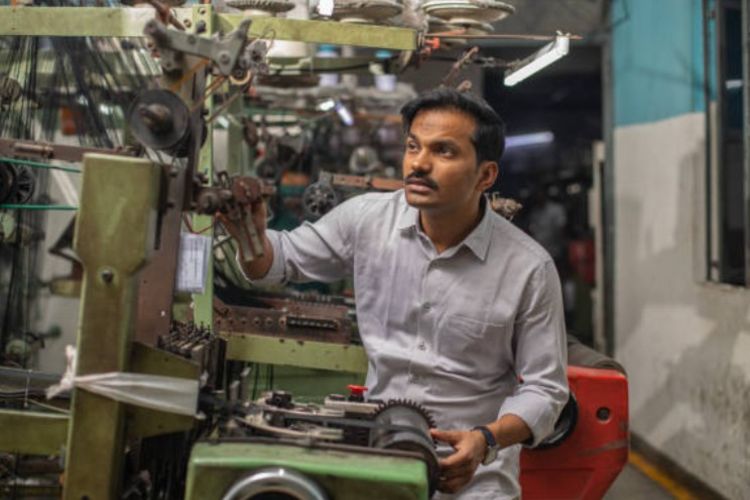
Informal sector jobs: India’s informal sector remains the country’s largest absorber of labour. The latest Annual Survey of Unincorporated Sector Enterprises 2025 (ASUSE 2025) shows that the unincorporated non-agricultural sector added nearly 7.5 million workers in a year. Its total workforce rose to 128.1 million. The number of establishments increased to 79.2 million, while gross value added climbed to nearly Rs 20 lakh crore.
That looks like vitality. It is also a warning. The key question is not whether jobs are being created. It is what kind of jobs they are.
READ | A national employment policy key to solving the jobs crisis
Informal sector jobs and low productivity
The informal sector employs the majority of Indian workers and contributes a large share of national output. It includes small workshops, home-based manufacturers, vegetable vendors, street-food stalls, tea shops, pushcart hawkers, repair units, local transport operators, beauty parlours, eateries and family-run businesses outside the corporate sector.
These enterprises keep households afloat. They also reveal the weakness of India’s employment model. Much of the expansion is in survival work, not growth-oriented enterprise. Many units use unpaid family labour, operate with little capital, have weak technology adoption and limited access to formal credit.
The ASUSE data shows that job growth is concentrated in low-productivity activities. “Other services” added nearly 3.5 million jobs, the biggest increase among broad categories. This includes personal services, repair work, local logistics, hospitality, transport support and informal urban services. These jobs are easy to create because they need little capital. They also tend to offer low wages, unstable earnings and no social security.
India is creating work. It is not creating enough productive employment. A worker joining a roadside food stall, neighbourhood tailoring unit or micro-enterprise is counted as employed. But such work rarely offers predictable income, legal protection, insurance, pensions or upward mobility.
READ | Urban women and gig work: Why India’s platform economy is not yet a real jobs pathway
Wage growth weakens in informal enterprises
The wage data is the clearest signal. Informal sector pay rose by only 3.9% in 2025, far below the 13% growth recorded in the previous survey round. Rural wage growth was weaker at 2%. This lagged behind the formal corporate sector, where listed companies reported wage growth of around 9%.
The survey also exposes regional differences. Uttar Pradesh and West Bengal account for large shares of establishments and workers, but their productivity indicators remain weak. Maharashtra and Tamil Nadu generate higher shares of gross value added despite having fewer establishments. Southern and western industrial states have larger and more productive enterprises.
Size is not the only difference. Digital adoption matters. Delhi reported internet adoption among informal enterprises at nearly 72%. Haryana and Assam also performed strongly. Uttar Pradesh and West Bengal lagged. States with higher digital integration also reported stronger productivity and higher value added per worker.
The reason is straightforward. Internet access lets small enterprises use digital payments, online marketplaces, logistics networks, app-based commerce and formal credit systems. A tailoring unit using UPI, WhatsApp orders and online procurement operates in a different economy from a cash-only unit dependent on walk-in customers.
Instagram commerce shows the same divide. A small artisanal soap maker in Khanna can reach a buyer in Goa only if it has access to digital tools, payments and delivery networks. Without them, geography remains destiny.
The rise in internet use among informal enterprises is one of the more encouraging findings. But the divide is sharp. Regions with weak digital penetration risk remaining trapped in low-income informality, while more connected states move up the value chain.
Women entrepreneurs and distress work
The survey also reports high participation by women entrepreneurs. Women now head 27% of informal establishments. In manufacturing, their share exceeds 60%. Telangana stands out, with more than 80% of proprietary manufacturing units run by women.
This is significant, but it needs caution. Much of this reflects the feminisation of distress work. Women-led enterprises often operate from homes, rely on unpaid family labour and remain concentrated in low-margin activities such as food processing, garments, handicrafts and petty retail.
Such enterprises exist partly because formal wage employment for women remains scarce. The recent rise in female labour force participation has been driven mainly by self-employment and unpaid work rather than secure salaried jobs. ASUSE confirms that pattern.
The informal sector gives women an entry point into economic activity. It also shows how little the formal economy has offered them.
READ | Indian economy’s growth challenge is jobs, skills and state capacity
Informal economy needs productivity
The policy challenge is not to dismiss the informal sector. It absorbs labour when the formal economy cannot. It provides flexibility to those excluded from regular employment. It allows many women to work from home when paid jobs outside remain unavailable.
But it also reflects India’s failure to move workers into high-productivity manufacturing and formal services at the scale needed for developed-economy status.
Millions of enterprises still operate at subsistence scale. The deeper problem is that India has too many enterprises that are born small and remain small. Informality is not only a lack of registration; it is a failure of firm growth. A micro-unit often avoids formalisation because compliance brings costs before it brings credit, markets or protection.
The policy test is therefore not how many firms can be registered, but how many can be helped to scale, use digital tools, access working capital, enter supply chains and provide basic security to workers.
Their access to finance is weak. Their technology use is uneven. Their workers lack social protection. Their productivity remains too low to support durable income growth.
The correction cannot be rhetorical celebration of entrepreneurship. It must be formalisation that actually helps firms grow. That means easier credit, cheaper working capital, simpler compliance, digital access, market linkages and portable social protection for workers.
India cannot rely indefinitely on low-productivity informal work to power long-term growth. Employment generation alone is not enough. The test is whether survival enterprises can become engines of prosperity.