





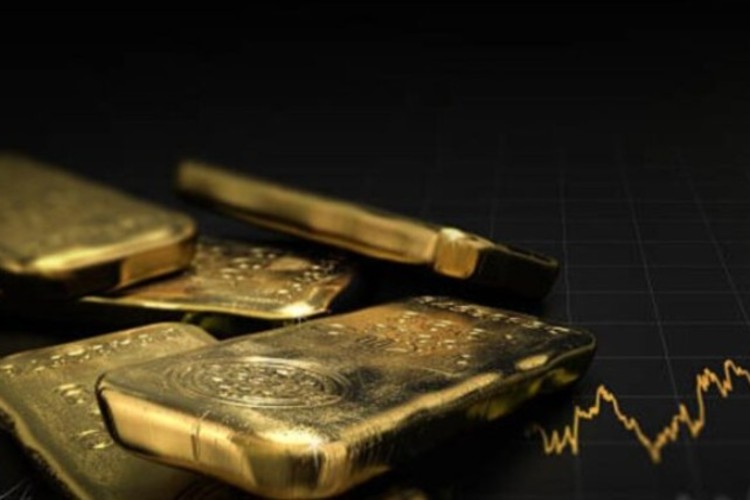
Gold prices: Gold’s rise is no longer just a commodities story. It is a referendum on the credibility of paper assets, on the fiscal discipline of the United States and Europe, and on the shape of a world economy that is becoming more fragmented, more politicised, and less trusting of a single monetary anchor. That does not mean gold will move in a straight line. It has not.
World Gold Council data show that 2025 was extraordinary: the LBMA PM gold price set 53 all-time highs, with the annual average price rising 44% to $3,431 an ounce and the Q4 average reaching $4,135. Reuters reporting shows that in early 2026 gold surged to a record $5,595 an ounce in January, only to fall sharply in March as the Iran war lifted oil prices, revived inflation fears, and pushed investors to reassess how long interest rates might stay high.
READ | Gold prices reflect global distrust in dollar, US policy
Gold as an asset class
That volatility matters because it clarifies what gold is, and what it is not. Gold is not a reliable day-to-day hedge against every geopolitical shock. In the first phase of a conflict, liquidity needs can overwhelm safe-haven demand. Reuters noted that gold fell about 15% after the Iran war began on February 28, 2026, and gold-backed ETFs saw large outflows during the conflict. The old textbook assumption that war automatically lifts bullion no longer holds in the short run.
But the deeper trend is harder to dismiss. The World Gold Council’s 2026 outlook says geopolitics, pressure on the US dollar, bond-market uncertainty, and sustained official-sector buying should continue to support gold. Its 2025 central bank survey found that 73% of respondents expect lower US dollar holdings in global reserves over five years, while 76% expect gold’s share of reserves to rise. That is not panic. It is reserve management adapting to a world in which sanctions, tariffs, capital restrictions, and fiscal excess have become durable features rather than temporary distortions.
READ | Sovereign gold bonds are becoming a budget nightmare
Gold prices and the slow erosion of dollar privilege
The dollar is not about to lose reserve-currency status. The IMF’s latest COFER data still show the US dollar accounting for 56.92% of global foreign-exchange reserves in the third quarter of 2025, far ahead of the euro at 20.33% and the renminbi at 1.93%. But the direction is unmistakable. The dollar’s share has drifted lower, and the “other currencies” bucket has been rising. Gold sits outside that currency table, yet it is plainly part of the same diversification impulse.
That is why the gold story should not be read as a forecast of sudden dollar collapse. It is better read as evidence of reduced confidence in the old reserve model. Central banks, especially in emerging markets, are not replacing the dollar with the euro or the renminbi in any decisive way. They are buying an asset with no issuer, no sanctions risk, no electoral cycle, and no finance ministry behind it.
This is where gold’s message becomes uncomfortable for Washington. A higher gold price reflects not merely inflation hedging, but institutional hedging against the United States itself: against the weaponisation of finance, against repeated fiscal slippages, and against the possibility that Treasuries may no longer be treated as the unquestioned risk-free asset in every crisis. Reuters reported this week that foreign official holdings of Treasuries at the New York Fed have fallen sharply over recent weeks, while analysts at Deutsche Bank see large foreign-official selling linked to the latest energy shock.
Central bank demand is the market’s anchor
The strongest case for structurally higher gold prices lies not in retail enthusiasm but in official buying. The World Gold Council expects central bank demand in 2026 to remain close to 2025 levels, even after three years of unusually strong accumulation. The reports you shared make the same point from a different angle: official and investor diversification into gold is not exhausted, and the long-term drivers remain intact.
This matters because central banks buy differently from speculative funds. Their purchases are strategic, slow-moving, and less sensitive to short-term price swings. That gives the market a firmer floor. It also means gold can stay expensive for longer than many valuation models would suggest, especially models built mainly on real interest rates.
Indeed, one of the more striking features of the recent cycle is that gold has remained strong even when real yields have not moved in the direction bullion investors usually prefer. The World Gold Council explicitly notes that bond-market uncertainty and official-sector demand have weakened the old inverse relationship between gold and real rates. The implication is straightforward: gold is now reacting less to narrow monetary signals and more to systemic ones.
READ | What will drive gold prices in 2026 and beyond
Gold prices, major currencies, and the reserve order
What does this mean for major currencies? First, it does not automatically mean a stronger euro, yen, or renminbi. Each alternative has structural limits. The euro lacks a unified fiscal sovereign. Japan’s yen remains constrained by weak growth and energy dependence. China’s renminbi is held back by capital controls and trust deficits. Reuters reported on March 19 that the euro, yen and sterling strengthened after major central banks held rates steady, but these were cyclical moves, not evidence of a new reserve hierarchy.
Second, a persistently high gold price raises the reputational cost of fiscal indiscipline. When gold rises because investors and central banks fear currency debasement, governments cannot dismiss it as a niche market signal. It is a market verdict on public debt, inflation tolerance, and the credibility of future policy. That is why the reports you shared rightly connect gold’s long-term appeal to ballooning sovereign debt, persistent inflation fears, and reserve diversification.
Third, gold’s strength makes the world economy more defensive. It encourages reserve managers to hold non-productive assets. It signals distrust rather than optimism. It coincides with a world in which trade is politicised, supply chains are shorter, sanctions are more frequent, and military conflict has re-entered economic planning. None of that is good for global growth.
World economy should not celebrate this bull market
There is a temptation to read record gold prices as just another profitable trade. That would be a mistake. Gold does well when the market doubts the guardians of monetary order. A gold rally built on jewellery demand or lower real rates is one thing. A rally built on reserve diversification, fiscal anxiety, and geopolitical fracture is another.
That is why the outlook for gold remains strong even after the recent correction. The World Gold Council says strong ETF demand, persistent central bank buying, and pressure on the dollar should support bullion in 2026, while supply growth remains modest. Reuters reporting from South Africa, once the world’s dominant producer, underlines the supply constraint: high prices are not producing a rapid mining response.
The reports you shared go further, arguing that if official and investor diversification continues, gold could move materially higher over the next two years. Those price targets may or may not be met. But the direction of the argument is persuasive. When mine supply is relatively inelastic, when central banks are still buying, and when confidence in the monetary status quo is eroding only slowly, the burden of adjustment falls on price.
Gold, then, is not predicting imminent monetary collapse. It is signalling something subtler and more serious: that the world is moving away from a singular reserve order without yet discovering a credible replacement. In that transition, the dollar loses some privilege, rival currencies gain only marginally, and gold reclaims a role that modern finance had assumed was largely ceremonial.
Markets are rarely eloquent. On gold, they have been unusually clear.