





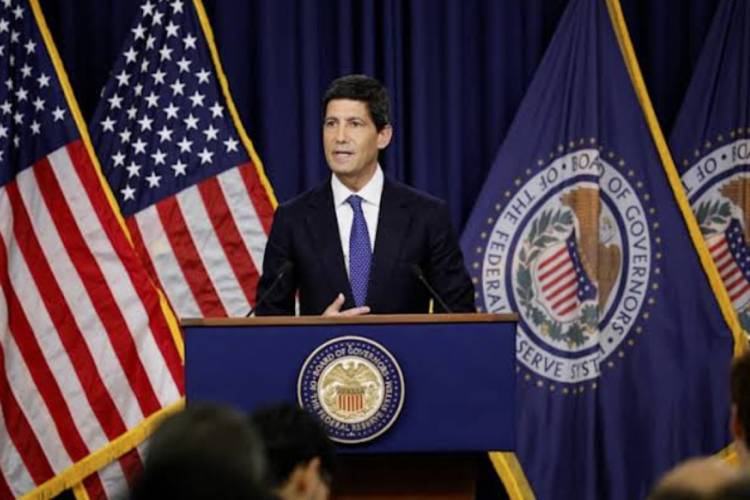
Fed rate hike: The Federal Reserve has raised its policy rate for the first time since July 2023, taking the target range to 3.75%-4%. The increase itself is modest. The significance lies in why the Fed has done it: inflation remains stubbornly above its 2% target even though the US economy continues to grow. For the rest of the world, this means that the cost of money is rising again just when governments, companies and households are already coping with high energy prices and heavy debt.
That combination changes the financial conditions facing almost every major economy. The world is already dealing with an energy shock, high public debt and uneven growth. A stronger dollar and higher US yields will now add another layer of pressure, particularly for countries that rely on external financing. The immediate effect need not be a global downturn. The larger concern is that monetary tightening could expose weaknesses that were being concealed by relatively easy financial conditions.
READ | State market borrowings reshape India’s federal finances
Fed rate hike: The Fed is tightening into an inflation shock
The Fed’s decision reflects a difficult distinction between an inflation shock and an inflation process. Higher oil prices, driven by the conflict in the Middle East, cannot be reversed by monetary policy. But the central bank can prevent an energy shock from becoming embedded in wages, services and inflation expectations.
The September 16 statement said US economic activity was expanding at a solid pace, productivity growth was strong and capital investment remained robust. It also said inflation was still elevated and that the latest rate increase was intended to support a more timely return to the Fed’s 2% target.
The Fed’s projections show why markets are taking the decision seriously. The median projection puts the federal funds rate at 4.1% at the end of 2026, implying another increase from the present range. The median projection for headline PCE inflation is 3.7% for 2026, well above the central bank’s target.
This is important for the rest of the world because US monetary policy does not remain confined to the US financial system. US Treasury yields influence the pricing of sovereign and corporate debt elsewhere. The IMF warned earlier this month that rising yields in advanced economies are lifting yield curves across the world, increasing refinancing costs for emerging and developing economies.
READ | Finance Commission devolution tests fiscal federalism
Emerging markets face the sharper transmission
The first transmission channel is the dollar. Higher US interest rates can increase the attraction of dollar assets, especially when investors are uncertain about global growth. Capital need not leave every emerging market, but the hurdle rate for investing there rises.
The second is debt service. Governments and companies that borrowed in dollars or must refinance at higher global rates face larger interest bills. This matters particularly for countries with large external financing requirements. The IMF has warned that high refinancing needs and rising debt-service costs are already restricting the fiscal room available to some developing economies.
The problem is magnified by the world’s debt position. Global public debt is close to 100% of GDP, according to the IMF, leaving governments with less room to cushion another financial or growth shock through fiscal policy.
The World Bank’s research points to another uncomfortable relationship: higher government debt is associated with higher domestic yields and sovereign spreads, with the effect becoming more pronounced at elevated debt levels. A rise in global rates therefore need not produce a uniform increase in borrowing costs. Highly indebted economies can experience a much larger increase in risk premia.
This is where the present cycle differs from a conventional US tightening episode. The Fed is tightening while several countries are simultaneously confronting expensive energy, weak fiscal positions and slower external demand.
Europe and Asia cannot simply follow the Fed
The Fed’s move also complicates the choices facing other central banks. If they keep rates low while US yields rise, their currencies may come under pressure. If they raise rates to defend currencies and contain imported inflation, they risk weakening domestic demand.
Europe is already facing that dilemma. The European Central Bank has raised its policy rate amid renewed energy inflation, while officials have warned that higher energy costs could weaken household consumption. The Bank of England has also had to balance persistent inflation against slowing demand. Reuters reported this week that major central banks are moving towards a more restrictive stance as the energy shock keeps inflation above target.
Japan presents a different case. The Bank of Japan has moved towards higher rates as domestic inflation becomes more persistent. Its challenge is complicated by the yen’s sensitivity to interest-rate differentials. The result is that the world’s major central banks are no longer moving in a single, predictable direction.
For Asia’s emerging economies, this divergence creates a narrower policy corridor. Countries with credible inflation frameworks and manageable external debt have greater room to absorb the shock. Those dependent on imported energy and foreign capital have less.
READ | Fed rate cuts under pressure could backfire on growth
The real risk is a squeeze on investment
The most important global consequence may not be the first move in currencies or stock markets. It may be a gradual reduction in investment.
Higher rates change the economics of projects whose returns arrive several years in the future. Manufacturing equipment, infrastructure, property, technology and energy projects become harder to finance when the cost of capital rises. This effect is particularly relevant for industries that sell expensive capital goods.
The experience of additive manufacturing offers a useful illustration. During the 2022-23 tightening cycle, global shipments of industrial 3D printers fell 9% in 2023, while US manufacturing technology orders declined 11.2%. Companies including Desktop Metal and Stratasys reported that higher financing costs and pressure on customers’ capital expenditure budgets delayed purchasing decisions.
The current position is stronger. US manufacturing technology orders reached $4.03 billion in the first seven months of 2026, 37.1% above the corresponding period of 2025, while industrial 3D-printer shipments rose 18% in the first quarter. Aerospace, defence, energy infrastructure and data-centre investment are providing demand that did not exist at comparable scale during the previous tightening cycle.
That distinction matters beyond 3D printing. The global economy can absorb higher rates more easily when investment is driven by productivity-enhancing projects with strong expected returns. It struggles when investment depends mainly on cheap credit.
The Fed’s decision raises the cost of a mistake
The global economy is not entering this period from a position of weakness. The IMF estimated in September that global growth for 2026 remains around 3%, helped in part by strong AI-related investment. But it also warned that the energy shock is not over, disinflation has stalled in many countries and higher global yields are creating problems for heavily indebted economies.
That makes the Fed’s task unusually difficult. If it does too little, an energy shock could become entrenched inflation, forcing even more aggressive tightening later. If it does too much, it could suppress investment and demand just as economies are adjusting to higher energy costs.
Markets have so far absorbed the decision without signs of disorder. Reuters reported that US equities rebounded on September 17 as oil prices eased and Treasury yields fell, although the 10-year Treasury yield remains around 5%.
That relative calm should not be mistaken for immunity. Monetary policy works with a lag. The first effect of a rate hike is financial. The effect on investment, employment and consumption comes later.
The central question for the global economy is therefore not whether one quarter-point increase will cause a recession. It is whether inflation, energy prices and public borrowing remain high enough to force central banks into a prolonged period of restrictive policy.
If that happens, the winners will not simply be countries with the highest growth rates. They will be economies with lower external financing needs, credible monetary policy, manageable public debt and enough domestic demand to sustain investment. For everyone else, the Fed’s latest move is a reminder that the era of assuming abundant and cheap global capital can no longer be taken for granted.