






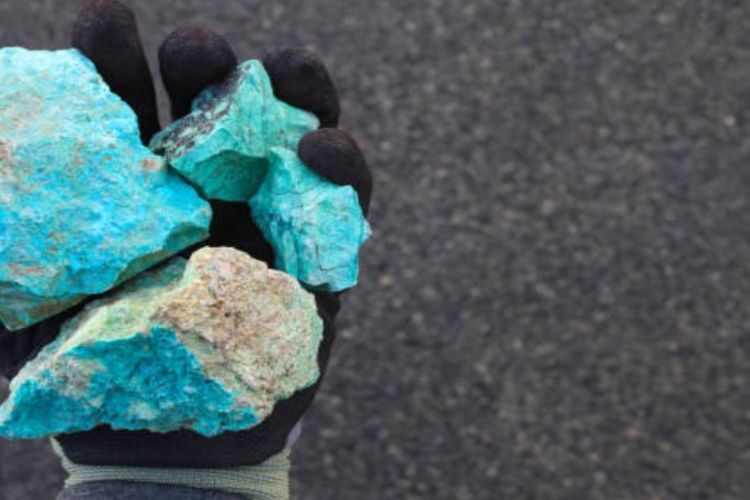
India’s critical minerals hunt should include mine waste: India has set aside ₹100 crore under the National Critical Mineral Mission to test whether materials such as mine tailings, fly ash and red mud can yield commercially recoverable minerals. In December 2025, the Ministry of Mines followed up with a policy to identify and assess material left at existing mines. For a country looking to secure mineral supplies for batteries, electronics and clean energy, the potential is worth testing. Some residues could supply metals with less need for fresh excavation. The case for public funding depends on how much usable material can be recovered, what it costs and what the process leaves behind.
What mine tailings can yield
Mining has traditionally followed a simple sequence. Extract the ore, recover the valuable material and dispose of the residue. Tailings, the material left after ore processing, can still contain metals that the original operation could not recover economically. What remains depends on the geology of the deposit and the way the ore was processed. A change in prices or processing technology can make a residue worth examining again.
READ | India’s critical minerals strategy needs more than diplomacy
A 2025 review in Environmental Geochemistry and Health examined methods for recovering metals such as copper, iron, nickel and gold from tailings. It also looked at how recovered material could be used to make nanomaterials for applications such as catalysis and energy storage. These are possible uses. A process that works on a laboratory sample must still prove that it can handle a variable feedstock, recover enough metal and produce material of a quality that buyers will pay for.
New mines will remain part of India’s supply strategy. Where a residue is suitable for reprocessing, it offers another source of some of the metals Indian industry needs. The economics will vary with the concentration of the metal, the proportion that can be recovered, the cost of water and power, and the distance to a processing plant. A large dump may offer a steady supply of feedstock, but its size tells an investor little about the cost of producing a tonne of saleable material.
READ | India’s critical minerals mission needs a sharper edge
What coal ash tests tell us
The Ministry of Coal told the Rajya Sabha in July 2025 that tests found about 400 parts per million of total rare earth elements in fly ash and overburden clay from Singareni. Fly ash tested at Neyveli contained 2,100 milligrams per kilogram. The same reply reported promising results from parts of the Singrauli coalfield and said economical extraction there would depend on technological advances and economies of scale.
These measurements describe the material sampled. A recovery plant would have to show how much of each element it could separate, in what form and at what cost. The concentration of all rare earths taken together is only a starting point because individual elements differ in value and in the difficulty of separating them. Sampling across a deposit or ash stockpile would also show whether a plant could expect a consistent feed.
Judge recovery by what it leaves behind
Reprocessing tailings can reduce the volume of material that needs long-term storage. It can also generate new residues and require substantial amounts of water, energy or chemicals. Disturbing old deposits can expose workers and nearby communities to contaminants. The 2025 review calls for life-cycle assessment before large-scale adoption. At an individual site, that means comparing the effects of reprocessing with those of safely managing the waste in place.
READ | Why oil demand remains resilient amid quest for critical minerals
The mines ministry’s policy provides for identifying where waste is located, how much is available and whether the minerals in it can be recovered economically. That should form the basis of a national inventory. Pilot projects can then publish recovery rates and product quality alongside water and energy use, the volume and toxicity of new residues, and the cost of managing them. Those results would help researchers and mining companies decide which approaches deserve further investment.
A role for recovery after mines close
In coal districts, the closure of a mine can affect contractors and local businesses as well as people employed at the mine. Where recovery is viable, processing and site rehabilitation could provide some work after extraction ends. That depends on where the processing takes place, whether local workers can obtain the necessary training and whether nearby businesses can compete for contracts. Communities should have a say in how deposits are worked and access to monitoring results from the site.
Mine closure plans should spell out who pays to stabilise the site, manage the new residues and monitor water quality once recovery ends. A project whose returns depend on leaving those costs to the state or the community has overstated the value of the minerals it recovers.
Anusreeta Dutta is a columnist and climate researcher with experience in political research analysis, ESG research, and energy policy.