





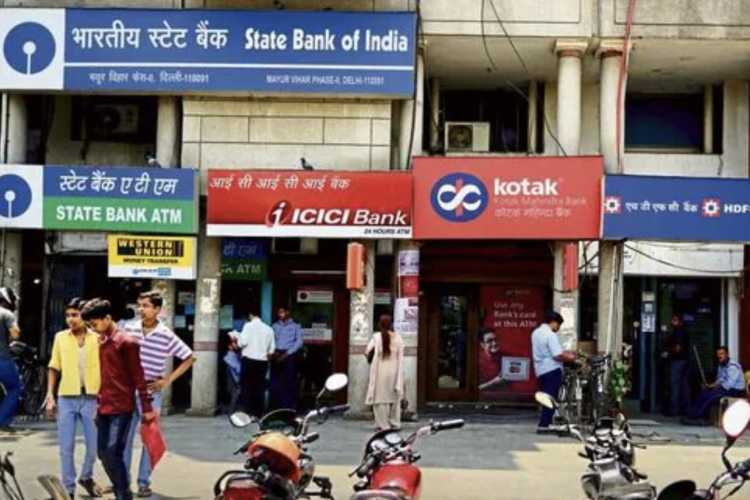
Next banking reform cycle: India’s public sector banks have given the government room to think beyond balance-sheet repair. PSBs reported a record net profit of ₹1.98 lakh crore in FY26. Gross non-performing assets fell to 1.9% from 7.3% in FY22. Aggregate business crossed ₹283 lakh crore and capital adequacy reached 16.6%. After years of bad loans, recapitalisation and weak balance sheets, the sector is in its strongest position in years.
Finance Minister Nirmala Sitharaman said on Monday that the government is expected to set up a high-powered banking committee to examine the next phase of reforms for Viksit Bharat. Its remit is expected to extend beyond PSBs to the wider financial sector. That is appropriate. The old problems have receded. The questions now concern savings, investment, scale and the ability of banks to finance a much larger economy.
READ | Bankers’ Books Evidence Bill updates law for digital banking
Banking reforms after the PSB clean-up
The government’s PSB Confluence has identified seven areas: deposit mobilisation, banking for youth, support for the investment cycle, financing global capability centres, agriculture and horticulture value-chain infrastructure, credit-card innovation and priority-sector lending. The list is wide because the demands on banks are changing. They will have to mobilise more savings while financing an economy that is larger, more capital-intensive and more integrated with global markets.
Deposits are the immediate constraint. Household savings have been moving towards mutual fund, SIPs, equities, metals and other financial assets. Bank deposits no longer have the position they once enjoyed among middle-class savers. Credit, meanwhile, cannot keep expanding indefinitely without a corresponding increase in stable liabilities.
PSB deposits rose from ₹107.2 lakh crore in FY22 to ₹156.3 lakh crore in FY26. The numbers are large, but so is the competition for household savings. Banks can no longer assume that rising incomes will automatically translate into deposits. The proposed committee should examine whether deposit products, interest-rate structures and regulations have kept pace with changes in household saving.
The same issue appears in banking for younger customers. More accounts by themselves will achieve little if younger savers increasingly use non-bank platforms for payments, investment and credit. Banks need to retain a place in the financial lives of customers who have more choices than the previous generation.
READ | AI in banking carries huge financial stability risks
Banks and India’s next investment cycle
The larger question is whether banks are equipped for the next investment cycle. Infrastructure, manufacturing, energy transition, urbanisation and logistics will require large amounts of long-term capital. The last credit boom showed what happens when rapid lending runs ahead of project appraisal, risk pricing and monitoring. Bad loans accumulated and the banking system spent years repairing the damage.
Banks therefore cannot carry the entire investment cycle on their balance sheets. India also needs a deeper corporate bond market. EY India has pointed to stronger bond markets, greater participation in global trade, larger bank balance sheets and productivity gains from artificial intelligence as factors that could narrow the gap between Indian and international lenders.
This matters because the quality of financing is as important as its volume. Long-gestation infrastructure and industrial projects need sources of capital suited to their risks and maturity. Loading too much of that exposure onto banks would recreate an old vulnerability.
READ | AT1 bonds return to haunt India’s banking system
Bank consolidation cannot substitute for reform
Consolidation will inevitably return to the discussion. In 2020, the government merged 10 PSBs into four, reducing the number of state-owned banks to 12. The objective was to create lenders with greater scale, stronger capital and more capacity to compete internationally.
Indian banks still have limited weight in global rankings. State Bank of India is the only Indian lender in the top 50 global banks by assets, at around the mid-40s in the latest rankings cited in the draft. The upper end of global banking remains dominated by very large Chinese and other international institutions.
That is a poor case for another round of mergers. A merger creates a larger balance sheet. It does not by itself improve governance, credit appraisal, management quality or productivity. Two inefficient institutions do not become efficient because their accounts are combined.
The proposed committee should instead ask why Indian banks struggle to scale organically. Is the constraint capital, governance, management autonomy, the weakness of the corporate bond market or the structure of public ownership? Those questions should precede any decision on further consolidation. Mergers are an instrument. They are not a banking strategy.
The last reform cycle dealt with bad loans and weak capital. The next one has a harder job. Banks will have to compete for savings, finance productive investment, price risk better and support firms operating at a much larger scale.
That is the useful test for the proposed committee. India has spent a decade making its public sector banks healthier. The question now is what those healthier banks are capable of doing.