





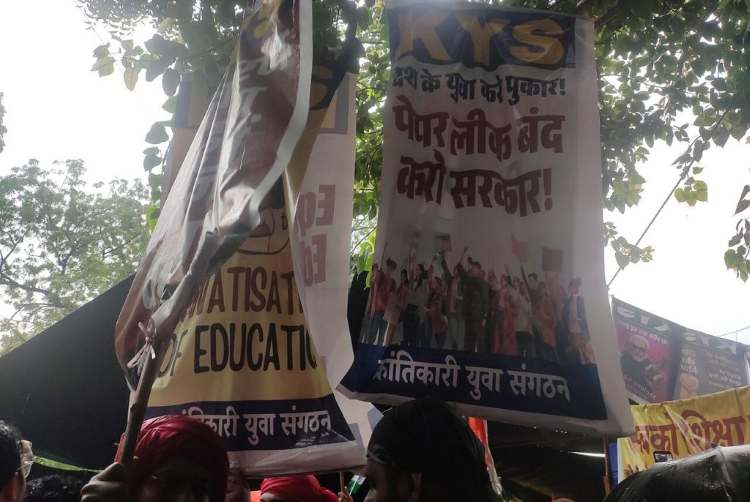
Youth protest and accountability: In a letter addressed to “young friends”, Dharmendra Pradhan resigned as India’s education minister on July 25 after taking “moral responsibility” for the National Eligibility cum Entrance Test (NEET) paper leaks and the youth-led protests stemming from them.
For some, the reason for this untimely ministerial departure, for the first time in the Narendra Modi government’s 12-year tenure, is framed as protective instead of punitive. Pradhan wrote that he did not wish for “anti-national forces” to exploit the situation at New Delhi’s Jantar Mantar protest site and across the country.
This “situation” which Pradhan alluded to ignited – and provided – an intriguing churn in India’s democratic expression of change: led broadly on two grounds, education and accountability, which otherwise historically carried lesser weight insofar as the citizens are concerned.
READ I Student protest restores ministerial accountability
While there have been resignations by Indian ministers in the past, this recent departure scripted history because of the mobilised force which caused it to happen – not through a court-driven stricture or parliamentary proceeding, but rather because of the unified and relentless voice of Gen Z comprising mostly students and young professionals.
This moment and the week-long demonstration spearheaded by the Cockroach Janata Party in New Delhi and other Indian cities call for a deeper introspection into the socio-political circumstances, participants and events that built a movement on the need for the government to be more accountable and its actions going forward.
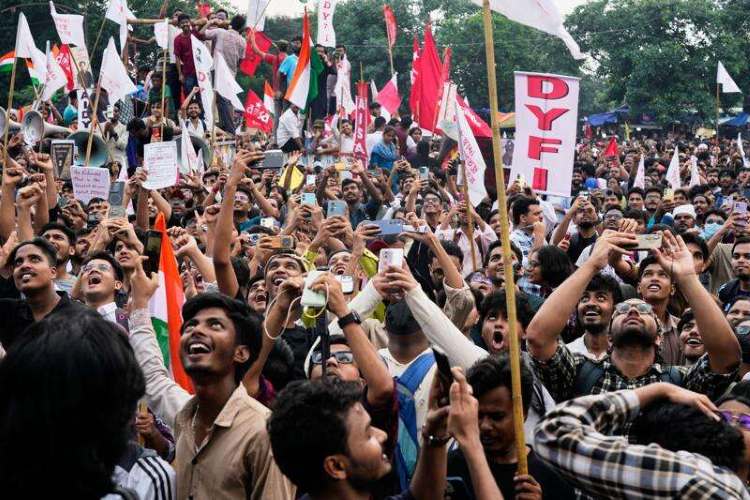
The significance of the youth-anchored protests lies more in what it has managed to unravel about 21st century Indian political structures rather than what it has achieved. For instance, social media and the power of ‘virality’ caused the movement’s success.
Innumerable reels that spread like contagion through mobile phones overwhelmed the government narrative and response. Videos and social media posts of Ladakh-based engineer and education reformer Sonum Wangchuk’s hunger strike, tear gassing the student-protestors, the violent clashes with the police and students being dragged turned distant news into personal invitation to participate. While the epicenter was Jantar Mantar, the shock waves were felt in states and districts as far off as Maharashtra, Assam, West Bengal and Telangana.
READ I Why India’s unemployment rate misses the jobs crisis
Youth protest and the language of dissent
This vociferous, socialised digital public infrastructure created a distinctly Gen Z language of dissent, but it was built on satire, speed and self-parody.
The second important feature is the designation of the movement as largely youth driven. This serves as an acknowledgement that a generation, often dismissed as being apolitical, could organise itself into a force which the state could simply not overlook. This characteristic is prominently visible in the optics at the negotiating table.
The government was represented by political veterans, J P Nadda and Jitendra Singh to do their bidding, while Saurav Das and Ashutosh Ranka, two young and aspiring professionals, represented the interests of the youth. This image was powerful, because it reflected that India’s youth are capable and prepared to voice their interests, and that the government must engage with its citizens as direct stakeholders in governance.
Third, Pradhan’s resignation had a great impact on the democratic spirit and offered evidence that collective protest remains an effective instrument in ushering change irrespective of the degree of government coercion. The demonstrations reminded the executive that Indian democracy was built on popular dissent and has historically stood up for defending fundamental rights. Dialogue is therefore woven into the very fabric of the nation’s political life.
As politician and activist Yogendra Yadav observed, “the future of democracy in India would be settled on the streets rather than in Parliament or through elections”, arguing that the July 20 protest affirmed that the road to Parliament passes through the streets. Indeed, the movement placed unprecedented emphasis on securing governmental accountability through non-electoral spaces, highlighting the increasingly central role of public protest in shaping democratic politics beyond the ballot box.
The education minister’s resignation represents more than a bureaucratic adjustment. It reaffirms a core democratic principle: governmental legitimacy depends not only on electoral success but also on a sustained willingness to respond to citizens’ concerns. In a representative democracy, accountability is continuously negotiated through public engagement rather than assumed after an election.
Seeking accountability
Education and public accountability lay at the centre of the nationwide protests. Although the movement initially gained momentum after Chief Justice Surya Kant’s controversial remarks comparing unemployed protesting youth to “cockroaches,” the immediate catalyst for demands seeking the minister’s resignation was the succession of NEET examination paper leaks, student suicides linked to examination pressures, and the widespread mismanagement of the Class XII Board examinations.
These events exposed deeper structural anxieties confronting India’s youth. The protests reflected growing frustration over declining educational integrity, limited employment opportunities, and the perceived erosion of meritocratic institutions under the pressures of nepotism, political patronage, and rapid technological change. For many young Indians, these failures represented not isolated administrative lapses but symptoms of a broader crisis of opportunity.
Government accountability therefore became the movement’s central demand. Public examinations are not merely mechanisms for assessing academic performance; they are institutions through which the state allocates educational access, employment prospects and social mobility. When these systems lose credibility, the state fails to uphold one of its most fundamental obligations to its citizens.
Accordingly, the demand for the education minister’s resignation was never simply punitive. It was a broader appeal for institutional responsibility and meaningful reform. While the resignation marks an important political concession, it addresses only part of the crisis. Restoring public confidence will require comprehensive reforms to examination governance, greater institutional transparency, and sustained investment in both education and employment generation.
The government’s response revealed the limits of its centralised governing strategy. Rather than immediately accepting political responsibility, the BJP initially relied on bureaucratic reshuffles within agencies responsible for conducting examinations while resisting calls for the minister’s resignation.
Pradhan’s resignation letter similarly avoided acknowledging a direct connection between his departure and the examination controversies. Instead, it framed his resignation as a sacrifice intended to prevent “anti-national” forces from exploiting the situation. The resignation therefore appeared as a carefully managed political concession, allowing the government to retain narrative control while responding to mounting public pressure.
The episode nevertheless signals an important shift in contemporary Indian politics. It demonstrates that organised, non-violent public mobilisation remains capable of compelling governmental accountability even within an increasingly centralised political system.
As the farmers’ movement previously illustrated, sustained civic mobilisation can reshape policy outcomes when institutional channels prove insufficient. The protests suggest that democratic contestation increasingly extends beyond Parliament into public spaces, where citizens seek to restore political accountability when formal institutions appear unable or unwilling to do so.
For the opposition, this episode also provides a model for constructing effective democratic pressure outside conventional parliamentary politics.
Deepanshu Mohan is Dean and Professor of Economics, O.P. Jindal Global University. He is a Visiting Professor at the London School of Economics (LSE) and a Visiting Research Fellow at the University of Oxford. Sonakshi Garg, who studies Law and is a Research Analyst with Centre for New Economics Studies (CNES), O.P. Jindal Global University, Sonipat, Haryana, contributed with research for this article. Originally published under Creative Commons.