




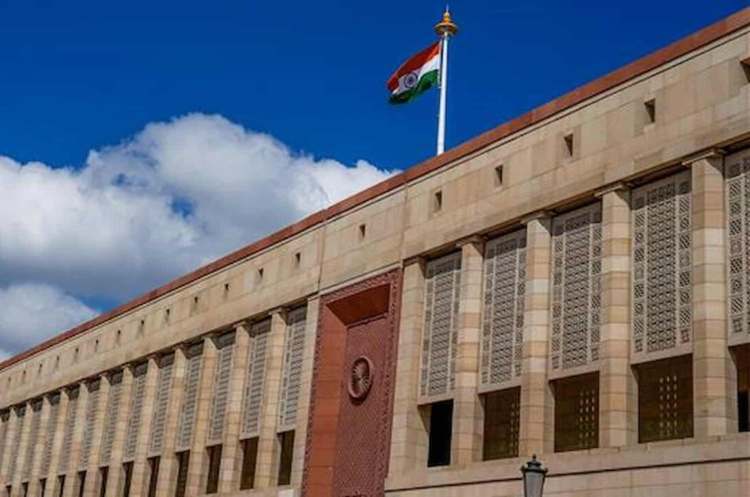
India is the largest democracy and it also is the most election-fatigued. With nearly 968 million registered voters, elections are an extraordinary exercise in logistics and public participation. But their frequency has become a structural burden. Five to seven state assembly elections are held in a typical year, apart from municipal and panchayat polls. Governance is repeatedly pulled into campaign mode.
This was not always the case. In the early decades after Independence, Lok Sabha and state assembly elections were held together. Political instability in the 1960s, including premature dissolution of several legislatures, broke that cycle. The case for One Nation, One Election is therefore not a radical redesign. It is an attempt to recover a rhythm that India once had.
READ | AI in elections: ECI may struggle to tackle synthetic campaigns
One Nation, One Election and the fiscal burden
The financial cost of elections is large. The 2019 Lok Sabha election is estimated to have cost about Rs 60,000 crore, with more than 10 lakh polling stations across the country. The 2024 general election is estimated by some agencies to have cost about Rs 1.35 lakh crore. State assembly elections add another Rs 15,000-20,000 crore per cycle. Local body elections, covering about 2.5 lakh panchayats and nearly 4,000 municipalities, impose further costs.
These numbers are not limited to the Election Commission’s expenditure. They include campaign spending, deployment costs, logistics, security arrangements, and the diversion of public staff. Nearly 10 million officials are involved in a general election. Repeated mobilisation of this scale drains administrative capacity.
The larger cost is indirect. Approvals slow down. Ministers and senior officials shift attention to campaign management. Welfare announcements multiply. States often carry the fiscal burden of election-time promises well after polling is over. Over a five-year period, fragmented elections are estimated to impose a combined cost of more than Rs 2 lakh crore on the public exchequer and the wider economy.
Synchronised elections would not remove all costs. But they would reduce duplication. Polling infrastructure, personnel, transport, security deployment and administrative preparation would be mobilised in fewer cycles. That alone makes the reform worth serious examination.
READ | Lok Sabha reform: Delimitation must look beyond population logic
Model Code of Conduct and governance disruption
The deeper problem is not the expense. It is the interruption of governance. India’s major reform agenda is long-gestation. GST rationalisation, banking consolidation, renewable energy transition, skilling, land markets, labour rules and urban reform all require sustained political attention. They do not yield results in a single quarter.
The Model Code of Conduct, triggered by every election, restricts new policy announcements and approvals. This is necessary to ensure fairness. But when elections occur every few months, the restriction becomes recurrent. Governments begin to work around the next election rather than the next reform milestone.
The consequence is predictable. Hard reforms are postponed. Short-term measures are prioritised. Administrative risk-taking declines. A fixed electoral calendar would give governments clearer windows for policy design, piloting and implementation. Complex reform needs continuity. India’s election calendar often denies it.
Election cycle and competitive populism
Frequent elections also reward the wrong kind of politics. The rise of freebies, loan waivers, subsidised power, direct cash transfers and other immediate benefits is not confined to any one party. It is now part of competitive electoral behaviour across states.
The fiscal consequence is serious. Once promised, such benefits are difficult to withdraw. They crowd out investment in infrastructure, health, education and urban services. State finances are then forced to absorb long-term obligations created for short-term electoral advantage.
One Nation, One Election will not end populism. No electoral reform can. But it can reduce the frequency with which governments are pushed into last-mile giveaways before polling day. A longer political horizon may shift some attention back to performance over a full term.
READ | Supreme Court must be mindful of judicial limits in electoral matters
Security deployment and administrative capacity
India’s elections also place a heavy burden on the security apparatus. The 2019 Lok Sabha election required large-scale deployment of central paramilitary forces and state police. Big state elections, especially in Uttar Pradesh, Bihar, West Bengal and Maharashtra, also require extensive security planning.
Repeated mobilisation has a cost. Personnel are moved across states. Routine law enforcement is stretched. Internal security priorities compete with election duty. A more predictable and less frequent election cycle would allow better deployment of police and paramilitary forces for their core responsibilities.
Federal accountability and 3-tier government
There is also a democratic argument. Each tier of government should be judged on its own responsibilities. The Union government should answer for national security, foreign policy, macroeconomic management and taxation. State governments should be judged on health, education, agriculture, policing and state infrastructure. Local bodies should be held accountable for sanitation, housing, roads, drainage and civic services.
Continuous elections blur these distinctions. National campaigns dominate state contests. Local elections are fought under the shadow of state and national leaders. Voters are often asked to judge one tier of government through the rhetoric of another.
A fixed and staggered election cycle can make federal accountability clearer. It can help voters separate national, state and local issues. That would strengthen, not weaken, democratic choice.
The opposition’s case cannot be dismissed as mere resistance to reform. Regional parties fear that synchronised elections will nationalise state contests and give larger national parties an inbuilt advantage. There are also serious constitutional questions. If an assembly falls mid-term, should the new government receive a full five-year mandate, or only the remainder of the synchronised cycle? The first option breaks synchronisation; the second weakens the voter’s mandate.
Opposition parties also argue that any mechanism to alter, shorten or align the tenure of state assemblies risks shifting power from the states to the Centre. These concerns do not defeat the case for reform, but they require a design that protects federal autonomy as much as administrative efficiency.
A staggered One Nation, One Election model
The strongest objection to One Nation, One Election is practical. Aligning terms, handling mid-term collapses, protecting state autonomy, and building political consensus will require constitutional and legislative care. These are real concerns. They cannot be brushed aside.
A rigid single-day election for all of India may be neither necessary nor desirable. A staggered model would be more workable. Lok Sabha elections could be held in Year 0, all state assembly elections in Year 2.5, and all local body elections in Year 3.5. Major elections would then occur roughly every 12 to 18 months, rather than every few months.
This would preserve five-year terms for each tier while reducing the intensity of the current electoral churn. It would also avoid forcing every contest into one nationalised moment. The gains would still be substantial: lower duplication, better security planning, fewer Model Code interruptions, and longer periods for governance.
India’s elections are vast, participatory and fiercely contested. The question is not whether elections matter. They do. The question is whether the present electoral calendar is compatible with the needs of a large, fast-growing economy.
When elections impose costs running into lakhs of crores, when the Model Code repeatedly slows decision-making, when reform is sacrificed to the next campaign, and when competitive populism weakens state finances, the system carries a development tax.
One Nation, One Election, designed as a structured cycle across tiers of government, offers a way to reduce that tax. It is not a cure for India’s political problems. It is a practical reform to make democratic government less distracted, less wasteful, and more capable of governing.
READ | India-US trade framework must be renegotiated after Supreme Court ruling
Dr Charan Sigh is a Delhi-based economist. He is the chief executive of EGROW Foundation, a Noida-based think tank, and former Non Executive Chairman of Punjab & Sind Bank. He has served as RBI Chair professor at the Indian Institute of Management, Bangalore.