





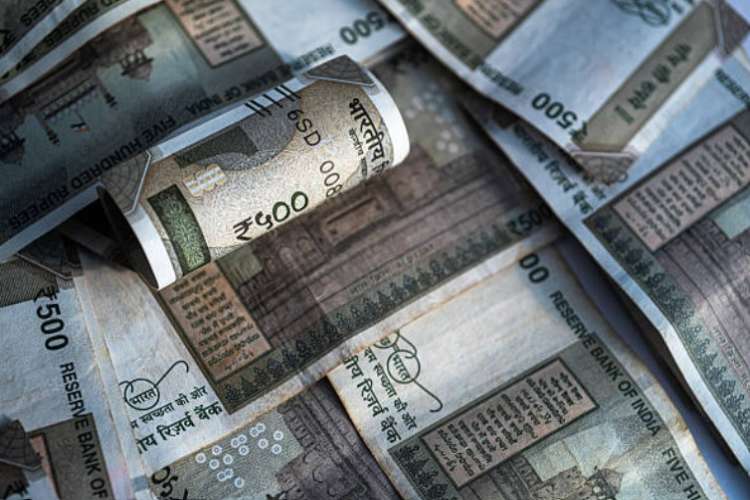
The war in West Asia has claimed an Indian casualty that few noticed at first- the rupee. As the conflict has dragged on and oil markets have priced in supply risk, the currency has slipped to record lows. On March 16, it closed near 92.42 to the dollar, just off its all-time low of 92.4750. That is not a routine market move. It reflects a familiar Indian vulnerability: when oil spikes and risk appetite disappears, the rupee is left to absorb the shock.
The first pressure point is crude. Brent has moved above $100 a barrel as markets react not only to current disruption, but to the risk of a wider conflict around the Strait of Hormuz, through which a large share of global oil and gas trade moves. For India, which remains heavily dependent on imported energy, that matters at once. Oil is paid for in dollars. A higher oil bill means higher demand for dollars. The rupee weakens almost by arithmetic.
READ | Rupee depreciation is India’s oil warning
The second pressure point is global risk aversion. In periods of geopolitical stress, money moves to the dollar and away from emerging markets. That has been visible again. Foreign investors have sold more than $5.5 billion of Indian equities this month, adding direct pressure on the currency. Other Asian currencies have also weakened, but the rupee has been one of the sharper casualties.
India’s external balance remains the weak link
The domestic weakness is not new. India’s dependence on imported energy remains its largest macroeconomic vulnerability. Reuters reported on March 12 that if oil stays near $100 a barrel through the next financial year, India’s growth could slow to 6.6% and inflation could rise to 4.1%. That would not only widen the current account deficit; it would also complicate monetary policy. A rupee slide driven by oil feeds imported inflation and reduces the Reserve Bank of India’s room for comfort.
The strain is visible in reserves. India’s foreign exchange reserves fell by $11.68 billion in the week ended March 6, to $716.81 billion, the sharpest weekly decline in over a year, after the RBI sold dollars to curb disorderly moves in the currency market. The stock of reserves remains large. But a large reserve stock is not the same thing as unlimited room to defend a preferred exchange rate. It allows the central bank to smooth volatility. It does not allow it to suspend the external arithmetic for long.
READ | Rupee outlook: Stability by design, weakness by choice
Inflation and fiscal strain now enter the picture
The draft version of this argument stopped at the exchange rate. That is too narrow. A weaker rupee caused by higher crude prices does not stay in the foreign-exchange market. It increases the landed cost of oil, raises imported inflation and can harden expectations on interest rates and liquidity. Reuters reported that analysts now expect the RBI to reassess its liquidity stance if external inflation risks worsen.
There is also a fiscal channel. Higher crude prices can force difficult choices on excise duties, LPG support, fertilizer subsidies and the finances of state-run oil marketing companies if the full burden is not passed through to consumers. Citi and Nomura, cutting their year-end targets for Indian equities, have already warned that a prolonged conflict could worsen both India’s fiscal deficit and current account deficit.
West Asia war matters to India for more than oil
The shock is wider than energy. The Middle East is a major trading region for India, accounting for around $100 billion in annual shipments, and disruptions around Hormuz are already affecting LNG, fertilizer and rice trade. Reuters also reported that India’s LPG supply has been disrupted, with deliveries stalling and 22 tankers carrying LPG, crude and LNG stranded in the strait. So the rupee story is not just about oil imports. It is about trade, logistics and a wider external account exposed to one region.
That wider exposure has another dimension: remittances. The Gulf remains central to India’s remittance economy. A prolonged conflict that slows economic activity in the region would hurt not only energy flows and trade, but also a key support to India’s external balance. The currency market has not fully priced that risk yet.
READ | RBI must let the rupee settle closer to its real value
RBI has steadied bonds, not solved the problem
The interesting contrast is in the bond market. Even as the rupee has weakened, the 10-year government bond yield has remained broadly anchored around 6.68%. That has not happened by itself. Reuters reported that RBI net bond purchases have reached a record 572.10 billion rupees, helping contain yields despite global volatility. That is competent crisis management. It is not a cure.
The distinction matters. The RBI can smooth volatility and prevent panic. What it cannot do is permanently defend a level if oil remains high, portfolio flows stay negative and the dollar remains firm. That is the real message from the past week.
A weaker rupee is not an unqualified bad
There is, as always, one consolation. A weaker rupee can support exports, especially services exports billed in dollars. But when depreciation is driven by an oil shock, the gain is limited. The higher import bill, the inflationary spillover and the strain on the current account usually outweigh the benefit to exporters. In such episodes, the rupee is less a competitiveness tool than a shock absorber.
That is the policy problem now. India’s growth outlook remains stronger than that of many large economies, and that should help over time. But in the near term, the rupee is hostage to forces outside New Delhi and Mint Street. If oil stays above $100 and the conflict deepens, the central bank may have to tolerate further depreciation while continuing to lean against disorderly moves. Goldman Sachs now forecasts the rupee could weaken to 95 within a year if these pressures persist.
The larger lesson is not about one bad week in the currency market. It is about the limits of macroeconomic management in an oil-importing economy during geopolitical crisis. India has handled the immediate volatility with some skill. But if West Asia remains on fire, the rupee will have to carry part of the burden.
READ | Rupee depreciation: The currency faces a slow, structural slide