





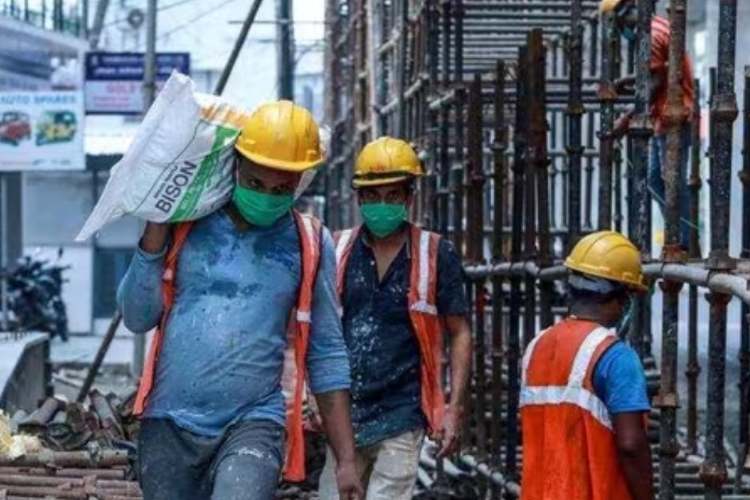
Maharashtra economy remains India’s biggest state economy, and it continues to post numbers that most states would envy. The state’s Economic Survey projects growth of 7.9% in 2025-26. Per capita income is expected to rise to Rs 3.47 lakh. Nominal Gross State Domestic Product is estimated at nearly Rs 51 lakh crore. The services sector is projected to grow by 9%, industry by 5.7%, and agriculture and allied activities by 3.4%. The fiscal deficit is budgeted at 2.7% of GSDP, within the prescribed limit.
These numbers confirm Maharashtra economy’s scale. They also underline its diversity. Few states have an economic structure in which agriculture, industry and services all retain weight. That mix has given the state resilience. When one sector slows, the others cushion the shock.
READ I Deregulation drive: Can states deliver the next big reform?
Maharashtra economy rests on services strength
The main engine remains services. Mumbai’s position as the country’s financial capital gives the Maharashtra economy an advantage no other state can easily replicate. The country’s largest banks, financial markets, insurers, fund houses and corporate headquarters are concentrated there. That financial depth feeds into trade, logistics, information technology, media and professional services. It also explains why Maharashtra continues to attract a disproportionately large share of foreign direct investment.
The state’s strength, however, is not confined to services. Maharashtra has built a broad manufacturing base across automobiles, engineering, pharmaceuticals, and chemicals. Its industrial clusters are backed by ports, highways, freight links and large urban markets. The Mumbai-Nagpur Samruddhi Expressway and the expansion of metro corridors in Mumbai are part of a longer pattern: public investment aimed at lowering logistics costs and raising productivity. Power capacity, including renewable energy, is also expanding. That matters because industrial competitiveness rests as much on reliable infrastructure as on policy incentives.
The same breadth is visible in the entrepreneurial base. Maharashtra’s 63.85 lakh MSMEs connect large industry to local supply chains and jobs. The state also commands a large share of India’s start-up ecosystem. That combination of legacy industry, financial capital and new enterprise is rare. It is one reason why Maharashtra has remained ahead for so long.
READ I Unspent SNA funds: Why states need more untied capital
Regional imbalances in Maharashtra economy
Yet the central question is not whether Maharashtra economy is large. It is whether it can remain cohesive as it grows. The sharpest weakness is regional imbalance. Economic activity remains concentrated in the Mumbai Metropolitan Region and the Pune belt. Vidarbha and Marathwada continue to lag in industrialisation, infrastructure and incomes. This is not a new problem, but it has become harder to ignore as headline growth stays strong while large parts of the state remain vulnerable.
That imbalance is most visible in agriculture. The sector contributes a smaller share of output, but it still supports a large share of the population. Distress in drought-prone districts cannot be treated as a marginal issue in a state that wants durable growth. Even a year of above-normal rainfall does not settle the problem. Maharashtra received 109% of normal rainfall during the 2025 monsoon, yet climate volatility still damaged nearly 95 lakh hectares of farmland. The state had to approve compensation of over Rs 9,000 crore for more than one crore farmers. That is a reminder that agriculture now faces not only water scarcity but weather instability.
READ I India’s higher education ambitions hinge on states
Urban stress is rising with growth
Urbanisation has brought another strain. Maharashtra’s growth is tied to the expansion of its cities, above all Mumbai and Pune. But urban growth has outpaced planning. Congestion, housing shortages and environmental stress are now economic issues, not merely civic complaints. Mumbai’s density is both a sign of opportunity and a warning about overload.
Metro expansion and suburban rail upgrades are necessary, but they are not enough by themselves. Without better land use, housing policy and urban governance, the costs of agglomeration will rise faster than the gains.
Fiscal discipline will be tested
The Maharashtra economy’s fiscal position is still sound by current benchmarks. A deficit of 2.7% of GSDP offers comfort. Revenue receipts of about Rs 5.6 lakh crore in 2025-26 suggest that Maharashtra still has the tax base to support both capital spending and welfare obligations. But this cannot be taken for granted. A state that spends heavily on infrastructure while expanding social commitments will face pressure on borrowing and expenditure quality.
Maharashtra’s revenue base depends heavily on buoyant real estate, manufacturing and financial services. Any slowdown in these sectors will quickly show up in the state’s finances.
Infrastructure and green investment can reshape growth
The opportunity lies in using today’s strength to alter tomorrow’s geography of growth. Infrastructure is the clearest lever. Expressways, ports, rail links, metro systems and logistics hubs can do more than improve mobility. They can reduce the historic concentration of opportunity. Better connectivity between Mumbai and interior districts could pull industry into regions that have so far remained peripheral to the state’s growth story.
That requires more than building roads. It requires policy intent. Maharashtra will have to direct industrial policy towards sectors where scale, logistics and skilled labour can create long-term advantage. Manufacturing, electronics, logistics and associated supply chains offer that possibility.
Renewable energy could become another area of advantage. As India’s energy transition gathers pace, Maharashtra has a chance to position itself as a destination for green manufacturing, electric mobility, battery value chains and, eventually, green hydrogen-linked investment. Early moves in renewable generation and solar pump installation show direction. The next step is to link energy transition to industrial strategy rather than treat it as a separate policy track.
Tourism also deserves more serious attention than it usually gets in discussions on Maharashtra’s economy. The state’s lead in foreign tourist visits in 2024 shows the range of its appeal. Cultural sites, wildlife, coastlines, pilgrimage centres and urban attractions create a diversified tourism portfolio. For regions outside the dominant industrial belts, tourism can generate employment with lower entry barriers than manufacturing.
Competition from other states is getting sharper
The Maharashtra economy’s traditional advantages remain formidable, but they are no longer unchallenged. Gujarat, Tamil Nadu, Karnataka and Telangana are all competing aggressively for investment. They are offering faster clearances, sector-specific parks and targeted incentives. Maharashtra can no longer rely on inherited strengths alone. It will have to improve regulatory efficiency and sustain policy credibility.
There is also the external risk. Maharashtra is more exposed than most states to shifts in global trade, capital flows and financial conditions. A slowdown in world demand can hit manufacturing exports. Volatility in financial markets can affect investment flows into Mumbai. A globally integrated economy gains first from openness, but it also absorbs the first shocks.
The Economic Survey presents a reassuring picture, and much in it is justified. But Maharashtra’s next challenge is not growth in the aggregate. It is the quality and spread of that growth. A state of this scale cannot depend indefinitely on a few metropolitan centres and a few high-performing sectors. The Maharashtra economy has the assets to remain India’s economic leader. The test is whether it can turn economic weight into broader, more resilient prosperity.