





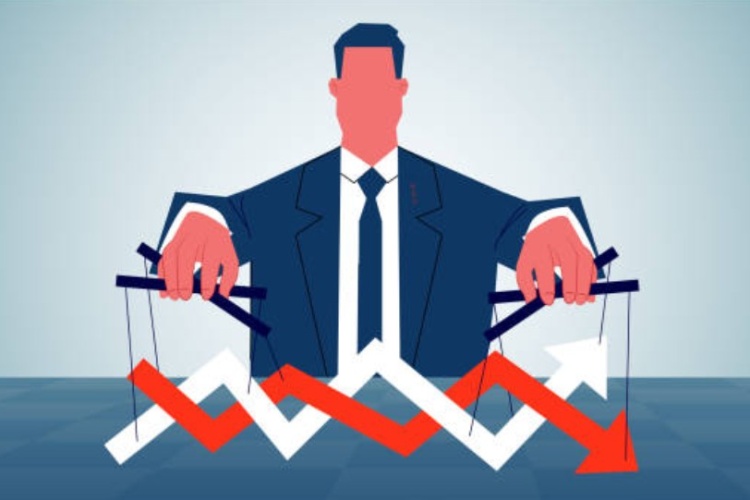
Trump tariffs: The return of President Trump to the White House in 2025 has accelerated the shift away from the post-WTO trading order. A new round of executive tariff actions has signalled that the United States is again willing to use unilateral trade instruments at scale. Such actions are not new in global trade history. What is new is the extent to which a major economy in the post-1995 era is relying on discretionary tariff power to pursue economic and geopolitical objectives at the same time. The speed, breadth and unpredictability of these measures have reopened questions about the durability of rules-based globalisation.
This is part of a larger return of American economic nationalism. The United States still accounts for about a quarter of global GDP and issues the world’s leading reserve currency. That gives it unusual room to act. In selected sectors after 2024, tariff rates rose sharply, especially in steel, aluminium and industrial inputs, justified by claims of unfair trade practices, chronic trade deficits and national security risk. The case made by Washington was plain enough: liberalisation may have raised global output, but it also left parts of industrial America hollowed out, weakened manufacturing wages and exposed supply chains to strategic risk.
READ | WTO reforms test the future of rules-based global trade
US tariff policy and domestic politics
This approach has support at home, but not uniformly. In the industrial Midwest and parts of the South, where factory closures and job losses have lingered for years, tariffs are seen as corrective policy rather than distortion. Organised labour sees them as a chance to recover bargaining power in sectors damaged by import competition.
Business groups, multinationals and consumer lobbies see the other side: costlier inputs, weaker export competitiveness, inflationary pressure and retaliation abroad. Smoot-Hawley remains an overused analogy, but the warning survives. Broad protectionism can trigger consequences that spread far beyond the sectors it intends to protect.
Executive trade authority and legal grey zones
The legal strain is equally important. Congress retains the constitutional power to regulate commerce with foreign nations. But over time, statutes such as the Trade Act of 1974 and the International Emergency Economic Powers Act have handed the executive substantial discretion. Court scrutiny of some post-2024 tariff steps led the administration to use alternative statutory routes. That only highlighted the elasticity of the system: Congress delegates, the executive stretches, the judiciary reacts. Trade policy now sits in a grey zone where domestic constitutional design and international obligations meet, but do not always align.
For investors and trading partners, the issue is not only the tariff rate. It is predictability. Trade depends on stable expectations, transparent rules and credible commitments. When tariff decisions can be revised quickly through executive action, the life of any assurance shortens. Cross-border investment decisions then begin to price in political volatility, not just market risk.
READ | Techno-nationalism is reshaping geopolitics, global trade
WTO rules under pressure
At the multilateral level, the damage is subtler but deeper. WTO principles such as most-favoured-nation treatment and tariff bindings remain formally in place. But enforcement has weakened. The paralysis of the Appellate Body and the slow pace of dispute settlement have reduced the deterrent value of legal challenge. For a dominant economy, unilateral action carries less institutional cost than it once did. That exposes the basic weakness of a rules-based order when power disparities return to the centre of trade politics.
Developing countries face this shift directly. India has seen sporadic duty escalations in some product lines during the post-2024 tariff rounds. Given bilateral trade with the United States across pharmaceuticals, engineering goods, textiles and services, prolonged uncertainty carries obvious costs. Waiting for legal resolution through multilateral channels may be formally correct, but commercially useless.
Trump tariffs: India-US trade and pragmatism
India’s preference for negotiation alongside legal engagement is therefore less capitulation than prudence. Early talks can create room for tariff moderation, transition periods and limited protection for vulnerable sectors. In trade, legal clarity often arrives after the market has moved on. Governments balance principle against commercial timing. Engagement can restore predictability without surrendering policy space.
The harder legal question lies in the use of national security exceptions. Article XXI of the General Agreement on Tariffs and Trade allows members to take measures they consider necessary for the protection of essential security interests. But the outer boundary of that exception remains contested. When trade access is linked to geopolitical alignment or foreign policy behaviour, the distinction between security policy and economic coercion begins to blur. WTO panels have allowed some deference in this area. Too much deference, however, empties the rule of limit. In practice, weak enforcement pushes states back towards political bargaining.
READ | India braces for fallout as US tariffs redraw global trade map
Geopolitics, dependence and trade power
The trade story can no longer be separated from geopolitics. Energy ties with Russia, Indo-Pacific defence alignments, supply-chain resilience plans and controls over strategic technologies now shape commercial policy. Tariffs are no longer just about market access. They are instruments in larger strategic bargains. India and other emerging powers therefore face a delicate task: engage major markets without becoming so dependent on them that policy autonomy narrows. Smaller economies face the same problem in harsher form.
If a structured trade arrangement does emerge between India and the United States, its effect will depend less on rhetoric than on design. Predictable tariff schedules, clearer regulatory pathways and investment facilitation could benefit firms on both sides. American companies would gain greater certainty in India’s market. Indian exporters would gain a more stable footing in the United States. But this is not distribution-neutral. Agriculture and small enterprises cannot be left to absorb the shock without transition support.
Globalisation after the liberal consensus
The world economy is now past the age when liberalisation could be treated as an end in itself. Resilience, industrial policy, supply-chain security and technological sovereignty now sit alongside efficiency and comparative advantage. The real question is whether globalisation can be re-anchored inside institutions strong enough to absorb national security concerns without destroying predictability.
For the United States, the wager is that economic nationalism can rebuild industrial capacity without splintering the system that underpins its own power. For countries such as India, the problem is different: how to remain open, negotiate hard and preserve room for domestic development strategy. For poorer countries, the risk is that systemic adjustment hardens into exclusionary blocs that shut out late industrialisers.
Hirschman, Gowa and the new trade realism
The debate over how to revive or redesign the WTO will continue. But one point is already clear. Realist thinking in political economy has returned. Trade is no longer treated mainly as an efficiency machine. Sanctions, supply disruptions, technology controls and geopolitical rivalry have pushed policy back towards a harder view of international commerce.
Albert Hirschman saw this long ago. Trade, he argued, is rarely a neutral exchange between equals. It can create dependency, and dependency can be turned into leverage. A dominant buyer can use market access as power. Commercial ties can slowly become political instruments.
The force of Hirschman’s argument lies in what it shifts attention towards. The key variable is not simply trade volume, but concentration. What matters is exit cost. If a country cannot redirect exports or replace critical imports quickly, it is exposed. If it can diversify markets and suppliers, it has more autonomy.
That does not mean autarky. In an economy built on dense supply chains, self-sufficiency is neither possible nor desirable. The aim is resilience. Countries need the ability to pivot, secure alternatives and reorganise trade links when shocks hit. The object is not insulation, but lower dependence.
Joanne Gowa made a related point from another angle. Trade patterns are shaped not only by economics, but also by security alignments. States often trade more deeply with allies because commerce reinforces strategic partnership. Dependence on rivals in critical sectors creates vulnerability. Trade networks, then, reflect power and alignment as much as comparative advantage.
That is the world now taking shape. Countries will remain open and interconnected. But they will also try to stay nimble enough to deal with different partners as strategic conditions change.
READ | Trump 2.0: India must prepare for a global trade shake-up

Suresh Kumar is a retired Indian Administrative Service officer with nearly four decades of distinguished leadership in governance, public policy formulation, administrative reform, agriculture transformation, water governance, and institutional restructuring. Widely respected as one of Punjab’s most influential policy architects, he served as Principal Secretary to the Chief Minister (2003–07) and subsequently as Additional Chief Secretary, Punjab and Chief Principal Secretary to the Chief Minister (2017–21). Educated at the London School of Economics, with extensive global exposure through the World Bank, IMF Institute for Capacity Development, UNDP, UNICEF, UNESCO, ILO, Columbia University SIPA, TERI, IIM Bangalore, and LBSNAA, he blends field-level governance depth with global development perspectives. He is also a prolific public policy commentator whose work has shaped national discourse on federalism, sustainability, agricultural policy, governance reform, institutions, and public administration.

Arpit Chaturvedi is the Co-Founder and Chief Executive Officer of Global Policy Insights (GPI), a centrist thinktank based out of New Delhi, New York, and London.