





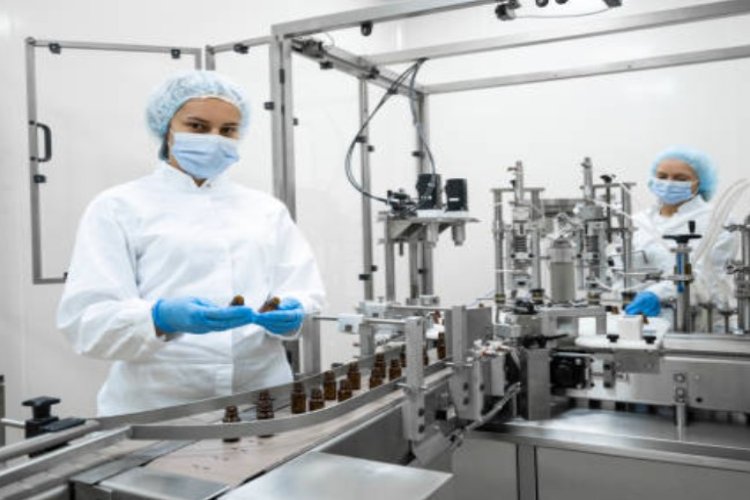
Medical device manufacturing: National security, supply resilience, and jobs are now shaping industrial policy across major economies. Strategic manufacturing—semiconductors, pharmaceuticals, medical devices—is moving closer to end markets. Trade sanctions, tariffs, and shifting geopolitical alignments have made long supply chains costly and uncertain. India’s policy choices are being shaped by the same calculus.
For India, the shift also creates an opening. Medical devices offer scope to deepen domestic manufacturing, reduce import dependence, and serve regional markets. Near-shoring is no longer a slogan; it is becoming a test of manufacturing credibility.
READ | Organoids set to replace animal testing in biomedical research
PLI has its limits
The government has pushed medical device manufacturing through policy-led incentives, most visibly the Production Linked Incentive (PLI) scheme, which offers a 5% incentive on incremental sales linked to output targets. The scheme has supported scale-up, attracted investment, and expanded production capacity.
But output-linked incentives alone cannot deliver self-reliance or position India as a near-shore exporter of complex devices. India imports medical devices worth about $8 billion annually, while exports are roughly $4 billion. The gap is structural, not cyclical.
More than half of India’s medical device imports come from five countries—the United States, China, Germany, Singapore, and the Netherlands. This concentration exposes supply chains to geopolitical shocks, regulatory disruptions, and logistics failures. For a sector tied directly to population health, such dependence is a strategic risk.
Trapped in low-complexity manufacturing
Domestic manufacturing remains concentrated in high-volume, low- to mid-complexity products. India continues to import most high-end devices—imaging systems, radiotherapy equipment, precision implants, and surgical robotics. Even where PLI has helped scale MRI and CT production, the focus has been on mature technologies, not frontier innovation.
A closer look at the ecosystem highlights four binding constraints.
READ | Medical tourism: Millions seek affordable healthcare in India
Medical device manufacturing capacity
High-risk devices—imaging systems, ventilators, orthopedic and cardiovascular implants—require centralised licensing and ISO 13485 compliance. Only about a quarter of Indian manufacturing plants are approved for Class C and D devices. The rest are confined to Class A and B products with lower design and validation complexity.
This skew matters for exports. Competing hubs such as Vietnam, Thailand, and Malaysia already deliver comparable low-complexity devices at 5–15% lower cost. Staying anchored to Class A and B manufacturing risks eroding export competitiveness.
Policy support is shallow relative to peers
PLI rewards output, not capability creation. Normalised against capital expenditure and R&D intensity, India’s support is modest compared to what Singapore and Malaysia offer. More importantly, PLI bypasses critical enablers—testing infrastructure, sterilisation facilities, clinical trials, and advanced skills. Without these, high-complexity manufacturing remains commercially unattractive.
If India wants to compete with FDA or CE-approved supply chains, CDSCO approvals must carry greater global credibility. That requires predictable review timelines and a more pragmatic approach to accepting foreign clinical trial data for novel devices. Without this, India will remain a manufacturing destination for legacy products, not innovation-led platforms.
Electronics and software validation gaps
Modern medical devices are software-driven and electronically intensive. India’s testing capacity for EC 60601 electrical safety, IEC 62304 software lifecycle validation, and cybersecurity remains fragmented. Manufacturers often complete final validation overseas, adding cost and deterring investment in complex devices.
India faces a widening gap between disease burden and device adoption, especially for chronic conditions. Despite high prevalence of diabetes and hypertension, penetration of monitoring and diagnostic devices remains low, particularly outside urban centres. This is both a public health failure and a manufacturing opportunity.
READ | HR crisis: Medical education should be tailormade for reality
Wearable and non-invasive devices, including continuous glucose monitors, offer scope to align domestic manufacturing with population health needs—if policy shifts from output maximisation to ecosystem building.
Orthopedic and cardiovascular implants illustrate the risk of import dependence. India’s population requires implants designed for local body types and usage patterns. With demand rising rapidly, reliance on imports could become a long-term constraint on healthcare access and affordability.
What policy must do next
Life expectancy has risen from about 63 years to nearly 70 over the past 25 years and will continue to improve. An aging population will push healthcare demand sharply higher. Incremental policy adjustments will not close the resulting device gap.
Moving up the value chain will require coordinated reform—state-level incentives, public-private partnerships, shared testing and validation infrastructure, and regulatory reforms focused on Class C and D devices. Production incentives have a role, but only alongside investments in capability, credibility, and compliance.
Without this shift, India will scale manufacturing volumes without reducing strategic dependence. With it, medical devices can move from a policy aspiration to a credible industrial pillar.
Rachna Dayal is founder and Managing Partner, Sugati Ventures, USA.
READ | India must prepare for a bout of migration by doctors, medical staff

Dr Badri Narayanan Gopalakrishnan is Fellow, NITI Aayog. Views expressed are personal.