





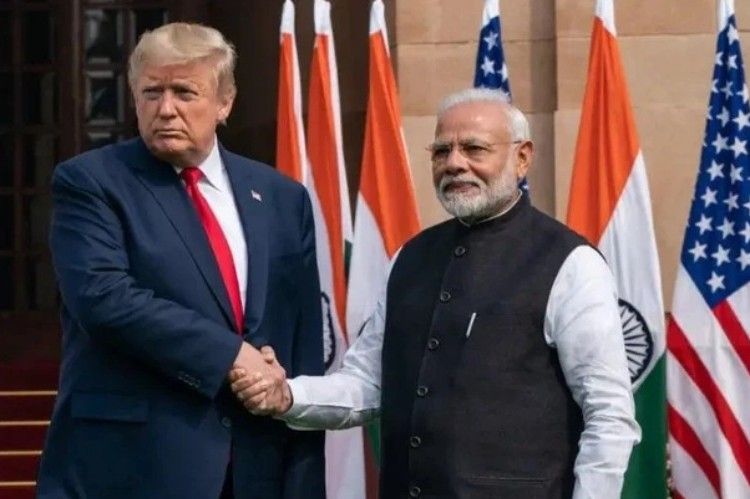
India’s tariff policy and trade: The White House’s latest announcement on finalising the Indo-US deal, and lowering of tariffs from 25 to 18% for India has once again brought to the fore the complex geopolitics of trade negotiations.
The exchange between the United States and India over the past year proves that modern trade negotiations extend beyond tariff schedules. Sanction regimes and geopolitical alignment have come to shape tariff discussions. In other words, domestic tariff policy has now become inseparable from foreign policy.
For India, then, to insulate itself from these shocks, the need of the hour is to recalibrate its tariff policy from a protectionist, reactive shield, to a strategic tool that can boost its export competitiveness, strengthen trade-negotiation credibility, and allow it to integrate more deeply into global value chains.
READ ITrade agreements have become India’s strategic tools
India’s trade policy paradox
In this respect, 2026 is significant. The year has begun with two powerful yet contradictory trade narratives: India continues to maintain a protective tariff regime, even as it pursues a liberal trade agenda through high-profile trade agreements with the UK, US, Netherlands, UAE and Australia.
The paradox is evident. On one hand, India is seen as protecting vulnerable domestic industries such as solar PV cells and modules, dairy, toys and steel. On the other hand, it is liberalising selected sectors such as electronics, pharmaceuticals and engineering.

Data reveals that India’s simple average Most Favoured Nation (MFN) tariff rate is 15.8 percent; the country’s simple average bound rate, or the maximum tariff rate that can be applied, is 48.5 percent.
In agriculture, the MFN rate stands at 36.7 percent, and the maximum rate that can be applied is 113.1 percent. This means that at any given point, India can levy tariffs ranging from 36.7 percent to 113.1 percent to restrict agricultural imports.
These rates are the highest among G20 countries and reflect the high tariff flexibility that India enjoys.
However, given that the tariff policy is unfolding in the backdrop of a highly politicised, protectionist global trade environment—G20 countries continue to introduce trade-restrictive measures even while publicly endorsing rules-based trade and open markets—it is undoubtedly a valuable strategy for a country such as India.
From a political economy perspective, this flexibility in levying higher tariffs allows rapid intervention in response to sectoral distress, dumping allegations, and import surges.
But seen from the lens of trade policy, there are definite downsides.
High tariffs mean input costs rise and supply chains are complicated, leading to weakening of exports. This risks credibility in global markets and a risk of retaliation, such as in the case of the trade war between US and India. US officials have consistently flagged India’s tariff levels as a barrier to deeper trade integration.
Here’s what happens when tariffs are frequently adjusted: to begin with, prices of imported goods may rise or fall in the domestic market. The more significant impact is seen in altered supply chains—prices for intermediate goods such as components, packaging materials, machinery, specialised metals, and chemicals that might be used as inputs for exports increase, thus undermining export competitiveness.
High or frequently adjusted tariffs on these inputs increase the production costs of exportable goods, even if the final products do benefit from Free Trade Agreement-based export incentives.
Thus, India’s high tariff policy is putting a structural constraint on its export competitiveness and supply-chain integration.
Disruption by tariff policy asymmetries
Lately, the stress of tariffs has been most visible in the manufacturing sector. In December 2025, the Indian government imposed a three-year safeguard duty of 11-12 percent on selected steel products. This was done to counter the surge of low-priced imported raw materials.
Also, provisional anti-dumping duties have been imposed on low-ash metallurgical coke imports in the same month.
These tariffs are meant to protect certain domestic industries such as steel, provide relief to upstream producers (those who supply inputs to be used in the production of goods), and often redistribute rents within the industry.
However, downstream export-oriented firms (that transform intermediate inputs into final goods) such as consumer durables, engineering exports and automobile manufacturers end up facing higher production costs, thereby eroding their export competitiveness.
This is also the reason why such tariff asymmetries often lead to ‘reciprocal tariff’ arguments.
Earlier last year, this led to growing concerns among Indian exporters about potential US retaliation linked to tariff differentials and geopolitical tensions. The Indian government was compelled to roll out support measures to cushion Indian exporters, including financial and institutional assistance.
Indian exporters may have shown resilience by diversifying markets across Africa, West Asia and parts of Asia, but export market diversification is not a substitute for competitiveness in the long run. New markets are often volatile and small, hence less profitable.
Sustainable export growth primarily depends on export competitiveness, scale and cost efficiency, and reliability, which are directly leveraged by tariff policy and strategy.
Boost investor confidence
To strategically align its tariff policy with an export-led growth vision, India could consider a few solutions.
First, while maintaining high tariff flexibility at the aggregate level, India can rationalise tariffs on critical intermediate inputs used by export-oriented sectors such as engineering goods, chemicals, food processing and electronics.
This will protect final goods and reduce the cost burden on exporters.
Second, tariff decisions should also be thoughtfully aligned with Production-Linked Incentive (PLI) schemes and logistics reforms to increase exports and enhance productivity.
While tariffs play an important role in protecting vulnerable sectors, complementary policies are essential for driving advancements and overall economic growth.
Narrowing the gap between bound and applied tariffs in certain export-oriented sectors will enhance India’s credibility while preserving flexibility, and reassure reliable trade partners.
Finally, the government should view free trade agreements (FTAs) as commitments with trading partners, not just as tools for reducing tariffs.
In modern FTAs, market access is traded for outcomes beyond tariffs to include a broad range of economic interactions, thus creating predictable conditions for cross-border trade and investment and allowing for deeper engagement with trading partners.
Given that 70 percent of international trade now entails several transactions where services, raw materials, parts and components are exchanged before being incorporated into final products for consumers across the world, such agreements now increasingly cover several dimensions of global value chains such as customs barriers, rules of origin, facilitation and services. These create stability for specific industries while maintaining flexibility in others and boost investors’ confidence without limiting policy options.
Going ahead, India should position its tariff framework strategically as a negotiating tool in trade negotiations to secure concrete and high-value gains in areas where India’s real strengths and interests lie—especially services, digital trade, standards recognition and foreign investment.
If this happens, tariffs will become an instrumental tool and asset rather than a constraint in India’s export growth trajectory.
Anusree Paul is a trade economist and Associate Professor, School of Business, UPES University, Dehradun, Uttarakhand. Originally published under Creative Commons by 360info