





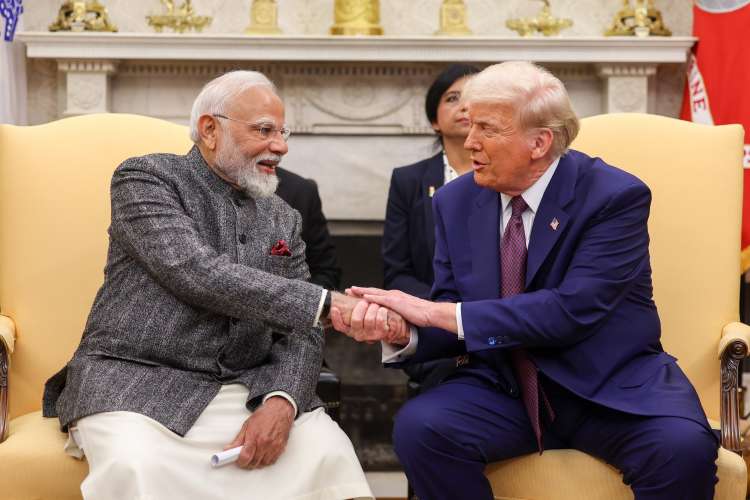
India-US trade deal: After years of build up and negotiations that felt like a tug-of-war, India and the US have finally cinched a deal, marking a pivotal moment in international trade diplomacy. The India-United States proposed Bilateral Trade Agreement (BTA) has come after the two sides have resolved most of the sticky issues and late at night on Monday, Washington announced that it has slashed tariffs from 50% to 18% on all India-made goods being exported to America. The 50% tariffs were among the highest in the world.
While the details of the deal are awaited, there is cynicism around if a trade deal with the US is immune from Trump’s frequent flip-flops. There are other concerns as well- long-standing disagreements on agriculture, dairy, tariffs, non-tariff barriers and market access which have bedeviled these talks for months and shaped the wider contours of India’s engagement with Washington.
READ | India-US trade deal keeps stalling despite strategic warmth
Sticky issues in India-US trade deal
A sticky issue is shorthand for a problem that refuses to yield easily which is an issue with real political, economic and often emotional stakes. In the India-US context, these sticky points are rooted in deep structural differences in these two economies and in political imperatives at home. More than that, they are tussles over who gets access to whose market and on what terms.
The impasse is mostly due to agriculture. There are particular commodities which India cannot allow American firms to have meaningful access to the Indian market. The United States has repeatedly pressed New Delhi to open up its agricultural and dairy markets for items such as corn, soybeans, wheat, ethanol and dairy products, while reducing protective tariffs that New Delhi levies to safeguard domestic farmers.
For India, this is a red line. Agriculture is the backbone of India’s rural economy and provides livelihoods to a majority of the population. Any meaningful opening of agricultural borders, especially to heavily subsidised American grains and dairy products, may result in a flood of imports that could destabilise prices and undercut Indian producers. India’s tariff protection in this sector has traditionally been high and defensive precisely to prevent large-scale entry of subsidised imports. India, in fact, has stayed out of deals like RCEP precisely to protect agriculture.
Beyond tariffs, there are non-tariff regulatory barriers that have proved equally contentious. The United States has advocated for greater access to India for genetically modified (GM) crops, cattle feed, and other agricultural inputs and this demand collides with Indian regulations shaped by concerns about food safety, environmental impact and the interests of small farmers. India’s stance on GM crops has historically been cautious, not just because of science but also due to politics and staunch resistance from farmers’ groups and civil society.
This tension on agricultural policy mirrors larger anxieties. India’s reluctance to open its dairy market is tied to millions of smallholder farmers and rural dairy producers whose livelihoods could be imperiled by an influx of American dairy products produced at much higher yields and lower cost per unit. Experts warn that even modest access for American milk powder, cheese or other dairy imports might displace local producers and erode the rural income base.
Beyond the most visible front line ie agriculture, tariffs on industrial goods especially steel, aluminium and automobiles has also been a concern. Last year, the Trump administration slapped steep tariffs on Indian goods, including steel and aluminium duties that went up to 50% and raised tensions between the two countries. India has been seeking significant relief from these levies and while the US has been willing to adjust tariffs as part of a deal, the pace and extent of these reductions has been a matter of dispute.
American industry groups have long complained about what they see as barriers to their exports into India, even as US tariffs on many Indian goods remain higher on average than India’s tariffs on American products. Indian officials have pointed to this disparity as evidence of an uneven playing field and asked for reciprocity in the trade dialogue.
Non-tariff measures beyond agriculture are also hurting. The US has sought reforms in areas such as digital trade, data localisation, patent protection in pharmaceuticals and medical device regulation. These happen to be the areas India treats with caution to preserve digital sovereignty and public health objectives. The compromise has been difficult in these areas because these issues have political overtones.
Then there are disagreements over India’s energy ties with Russia which means that the negotiation is not only about trade but about strategic alignment and sovereignty. In August 2025, US tariffs targeting India’s Russian oil purchases contributed to one of the most pronounced strains in bilateral relations in decades. While trade talks have resumed with renewed urgency, the truth remains that trade policy and foreign policy can become intertwined in ways that complicate negotiations.
If the focus must be trained on progress, there is much to applaud. Much of the progress has occurred on less sensitive tariff lines and in reaching frameworks for how tariffs and non-tariff barriers might be addressed over time through phased commitments. The near-term focus remains on an early harvest deal, which would capture easier, more reciprocal tariff adjustments and procedural alignments.The broader BTA is left to a longer horizon.
Then there is the Trump problem. Countries have found out to their chagrin that despite signing trade deals that cut duties and improved market access for both sides, it did not stop the US President from hitting the rewind switch and imposing fresh tariffs or threatening the countries with sanctions. Even US allies found it the hard way. The example of the North American countries of Canada and Mexico offers a glimpse. How will India protect itself from a dilly dallying ally will only unfold in the future.