





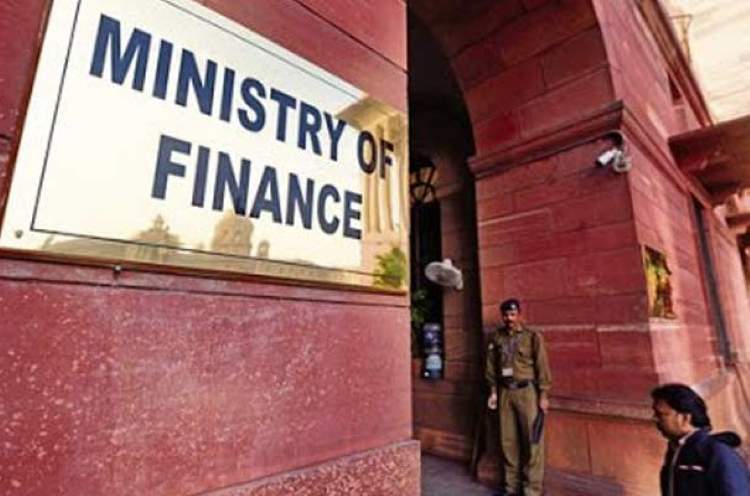
Scheme rationalisation: India’s welfare architecture is entering a rare moment of self-examination. The government has asked ministries to review, merge, or discontinue 54 centrally sponsored schemes and around 260 central sector schemes before the end of March, just weeks ahead of the Union Budget. The stated objective is to prune overlapping programmes that have failed to produce measurable outcomes and to redraw the architecture of public spending from the next financial year. If pursued seriously, this could mark a shift away from indiscriminate scheme expansion. If rushed, it risks becoming another pre-Budget accounting exercise.
Over the years, governments have responded to emerging priorities, political commitments, or crises by launching new schemes. What has rarely followed is the decision to close or redesign programmes that have lost relevance. The result is a crowded policy framework in which multiple ministries pursue similar objectives through parallel schemes. This weakens implementation and blurs accountability.
READ | Government transforms MGNREGA into water security scheme
Overlap and dilution of accountability
Women’s empowerment provides a clear example. The Mahila Kisan Sashaktikaran Pariyojana under the rural development ministry, the Rashtriya Mahila Kisan Yojana under agriculture, and sector-specific initiatives such as the Mahila Coir Yojana under MSME all target women farmers or entrepreneurs. Their objectives are broadly similar. Each seeks to raise productivity, incomes, or participation. Yet each operates through a separate bureaucratic chain, monitoring system, and budget head.
This fragmentation stretches administrative capacity. When responsibility is dispersed across departments, it becomes difficult to assign ownership for outcomes. Officials in the expenditure department of the finance ministry have repeatedly argued that fewer, better-designed schemes are easier to monitor and evaluate, and more likely to deliver results that can be measured.
Fiscal constraints sharpen the case
The fiscal argument for rationalisation is now unavoidable. Interest payments absorb a rising share of Union government revenue, leaving limited room for discretionary spending. Every rupee committed to an underperforming or redundant scheme is a rupee unavailable for infrastructure, health systems, school education, or targeted nutrition.
The government’s effort to move away from open-ended allocations towards outcome-linked funding reflects this constraint. If implemented carefully, this shift can improve value for money and strengthen the credibility of the Budget at a time when investors and rating agencies are closely watching India’s fiscal consolidation path.
Why timing matters now
The timing of the review adds to its importance. The award period of the Fifteenth Finance Commission ends on March 31, 2026. The next cycle will reset the framework governing Centre–state fiscal relations. Schemes seeking continuation will therefore need to justify themselves not only through political salience but through demonstrable outcomes.
READ | PMFBY: Crop insurance scheme faces coverage crisis
This moment also allows a re-examination of programmes criticised for weak alignment with local needs. Uniform national templates have often overlooked regional variation in capacity, geography, and labour markets. Rationalisation, if paired with redesign, can correct some of these mismatches.
Evidence, capacity, and accountability will decide success
Whether scheme rationalisation delivers real gains will depend on evidence and execution. Assessments by the Comptroller and Auditor General and evaluations conducted by NITI Aayog’s Development Monitoring and Evaluation Office have repeatedly pointed to low fund utilisation, weak outcome indicators, and overlapping mandates across ministries. These findings, however, have rarely resulted in closures or meaningful redesign.
Administrative capacity is an equally binding constraint. District administrations are expected to implement dozens of schemes, each with its own guidelines, reporting formats, and digital portals. Compliance often crowds out delivery. A smaller number of schemes, aligned with clear outcome indicators under the Outcome Budget and Results Framework Documents, would ease this burden and sharpen accountability.
Rationalisation must also strengthen parliamentary and audit scrutiny. Cosmetic mergers or rebranding exercises only obscure oversight. What is required is transparent mapping between allocations, outputs, and outcomes, so that Parliament, auditors, and citizens can judge whether public spending is delivering results rather than sustaining programmes.
READ | ELI scheme will boost female participation in manufacturing
States could gain if autonomy is respected
From the perspective of state governments, consolidation offers potential benefits. A smaller number of schemes with clearer objectives and greater design flexibility could reduce administrative burdens and allow states more room to tailor interventions. In sectors where saturation has largely been achieved, such as rural housing or basic road connectivity, resources could be redirected towards emerging gaps rather than extended mechanically.
Recent changes to the rural employment programme show that even politically sensitive schemes are not immune to redesign when labour market conditions and economic priorities shift.
Risks of disruption and centralisation
The risks are substantial. Abrupt mergers or closures can disrupt service delivery, particularly if driven by fiscal targets rather than ground-level evidence. Beneficiaries face uncertainty when schemes change names, guidelines, or funding flows. The human impact matters. Consolidation that leads to delayed payments, staff retrenchment, or administrative confusion will provoke resistance and weaken trust.
There is also the risk of excessive centralisation. Centrally sponsored schemes involve shared financing and implementation by states. Rationalisation could tilt the balance towards the Centre by tightening conditionalities or absorbing state-implemented schemes into centrally controlled ones. Past experience suggests that states remain wary of reforms that reduce their fiscal and administrative space, even when framed as technical improvements.
Political economy will decide outcomes
Scheme pruning is rarely politically neutral. Welfare programmes create constituencies, and flagship initiatives carry symbolic value that often outweighs technical assessment. Earlier consolidation efforts have sometimes settled for renaming rather than substantive reform. A similar exercise initiated in the past remained incomplete, underlining how easily momentum can dissipate.
The credibility of the current push will depend on whether it addresses design flaws, duplication, and weak monitoring, rather than merely aggregating schemes on paper.
A credible rationalisation exercise could strengthen India’s public expenditure framework. Clearer lines of responsibility would improve parliamentary oversight, audit effectiveness, and public accountability. Better coordination across ministries could also reduce the siloed functioning that has long undermined delivery.
If the exercise turns into a hurried pre-Budget ritual aimed primarily at expenditure compression, it will weaken confidence in the reform process. As the Union Budget 2026 approaches, the choices made by the finance ministry will indicate whether this effort marks a technical clean-up or the start of a deeper rethink of how the Indian state deploys scarce public resources.