





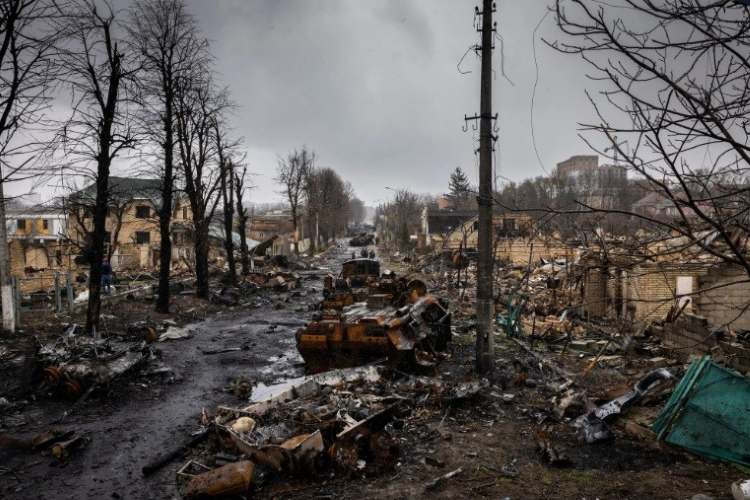
Ukraine peace plan: President Volodymyr Zelensky’s revised 20-point peace plan, prepared with the United States, is the most explicit signal yet that Kyiv accepts the limits imposed by battlefield realities and donor fatigue. It proposes security guarantees, reconstruction finance, and a framework to freeze hostilities. It also hints, carefully, at territorial compromise. Yet the plan’s core assumption is fragile: that calibrated concessions can persuade Moscow to settle. The evidence points the other way.
Russia’s negotiating posture, military objectives, and domestic politics suggest that Ukraine may have to concede more: territory, control over assets, and sequencing of sovereignty — to secure an end to the war. This matters now because the window for a negotiated pause is narrowing as Western support plateaus and Russia consolidates gains.
READ I Ukraine war: Why a frozen conflict now looks inevitable
Russia’s war aims remain maximalist
Moscow’s position has been consistent since late 2022. It seeks full control over Donetsk, recognition of territorial changes, and limits on Ukraine’s strategic autonomy. Kremlin statements have repeatedly rejected partial withdrawals or shared control of key assets. President Vladimir Putin has framed the conflict as existential, a narrative that constrains compromise.

On the ground, Russian forces continue to press in eastern Ukraine, aiming to convert military momentum into diplomatic leverage. A demilitarised zone that preserves Ukrainian control of fortified cities such as Kramatorsk and Sloviansk does not meet that objective. The plan’s reliance on symmetry — reciprocal pullbacks, neutral buffers — collides with an asymmetry of power and intent.
READ I Ukraine peace hinges on Europe scaling back militarisation
Security guarantees without NATO not decisive
The Ukraine peace plan’s strongest element is security. It envisages a peacetime Ukrainian army of 800,000 troops, funded by Western partners; a bilateral US security agreement ratified by Congress; and deeper European military support. It also seeks a firm date for European Union accession. These are meaningful. They are also insufficient substitutes for NATO membership, which Moscow views as the red line.
Russia has already signalled opposition to any foreign troop presence in Ukraine, even under a “coalition of the willing.” Without NATO’s Article 5, guarantees are political commitments, not treaty-bound deterrents. Moscow can live with them if the price — territory and strategic depth — is right.
READ I Ukraine peace built on territorial surrender may not last
Territory is the price Russia expects
Territorial settlement is the Ukraine peace plan’s hardest test. Kyiv’s offer to create a demilitarised zone in Donetsk, expanded to include Russian-held areas, is the first explicit concession of its kind. Yet Moscow has little incentive to accept a freeze that leaves Ukraine in possession of its last defensive belt in the east. The Kremlin has rejected swaps and neutral zones before.
It wants recognition of control, not management of risk. For Ukraine, further concessions would cut deep — ceding cities, legitimising occupation, and risking morale. But history suggests wars often end with lines drawn where armies stand, not where law prefers. Buying peace may require Kyiv to accept de facto losses now, while keeping de jure claims alive.
Strategic assets won’t be shared on Kyiv’s terms
Control of the Zaporizhzhia nuclear power plant exposes another fault line. At six gigawatts, it is Europe’s largest and central to Ukraine’s reconstruction. The U.S. proposal for shared control and profits with Russia was politically untenable for Kyiv. The counter-offer—joint management with Washington—assumes Moscow will accept exclusion from an asset it occupies.
That assumption is weak. Russia has used energy infrastructure as leverage across conflicts. In any settlement, Moscow is likely to demand either control or binding revenue-sharing. Ukraine may have to trade operational control for guarantees on safety, output, and compensation—an unpalatable but plausible compromise.
Ukraine peace and reconstruction finance
The Ukraine peace plan’s economic architecture reveals shifting leverage. It proposes multiple funds to mobilise up to $800 billion for reconstruction, with U.S. and Ukrainian firms in priority sectors and a “leading global financial leader” to coordinate investments—widely read as BlackRock. This aligns Ukraine’s recovery with Western capital.
It also strengthens Washington’s hand in negotiations. For Moscow, such arrangements highlight why it prefers a settlement that limits Ukraine’s integration with Western markets and institutions. The more reconstruction is locked into Western frameworks, the higher the price Russia will set for peace.
Data explains the pressure. Ukraine’s economy contracted by roughly 30% in 2022 and recovered modestly thereafter, while infrastructure damage estimates exceed $400 billion. Sustaining an 800,000-strong force requires predictable external finance. Western aid has become more conditional and politically contested. These constraints narrow Kyiv’s options at the table.
Domestic politics limit Kyiv’s room
Any territorial compromise will face domestic resistance. Zelensky has indicated a referendum would be required for a demilitarised zone. Elections are promised after a deal, underlining the legitimacy challenge. Yet prolonged war also carries political costs: mobilisation fatigue, demographic loss, and economic strain.
Russia’s calculus counts on these pressures. The plan’s sequencing—security first, elections later—recognises the risk. But if Moscow insists on more territory upfront, Kyiv will confront a stark choice between an imperfect peace and an open-ended war with diminishing support.
Ukraine peace, if it comes, will be asymmetric. Ukraine’s 20-point plan is a serious attempt to end a devastating war. It is also likely insufficient for Moscow. To buy peace, Kyiv may have to surrender more than it has offered: deeper territorial concessions, constrained control over strategic assets, and acceptance of security guarantees short of NATO.
The alternative is a frozen conflict on Russia’s terms anyway, reached later and at higher cost. Policymakers should prepare publics for that reality and design safeguards—legal, financial, and diplomatic—to keep Ukraine’s long-term sovereignty claims alive while stopping the fighting.