





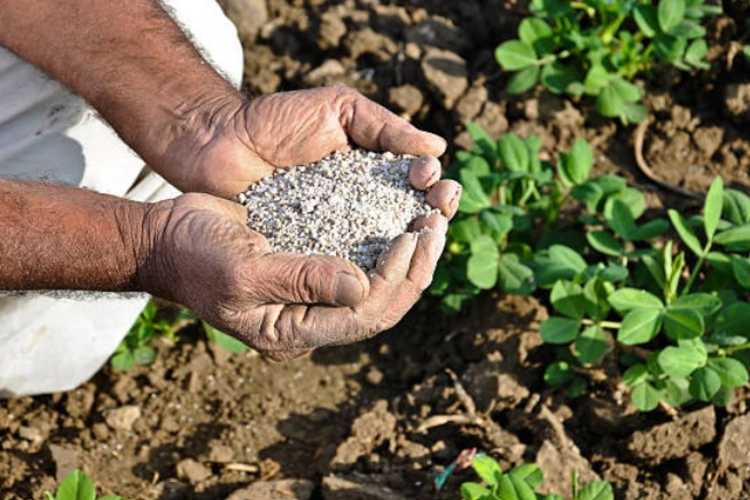
India’s fertiliser policy has long been a quiet pillar of food security. By holding input prices down, it has cushioned farm incomes and helped restrain food inflation in a country where agriculture still employs a large share of the workforce. Over time, the same policy has come to shape outcomes that now sit uneasily together: rising import dependence, deteriorating soil quality, and a subsidy bill that swings with global energy prices. What was once a manageable compromise between farm welfare and fiscal cost is now a growing source of economic and strategic risk.
Cheap fertilisers have served a political and economic purpose. But the costs of that bargain are no longer confined to the budget. Distorted nutrient use has weakened soil productivity, locked farmers into inefficient practices, and increased India’s exposure to volatile global supply chains. As fertiliser markets tighten and geopolitical risks deepen, the policy’s hidden vulnerabilities are becoming harder to ignore.
READ | Fake fertilisers threaten crop yields, food security
Recent supply disruptions illustrate the point. China’s repeated curbs on exports of water-soluble fertilisers, used increasingly in horticulture and high-value crops, exposed India’s dependence on a narrow set of suppliers. Although higher shipments from countries such as Norway and Russia temporarily filled the gap in 2024, this substitution came at higher cost. Diversification reduced immediate shortages, but it did not reduce vulnerability. It merely shifted it.
Subsidy design and distorted incentives
At the heart of the problem lies the structure of fertiliser subsidies. Urea remains price-controlled and heavily subsidised, while phosphatic and potassic fertilisers fall under the nutrient-based subsidy regime, where prices are notionally market-linked but politically constrained. This imbalance has shaped farmer behaviour for decades. Cheap urea encourages excessive nitrogen application, while balanced fertilisation remains the exception rather than the rule.
The effects are visible in the data. India’s nitrogen-phosphorus-potassium usage ratio has drifted far from the agronomic norm of 4:2:1, with nitrogen use dominating in most major cropping systems. Over time, this reduces fertiliser efficiency and soil responsiveness, raising input requirements further. What appears affordable at the retail counter imposes long-term productivity costs that are harder to quantify but increasingly evident in stagnating yields.
The environmental spillovers extend beyond soil. Excess nitrogen leaches into groundwater, contributing to nitrate contamination in large parts of north and western India. Overuse also raises nitrous oxide emissions, complicating India’s climate commitments. Fertiliser policy, long treated as a narrow agricultural issue, now intersects with water security, public health, and emissions management.
READ | From urea glut to cash in hand: Can fertiliser subsidy go direct?
Manufacturing without resource security
Domestic fertiliser capacity has expanded, but it rests on fragile foundations. India has negligible reserves of phosphate and potash, making import dependence unavoidable for these nutrients. Even nitrogenous fertiliser production relies heavily on imported natural gas, exposing manufacturers to global price shocks.
The sector is therefore domestic largely at the final manufacturing stage. Upstream vulnerabilities are built into the system. When gas prices surge or export restrictions tighten, the costs reappear—either as higher subsidies or as supply stress. Policy incentives, rather than soil requirements or efficiency, continue to determine production and consumption patterns.
These distortions are reinforced by state-level policies. Cropping patterns driven by minimum support prices, electricity subsidies for irrigation, and water availability encourage fertiliser-intensive rice and wheat systems in several states. While the fiscal burden of fertiliser subsidies sits largely with the Centre, many of the environmental and agronomic costs are borne locally. This misalignment between who pays and who benefits has made reform politically difficult and administratively fragmented.
Fiscal cost of price suppression
Fertiliser subsidies have become one of the most volatile components of agricultural spending. When global fertiliser or gas prices rise, the government absorbs the shock to keep retail prices unchanged. In 2022-23, fertiliser subsidies crossed ₹2.25 lakh crore, driven largely by international price movements rather than domestic demand growth.
This approach provides short-term protection to farmers but at a growing opportunity cost. Open-ended subsidies crowd out spending on irrigation, research, and extension services—investments that raise farm incomes more durably than cheap inputs. The volatility of subsidy outlays also complicates fiscal planning, especially in years of global commodity stress.
Global concentration in fertiliser supply chains adds to the risk. A handful of countries dominate exports of key nutrients and intermediates. Disruptions are quickly transmitted into prices. India has shown that it can source alternatives, but often at a premium. Those costs eventually circle back to the exchequer.
READ | Fertiliser subsidies need deeper reforms, better targeting
Reform options and strategic choices
Deeper reform has been delayed by political caution. Rationalising fertiliser subsidies is electorally sensitive, but avoiding reform is no longer cost-free. Shifting from price suppression at the factory gate to direct benefit transfers to farmers remains one possible path. It would preserve income support while allowing prices to reflect scarcity. The constraints are familiar: incomplete land records, uneven targeting capacity, and the absence of political consensus.
More importantly, fertiliser policy needs a clearer objective. If the goal is higher farm incomes and sustainable productivity, subsidies must reward outcomes rather than volumes. Soil Health Cards, precision farming tools, and crop-specific nutrient recommendations exist, but their integration into subsidy design remains weak. As long as incentives favour consumption over efficiency, import dependence will persist regardless of how many suppliers India lines up abroad.
Innovation is another missing link. Public and private investment in fertiliser R&D—covering customised blends, bio-fertilisers, and low-emission production—remains fragmented. Price controls blunt incentives for efficiency-enhancing technologies, while untested solutions risk being scaled without rigorous agronomic validation. Without a stronger innovation ecosystem, India will remain caught between inefficient domestic production and costly imports.
Narrowing window for reform
Fertilisers must also be seen through an energy and climate lens. As carbon pricing spreads and energy systems decarbonise, the economics will change. Imports may carry embedded carbon costs even as India tightens its own climate goals. Aligning fertiliser policy with energy strategy, green hydrogen plans, and mineral security is no longer optional.
India may continue to subsidise fertilisers. Few would argue for abrupt withdrawal. But the case for rethinking how those subsidies are designed is now compelling. What began as a tool to stabilise food prices has evolved into a source of fiscal volatility, environmental stress, and strategic exposure.
As agriculture modernises and global supply chains grow more uncertain, postponing reform will only raise the cost of adjustment. The question is no longer whether India can afford to change its fertiliser policy. It is whether it can afford not to.