





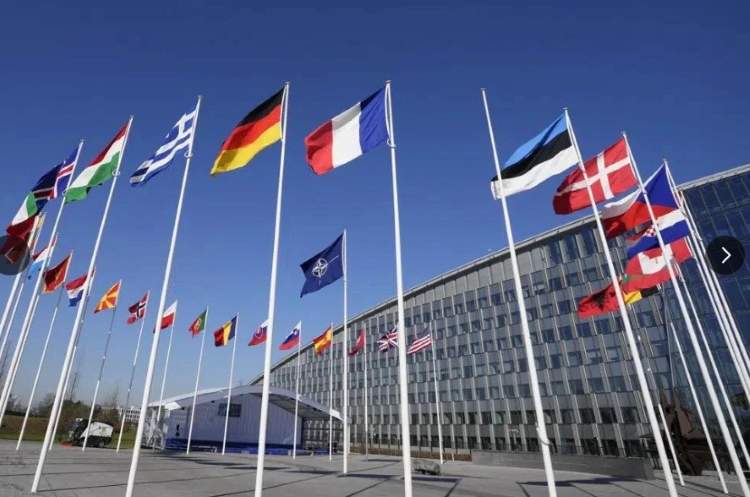
The latest transatlantic rupture over the US-led war against Iran has exposed a structural fragility within NATO that is no longer episodic. It is institutional. The disagreement is not about burden-sharing or tactical coordination. It is about the purpose of the alliance itself—whether it remains a defensive compact anchored in consensus or becomes an instrument of American strategic preference.
The immediate trigger is familiar. US President Donald Trump has pressed European allies to support US military operations against Iran, including access to bases and airspace. Several key allies—Spain, France, Italy, and initially the United Kingdom—have resisted, citing international law and domestic political constraints. Spain’s prime minister, Pedro Sánchez, has been explicit: cooperation must remain within the framework of legality.
This divergence is not new. What is new is Washington’s response. Reports of Pentagon deliberations on punitive measures against allies—including suspending Spain from NATO roles or revisiting security commitments—mark a departure from alliance norms. NATO’s founding treaty does not provide for expulsion. The very suggestion signals a shift from consensus-based decision-making to coercive alignment.
READ I Trump’s Iran threats will run into hard limits
NATO consensus under pressure
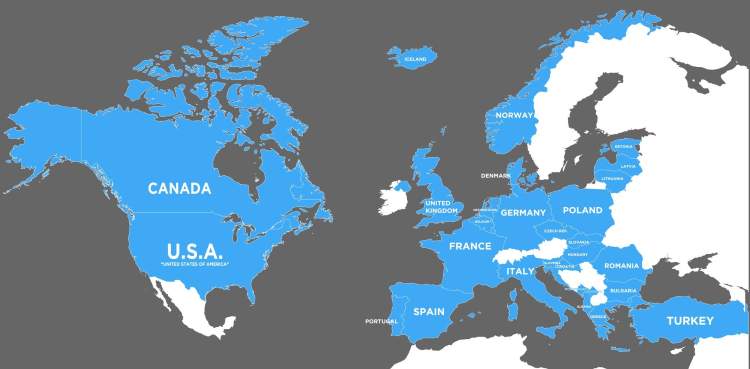
NATO’s operating principle is unanimity. Every major decision requires agreement among its 32 members. This design has historically been a constraint, but also its legitimacy. The Iran conflict has turned that principle into a fault line. The United States is attempting to redefine baseline obligations—such as granting access, basing, and overflight rights—as implicit duties of alliance membership. European capitals reject this interpretation.
The disagreement is not procedural. It is conceptual. European governments view the Iran campaign as a discretionary war, not a collective defence necessity. NATO’s Article 5 applies to attacks on member states, not to offensive operations. By blurring that distinction, Washington risks hollowing out the legal and political foundations of the alliance.
READ I Iran war tests BRICS — and reveals its limits
Strategic trust deficit
The deeper problem is erosion of trust. Poland’s prime minister Donald Tusk has publicly questioned whether the United States would honour its Article 5 commitments. This is not rhetorical dissent. It reflects anxieties in Eastern Europe, where deterrence credibility is existential.
Recent US actions have reinforced these concerns. The diversion of critical weapons systems from Estonia to support operations in Iran has left frontline states exposed. For smaller NATO members, the message is unambiguous: American security guarantees are contingent, not automatic.
At the same time, Washington’s “good ally versus bad ally” framing—articulated by US defence officials—introduces hierarchy into what was designed as a collective security arrangement. This weakens the alliance’s cohesion at a moment when Russia’s war economy is strengthening and intelligence assessments warn of potential confrontation within a short horizon.
READ I What Iran’s resilience reveals about decentralisation, collective action
Europe’s strategic hedging
Faced with this uncertainty, European governments are exploring alternatives. The revival of the European Union’s mutual defence clause—Article 42.7—signals a cautious attempt to build parallel security mechanisms. The European Commission has been tasked with drafting an operational blueprint for its use.
This is not yet a substitute for NATO. The EU lacks integrated command structures, force projection capability, and political clarity on burden-sharing. Even its own leaders acknowledge ambiguity over how Article 42.7 would function in practice. But the intent matters. Europe is preparing for a contingency where NATO’s guarantees may be unreliable.
France, the only country to have invoked Article 42.7 after the 2015 Paris attacks, has demonstrated that the clause can mobilise support. The current effort seeks to institutionalise that response. It is a hedge against American unpredictability.
Transatlantic divergence over Iran
The Iran conflict has crystallised a longstanding divergence in strategic culture. The United States has favoured unilateral military action. European powers prefer diplomacy, sanctions, and multilateral engagement. This gap is not about threat perception—both sides recognise Iran’s destabilising role—but about the instruments of response.
The consequence is operational fragmentation. European countries are preparing maritime security arrangements in the Strait of Hormuz independent of the United States. Even within NATO, coordination is ad hoc rather than institutional.
Such fragmentation reduces the alliance’s effectiveness. It also creates signalling confusion for adversaries. Russia, in particular, benefits from a divided NATO. Intelligence assessments already suggest that Moscow’s strategy would be to exploit political fractures rather than seek outright military victory.
The credibility problem
Former NATO secretary-general Jens Stoltenberg has warned that the alliance’s survival is not guaranteed over the next decade. This is not alarmism. It reflects a basic reality: alliances depend on credible commitments. Once members begin to doubt those commitments, the alliance becomes a shell.
Trump’s repeated characterisation of NATO as a “one-way street” undermines that credibility. So do threats to withdraw or downgrade support. Paradoxically, the United States derives disproportionate advantage from NATO’s network—access, influence, and global reach. Undermining the alliance weakens its own strategic position.
A slow unravelling
NATO is unlikely to collapse abruptly. Institutional inertia, shared interests, and bureaucratic depth will sustain it in the near term. But the current trajectory points to gradual erosion. The alliance is shifting from a cohesive security architecture to a transactional arrangement.
Three developments are particularly consequential. First, the normalisation of punitive rhetoric within the alliance. Second, the emergence of parallel European defence frameworks. Third, the growing perception that US commitments are conditional.
Taken together, these trends suggest that NATO’s challenge is not external. It is internal. The Iran conflict has merely accelerated a process already underway.
The question is no longer whether NATO can manage crises. It is whether it can survive a sustained divergence in strategic purpose between its principal members.